Gold vs Silver: The Choice
Sayali Shirke / 18 Sep 2025/ Categories: DSIJ_Magazine_Web, DSIJMagazine_App, Special Report, Special Report, Stories
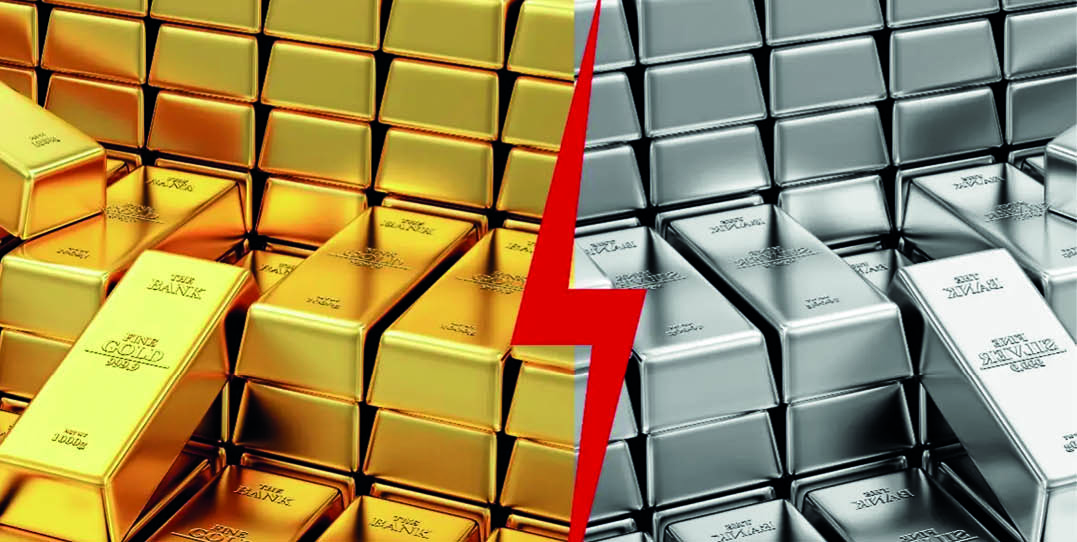
The most robust strategy is a blended approach that leverages the distinct strengths of both metals.
Gold remains the timeless safe-haven—anchored by central bank buying, low volatility, and a role as a portfolio cornerstone. Silver, by contrast, is a high-beta play: volatile, industrially essential, and structurally in deficit. Together, they form a powerful hedge against uncertainty and inflation, but the choice ultimately rests on whether you value stability—or are willing to embrace volatility for potentially outsized gains [EasyDNNnews:PaidContentStart]
BGold remains the timeless safe-haven—anchored by central bank buying, low volatility, and a role as a portfolio cornerstone. Silver, by contrast, is a high-beta play: volatile, industrially essential, and structurally in deficit. Together, they form a powerful hedge against uncertainty and inflation, but the choice ultimately rests on whether you value stability—or are willing to embrace volatility for potentially outsized gains
Over the past 25 years, investors who stayed the course with gold saw a staggering 1,246 per cent total return, comfortably outshining silver’s 745 per cent. Yet, silver has often dazzled with its bursts of outperformance—posting sharper rallies over shorter horizons, like a 44 per cent gain year-to-date against gold’s 40 per cent. On the flip side, the scars of volatility are deeper in silver, with a maximum drawdown of nearly –76 per cent, compared to gold’s relatively modest –44 per cent.

The data paints a clear contrast: gold has been the steadier compounder with a 10.95 per cent CAGR, while silver, despite its bouts of brilliance, has lagged at 8.90 per cent CAGR. But when markets heat up, silver often runs faster—over the past three months, silver beat gold (14.05 per cent vs 11.08 per cent). This raises a timeless question for investors: Should you anchor your wealth in the relative safety of gold, or ride the volatility of silver for potentially higher short-term gains?
Precious Metals in a New Macroeconomic Regime
The global financial landscape has entered a period of heightened uncertainty, characterised by persistent inflationary pressures, shifting geopolitical alliances, and a rapid, technology-driven energy transition. Against this backdrop, traditional financial assets have faced significant volatility, prompting a renewed investor focus on tangible stores of value. Gold and silver, in particular, have experienced a remarkable rally that challenges conventional market wisdom. As of recent data, gold's performance has been impressive, with a one-year gain of 42.4 per cent. Silver has also demonstrated strength, outperforming gold over the same period with a one-year gain of 44.69 per cent. These price movements are not arbitrary; they reflect a collective response by investors and institutions to a complex global environment.
In this article, we will move beyond a superficial price comparison and provide an exhaustive, data-driven analysis of the fundamental, macroeconomic, and technical investment cases for gold and silver. This analysis will determine which of these precious metals offers a more compelling opportunity, even after their recent run-up, to inform a strategic investment decision.
The Gold-Silver Ratio: A Cyclical and Fundamental Barometer
The gold-silver ratio is a powerful analytical tool in the precious metals market. It is defined as the proportional relationship between the respective spot prices of gold and silver, indicating how many ounces of silver can be purchased with one ounce of gold. More than just a simple price comparison, the ratio serves as a barometer of market sentiment, reflecting investor risk appetite and the relative strength of industrial versus safehaven demand.

Historically, the ratio exhibits a highly dynamic and countercyclical behaviour. It tends to rise during precious metals bear markets, which means the gap between the values of the two metals widens. Conversely, it typically falls during bull markets, signalling that gold is becoming less valuable relative to silver. This behaviour is attributed to silver's greater volatility; as the 'high-beta' version of gold, its price tends to experience more radical fluctuations. In precious metals bull markets, silver's price can soar, causing the ratio to decrease. During bear markets, silver's price often falls more sharply than gold's, causing the ratio to rise. The last five years provide a perfect example of this. The ratio more than doubled since the silver price peaked in 2011, when an ounce of gold was worth around 31 times more than an ounce of silver, and by February 2016, the ratio had reached almost 80:1.
As of the latest available data, the ratio stands at a current value of 88.67, with a 5-year high of 105.19 and a 5-year low of 62.82. This prolonged elevation of the ratio, which remains at twice its 2011 level, is a structural anomaly that warrants deep consideration. The historical trend suggests that during a precious metals bull market, which the current environment appears to be, the ratio should be falling as silver outperforms. The fact that it remains at such a high level, particularly in the face of gold's record-breaking nominal highs, suggests a fundamental undervaluation of silver. This divergence in price movement reveals that gold has been propelled by a powerful new demand source—central bank buying—while the market has not yet fully appreciated the profound structural changes occurring on the demand and supply side of the silver market.
This misalignment creates a powerful mean-reversion thesis. As industrial demand continues to accelerate and new investors recognise silver's unique structural bullish case, the ratio could tighten significantly. A movement of the ratio toward its historical mean would imply a much more rapid percentage gain for silver than for gold. The historical precedent from 2011, where the ratio was near 31:1, suggests there is a massive runway for silver's relative value to climb, making its potential for outsized returns particularly compelling.
Fundamental Demand Drivers: A Tale of Two Distinct Assets
The investment case for gold and silver is fundamentally differentiated by their respective demand profiles. An examination of how each metal is consumed reveals why they respond differently to economic cycles and why they serve distinct roles within a portfolio.
Gold's Enduring Foundation
Gold's value is primarily a function of its role as a monetary and jewellery asset. According to consumption data, gold demand is split across several key sectors: jewellery manufacturing accounts for the largest share (30 per cent to 50 per cent), followed by investment demand (25 per cent to 30 per cent), and a now-significant central bank component (20 per cent to 30 per cent). The demand for gold jewellery, particularly from leading consumers like China and India, has historically been the primary source of consumption. However, the most significant driver of gold's recent rally has been the resurgence of central bank buying. Global central banks have been net buyers every year since the 2008 financial crisis, accumulating gold as a hard asset to complement their foreign exchange reserves of fiat currencies like the U.S. dollar, euro, and yen. This trend has been reinforced by quantitative easing and increased use of financial sanctions. Central bank accumulation has provided a structural floor for gold prices by reducing the amount of metal available to the public, removing the equivalent of 8 per cent to 20 per cent of new mining supply each year over the past decade. Gold's industrial use, while important in applications such as electronics, is a minor fraction of overall demand, accounting for only 5 per cent to 10 per cent of total consumption.

Silver's Dual Nature and the Structural Demand Shift
In stark contrast, silver's value is heavily tied to its industrial applications, which account for approximately 55 per cent of its total consumption. This makes silver a dual-nature asset, sensitive to both the global economic cycle and investor sentiment. The core structural catalyst for silver's investment case is the accelerating global green energy and technological revolution. Its unparalleled electrical and thermal conductivity makes it an indispensable component in a range of new technologies.
The demand for silver in solar panels (photovoltaics) has become a massive growth area. Silver consumption for this technology is expected to constitute 14 per cent of global silver demand in 2025, a significant rise from just 5 per cent in 2014. Projections suggest that solar manufacturing could require more than 20 per cent of the annual silver supply by 2027 and nearly half by mid-century, creating a sustained and powerful demand driver.
Similarly, the rise of electric vehicles (EVs) is a major catalyst. Battery electric vehicles can contain up to twice as much silver as internal combustion engine vehicles, and demand from the automotive industry is forecasted to grow from around 90 million ounces today to nearly 200 million ounces by 2030.
Silver is vital for battery efficiency, charging speed, and various electronic components within EVs. Furthermore, nearly every modern electronic device contains silver, and the rollout of 5G infrastructure is expected to double silver demand from this sector by 2030.
The fundamental distinction between these two metals is critical. Gold's demand is driven by human behaviour and trust in institutions (or lack thereof), making it a psychological asset that rises on fear. Silver's demand, however, is increasingly tied to the physical production of goods that are fundamental to the global shift towards a low-carbon economy. This makes silver a physical commodity bottleneck for the energy transition. The key difference for an investor is that gold’s value rises on fear, while silver’s value rises on both fear and a growing, tangible, and irreversible industrial need. This dual-demand profile provides a more fundamentally supported and potentially powerful long-term price trajectory.

Macroeconomic and Geopolitical Undercurrents
The price trajectories of gold and silver are not isolated from broader economic and political forces. Both metals are significantly influenced by major macroeconomic variables, but they respond in subtly different ways that an investor must appreciate.
The U.S. Dollar, Real Interest Rates, and Opportunity Cost
Both gold and silver have a well-established negative correlation with the U.S. Dollar Index (DXY). Because the metals are priced in U.S. dollars, a weakening dollar makes them comparatively less expensive for international buyers holding other currencies, which tends to increase demand and drive prices higher. A strengthening dollar, conversely, often corresponds with downward pressure on prices.
The inverse relationship with real interest rates—the nominal interest rate less inflation—is a core driver for both metals. As non-interest-bearing assets, gold and silver become less attractive when real interest rates are high, as investors can earn a better return on interest-bearing assets like U.S. Treasury bonds. Conversely, when real rates are low or negative (a situation that arises when inflation outpaces nominal interest rates), the opportunity cost of holding precious metals declines, making them more attractive as a store of value. The biggest booms in the gold market have occurred in negative real rate environments, such as in the 1970s and the 2000s.
Geopolitical Instability, Tariffs, and Safe-Haven Demand
Gold has long been considered the quintessential safe-haven asset, a store of value during times of uncertainty and a hedge against inflation and market volatility. Its value tends to rise when confidence in other financial assets declines, particularly during periods of high inflation, economic uncertainty, or geopolitical instability. Historical events such as the 2008 financial crisis, the Russia-Ukraine conflict, and the COVID-19 pandemic have all seen gold's value surge as investors seek refuge.
Silver’s response to geopolitical events is more complex and less predictable due to its dual nature. While it can also attract safe-haven flows during crises and has historically seen price increases during times of war, its price is also heavily influenced by its industrial demand. This creates a fascinating conflict. For example, some data show silver prices declining in the face of tariffs that threaten to reduce industrial demand, while other data show it surging on trade war fears that push investors into safe havens. This duality means that silver's price movements can be a lot more volatile than gold’s, but that volatility also has its advantages in terms of upside potential.
A critical difference between the two metals' exposure to these macro forces is one of scale and market dynamics. The sheer size of gold's market makes it a stable, long-term anchor. Silver, with its smaller market size, has the potential for a disproportionately larger, more 'explosive' price movement when these macro tailwinds take hold. Both metals are beneficiaries of a weak dollar and a low-real-rate environment, but the degree of impact is different. Gold is the 'safe', lowvolatility anchor, while silver is the high-volatility, high-upside play.

Supply-Side Dynamics and Outlook
The supply-side story for both gold and silver presents a major divergence that is crucial to understanding their respective investment theses. While both markets have experienced stagnation in mine production, the underlying reasons and their implications for future prices are distinct.
Global gold mine production in 2024 was approximately 3,300 tonnes, with China, Russia, and Australia being the largest producers. A key aspect of gold's supply dynamic is its exceptionally high end-of-life recycling rate of 86 per cent. This high rate is largely due to gold's value density and its primary use in jewellery and investment-grade bars and coins, which are easily collected and recycled. This high recycling rate means that above-ground gold supplies are vast, estimated at over 2,00,000 tonnes, with recycling providing a significant portion of new supply each year.
The silver supply story is a different matter entirely, presenting a clear structural bullish case. Global silver mine production in 2024 was 819.7 million ounces, led by Mexico, China, and Peru.
A crucial distinction is that only about 30 per cent of silver is produced by primary silver mines; the remaining 70 per cent is a byproduct of mining other metals such as lead, zinc, copper, and gold. This means that new silver supply is not responsive to a rise in silver prices alone; it depends on the production decisions and economics of the primary metals being mined.
The silver market has experienced a structural supply deficit for five consecutive years (2021–2025), with a projected shortfall of 117.6 million ounces in 2025. This deficit is not a temporary blip but a persistent market imbalance where industrial and investment demand consistently outpace mining production and recycling combined. This imbalance is driven by several factors: declining ore grades (which have decreased by around 22 per cent since the mid-2010s), limited new project development due to long permitting timelines, and rising regulatory and environmental costs. This multi-year deficit has already begun to draw down above-ground stockpiles, creating a physical market tightness that is not fully captured by futures prices.
The disparity in recycling rates further compounds the issue. Silver's end-of-life recycling rate is much lower than gold’s, at only 50 per cent. This is because a significant portion of industrial silver is used in small quantities within complex electronic devices, solar panels, and other products, making it economically and logistically challenging to recover. The low recycling rate means that as industrial demand grows, it will increasingly put pressure on new mine supply, which is inherently inelastic. This combination of a rising, structural industrial demand and a slow-to-respond, challenged supply chain creates a perfect storm for silver prices. It represents a fundamental imbalance that cannot be easily or quickly resolved.

The Final Verdict: Gold vs. Silver as a Compelling Investment
Both gold and silver offer compelling investment opportunities, but they serve different, and complementary, purposes within a strategic portfolio. The final verdict on which is more compelling depends entirely on the investor's objective and risk tolerance.
Gold is a portfolio cornerstone for wealth preservation. Its reputation as the ultimate safe-haven, its low correlation with other assets, and its increasing accumulation by central banks make it an indispensable hedge against geopolitical risk, currency debasement, and economic uncertainty. Gold is the optimal choice for a risk-averse investor seeking a stable store of value in turbulent times. Its price trajectory is supported by a growing institutional and central bank demand base that provides a strong structural floor.
Silver is a strategic and tactical play on a market experiencing profound, secular changes. It is a high-beta bet on the precious metals cycle that is also a direct beneficiary of the green energy and technological revolutions. The current structural supply deficit, the low recycling rate, and the historically elevated gold-silver ratio present a unique and compelling opportunity for an investor seeking outsized returns and significant upside potential. While gold's price increases are fundamentally supported, silver's has the potential for explosive, asymmetric gains due to the confluence of these factors.
The risks for each metal must also be considered. Gold’s primary risk lies in a significant reversal in central bank buying or a sustained period of economic stability and low inflation, which would increase its opportunity cost and reduce its safe-haven appeal. Silver's primary risk, on the other hand, lies in its dual nature. A severe global economic slowdown could stifle its industrial demand and lead to a short-term price decline, even if its safe-haven appeal rises. Its high volatility can also lead to more radical price swings, making it less suitable for highly risk-averse investors.
In an era of rising geopolitical tensions, central banks are quietly stocking gold and silver as reserve currencies—moving away from the U.S. dollar’s dominance. As many nations diversify, they see precious metals as more than a hedge against inflation—they are lifelines of trust and monetary sovereignty in times when paper promises falter
Conclusion and Actionable Recommendations
The analysis confirms that both gold and silver offer compelling investment opportunities, but for fundamentally different reasons. Gold should be viewed as a long-term anchor for stability, while silver is a high-octane growth play on a profound market imbalance.
Based on this comprehensive analysis, the following portfolio strategy recommendations are advised:
Core Allocation (Gold): Maintain a core, strategic allocation to physical gold or physically-backed gold ETFs (such as GLD or GLDM) as a long-term store of value and a portfolio hedge. Gold’s utility as a hedge against inflation, geopolitical risk, and currency debasement remains unparalleled and is a necessary component for any well-diversified portfolio. This allocation should be considered a non-negotiable part of a long-term risk management strategy.
Growth Allocation (Silver): Allocate a portion of the portfolio to silver for its asymmetric risk-reward profile. The current structural supply deficit and the potential for a mean-reversion in the gold-silver ratio make it a highconviction trade. This allocation is suitable for investors with a higher risk tolerance and a focus on capital appreciation. Investment vehicles could include physical bullion, liquid Silver ETFs.
The most robust strategy is a blended approach that leverages the distinct strengths of both metals. The current elevated gold-silver ratio suggests a tactical opportunity to overweight silver relative to historical norms, capitalizing on its potential to outperform as the global green energy transition accelerates and the market fully prices in its unique structural supplydemand deficit. Silver’s industrial-driven, physical scarcity story makes it a uniquely compelling investment for the coming years, positioning it not just as a precious metal, but as a critical commodity for the future of the global economy.
[EasyDNNnews:PaidContentEnd] [EasyDNNnews:UnPaidContentStart]
To read the entire article, you must be a DSIJ magazine subscriber.
[EasyDNNnews:UnPaidContentEnd]