Multi-Asset Allocation Funds: Is it a Smarter Way to Ride Market Waves?
Sayali Shirke / 15 May 2025/ Categories: DSIJ_Magazine_Web, DSIJMagazine_App, MF - Special Report, Mutual Fund, Special Report
Recent market trends underscore the growing appeal of MAAFs.
Multi-Asset Allocation Funds (MAAFs) are gaining traction among Indian investors for their ability to offer stable returns with lower volatility. By blending equity, debt, and commodities like gold, they provide a balanced and automated investment strategy. This report by Abhishek Wani provides a comprehensive overview of MAAFs, exploring their fundamental characteristics and assessing their suitability for various investment portfolios [EasyDNNnews:PaidContentStart]
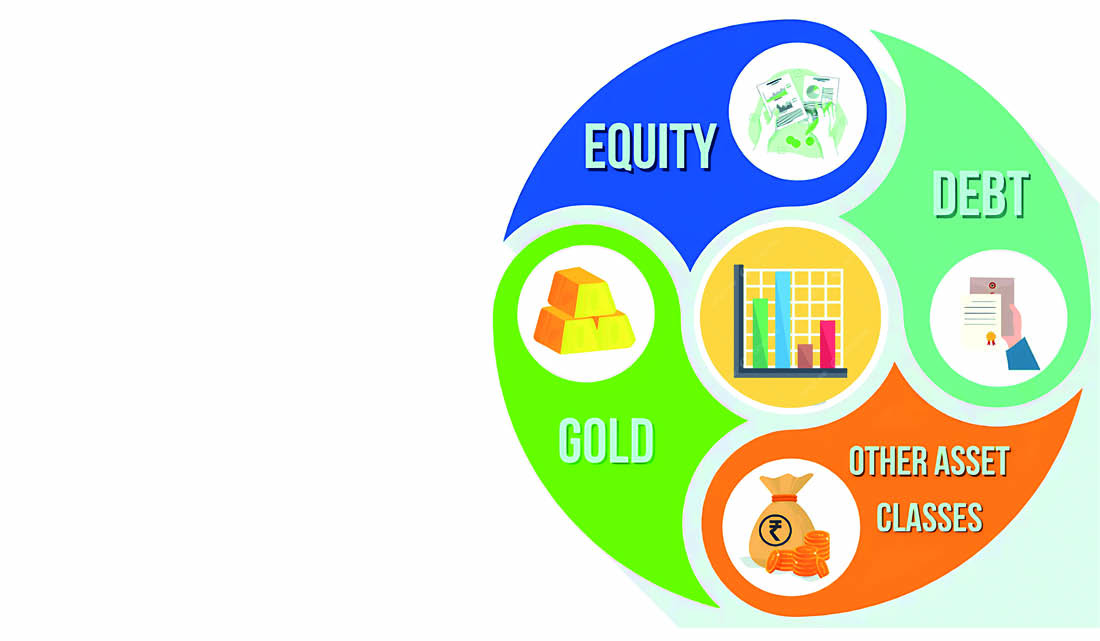
In today's increasingly unpredictable investment environment, Indian retail investors are actively seeking strategies that offer a balance between reasonable returns and effective risk management. Multi-Asset Allocation Funds (MAAFs) have emerged as a noteworthy solution, representing a hybrid mutual fund structure that combines investments across equity, debt, and commodities—typically gold—within a single portfolio. This diversified approach provides inherent risk mitigation, enabling investors to potentially achieve stable returns while reducing overall portfolio volatility across various market cycles.
Recent market trends underscore the growing appeal of MAAFs. As of May 8, 2025, gold has demonstrated significant outperformance compared to equities over the past three years, delivering a remarkable 86 per cent gain compared to the NIFTY 50's 49 per cent rise. While equities remain a preferred asset class for long-term capital appreciation, heightened market volatility and prevailing macroeconomic uncertainties have prompted investors to reconsider a portfolio strategy solely reliant on equities. Concurrently, debt instruments have regained attractiveness as the Reserve Bank of India adopts a more accommodative monetary policy stance following a period of peak interest rates. These converging factors—namely, heightened market volatility, the resurgence of gold prices, and attractive debt yields—have created a favourable environment for the increased adoption of MAAFs.
For many investors, the primary investment objective is not to pursue the highest possible returns but rather to achieve consistent, inflation-adjusted returns while effectively managing risk. Given the ongoing turbulence in equity markets after a multi-year bull run, risk-averse retail investors are increasingly drawn to more stable and balanced investment strategies. MAAFs address this need by consolidating multiple asset classes within a single fund, thereby relieving investors of the burden of actively timing market entries and exits or manually rebalancing their portfolios. Currently, a substantial ₹1.16 lakh crore fund is in assets under management across 28 active schemes with ICICI Prudential Multi-Asset Fund holding the largest share.
This report provides a comprehensive overview of MAAFs, exploring their fundamental characteristics, the key drivers behind their growing popularity, their operational mechanics, and an assessment of their suitability for various investment portfolios.
Understanding the Basics of Multi-Asset Allocation Funds
Multi-Asset Allocation Funds are mutual fund schemes that invest in a minimum of three distinct asset classes, typically including equity, debt, and gold, with a mandatory minimum allocation of 10 per cent in each asset class. This regulatory requirement, mandated by the Securities and Exchange Board of India (SEBI), ensures genuine diversification and prevents funds from being mislabeled. To illustrate, if an investor allocates ₹1 lakh to a MAAF, the fund manager might strategically allocate ₹40,000 to equities for long-term growth potential, ₹30,000 to debt instruments for income stability, and ₹30,000 to gold as a hedge against inflation and market volatility.
Unlike traditional hybrid funds, which typically focus on two asset classes, such as equity and debt, MAAFs offer an enhanced level of diversification and risk mitigation by incorporating commodities like gold. Certain MAAFs may further broaden their investment scope to include international equities, real estate investment trusts (REITs), or silver exchange-traded funds (ETFs), depending on the specific investment strategy of the fund house. The asset allocation strategy employed by MAAFs can be either fixed or dynamic, as dictated by the fund's investment mandate. Dynamic MAAFs provide fund managers with the flexibility to adjust asset allocations based on prevailing market conditions, offering a more responsive and active approach to fund management.
Factors Driving the Growing Popularity of MAAFs in 2025
The heightened market volatility is a significant driver. Domestic and global factors, including fluctuations in interest rates, political elections, and geopolitical tensions, have made investors increasingly wary of excessive exposure to equities. In this context, MAAFs function as an inherent risk management mechanism, with debt and gold acting as a buffer to mitigate potential losses during periods of stock market decline.
Secondly, gold has experienced a resurgence as a safe-haven asset in the face of global economic and political instability. Delivering returns exceeding 80 per cent over the past three years, gold has become a valuable contributor to portfolio performance. MAAFs typically allocate between 10 per cent and 30 per cent of their assets to gold or gold ETFs, enabling investors to participate in the gold rally without the complexities associated with physical gold ownership and storage.
Thirdly, convenience plays a crucial role in the appeal of MAAFs. Many investors, particularly those new to investing or busy professionals, find the management of multiple funds across different asset classes to be a complex and timeconsuming undertaking. MAAFs simplify this process by consolidating equity, debt, and gold investments into a single, easily manageable product. The fund manager assumes responsibility for all asset allocation decisions, providing investors with a truly hands-off investment experience.
Fourthly, MAAFs offer the benefit of automatic asset rebalancing. In a traditional investment portfolio, investors are required to actively monitor performance and periodically reallocate assets to maintain the desired asset allocation—a process that can be both technically challenging and demanding. MAAFs automate this rebalancing process internally. The fund manager dynamically adjusts asset allocations based on evolving market trends, asset valuations, and macroeconomic indicators.
Finally, SEBI's robust regulatory framework has instilled greater investor confidence in MAAFs. By mandating minimum allocation requirements across three distinct asset classes, SEBI has enhanced transparency and credibility, assuring investors that MAAFs genuinely provide the promised diversification.
Fund Structure and Regulatory
Framework
SEBI regulations stipulate that Multi-Asset Allocation Funds must adhere to the following guidelines:
- Minimum Asset Class Allocation: Invest a minimum of 10 per cent of assets in at least three different asset classes.
- Eligible Asset Classes: Include asset classes such as:
- Equities - Debt and Money Market Instruments
- Commodities (primarily gold, typically through ETFs or Sovereign Gold Bonds (SGBs)
- Real Estate Investment Trusts (REITs)/ Infrastructure Investment Trusts (InvITs) - Global Equities (often via Fund-of-Funds (FoFs))
The Fund Manager's Approach: Asset Allocation in MAAFs
MAAFs are structured around three core pillars: equity, which aims to provide growth potential; debt, which offers income generation and stability; and gold, which serves as a hedge against market volatility and a diversifier. Fund managers actively adjust asset allocations based on their prevailing market outlook and economic forecasts. For instance, in a bullish market environment, equity exposure may be increased to 60 per cent or higher, while during periods of geopolitical instability or heightened inflation, gold allocation may be increased to 30 per cent or more.
The performance of a MAAF is significantly influenced by the fund manager's investment decisions and asset allocation strategy. Given the absence of a rigid allocation structure or a predefined investment style, the fund manager's expertise in navigating market dynamics plays a pivotal role in the fund's overall performance.
This inherent flexibility is a key differentiating feature of MAAFs. While some funds adhere to fixed allocation models— for example, allocating 50 per cent to equity, 30 per cent to debt, and 20 per cent to gold—others employ a dynamic allocation strategy. Dynamic allocation provides fund managers with the agility to capitalize on emerging market opportunities while mitigating potential downside risks. In essence, investors entrust seasoned investment professionals to manage their asset allocation based on in-depth research, comprehensive market data analysis, and a thorough understanding of global economic trends.
Furthermore, MAAFs incorporate an automatic rebalancing mechanism. If, for example, the equity portion of the portfolio appreciates significantly and exceeds its target allocation, the fund manager will typically reduce the equity holding and reallocate the proceeds to debt or gold instruments to restore the portfolio's original asset allocation balance. This proactive rebalancing strategy helps to avoid overconcentration in any single asset class and ensures that the portfolio's risk profile remains consistent with the fund's investment objectives.
Taxation: The One Caveat to Watch
While MAAFs offer diversification and simplicity, taxation is a factor investors must understand. Besides cushioning against market swings, multi-asset funds, like other hybrid funds, possess another key advantage: tax efficiency. In a multi-asset fund, rebalancing happens internally by the fund manager, so retail investors don't need to pay tax whenever that happens. A short-term or long-term tax only applies when you withdraw money from the fund. Additionally, many such funds maintain over 65 per cent equity exposure, qualifying as equity-oriented funds. This implies that long-term capital gains (above ₹1.25 lakh) are taxed at 12.5 per cent, while short-term capital gains are taxed at 20 per cent. In contrast, debt-oriented funds are taxed at income tax slabs without indexation benefit.
Performance Comparison: MAAFs vs. Other Fund Categories
Here's how top-performing multi-asset funds stack up against other fund categories and benchmarks:

The performance data highlights that while pure equity funds, such as Flexi Cap or Multi Cap funds, may potentially outperform MAAFs during strong bull markets, MAAFs generally offer greater downside protection, as demonstrated by their comparatively smaller losses during recent market corrections.
Top Multi-Asset Funds in India (2025) Here’s a snapshot of all active MAAFs and their performance:

Should You Invest in MAAFs?
Deciding whether to allocate investments to Multi-Asset Allocation Funds (MAAFs) depends heavily on an investor's individual investment objectives and risk tolerance. MAAFs offer a convenient, all-encompassing investment solution by allocating capital across diverse asset classes, encompassing equity, debt and gold, thereby alleviating the complexities associated with managing multiple investment portfolios. This characteristic renders them particularly attractive to conservative investors, individuals in retirement, novice investors, and those prioritizing the minimisation of portfolio volatility.
The fundamental investment principle underlying MAAFs revolves around the strategic combination of assets that exhibit low or negative correlation patterns. For example, Indian equities and gold often demonstrate limited or inverse price movements, as do Indian debt instruments and global equity markets. By judiciously integrating these assets with divergent performance characteristics, MAAFs endeavour to mitigate overall portfolio volatility while simultaneously pursuing reasonable returns. The desired investment outcome for a MAAF is to achieve a volatility profile comparable to that of short-term debt funds, coupled with return potential that surpasses traditional fixed-income investments, although it may not necessarily replicate the high growth and corresponding volatility typically associated with pure equity investments. This investment approach seeks to provide a smoother and more predictable investment trajectory while enabling investors to participate in the long-term growth of the market.
However, it's essential to emphasise that MAAFs do not represent a universal investment solution suitable for all investors. A thorough and individualised assessment of risk appetite, financial goals, and investment time horizon is crucial before committing capital to these funds. While MAAFs are designed to offer stability and mitigate risk, it is imperative to acknowledge that investment returns are not guaranteed. Furthermore, the regulatory framework in India, which often mandates a significant allocation to equity (approximately 65 per cent) within MAAFs, can potentially dilute the intended diversification benefits derived from the low correlation among asset classes. Consequently, investors should carefully scrutinise the specific asset allocation strategies employed by individual MAAFs.
Despite these considerations, MAAFs can play a valuable role in a well-diversified investment portfolio. For investors primarily seeking stability and automatic diversification, allocating a portion of their investment capital to MAAFs can be a prudent strategy. These funds can serve as a stabilising force, 'smoothing the ride' of the investment journey and enhancing portfolio resilience, even when complemented by a separate allocation to pure equity investments for potentially higher long-term capital appreciation. Financial experts often advocate for MAAFs that possess the flexibility to dynamically adjust their asset allocation in response to evolving market conditions and opportunities. Ultimately, the decision to invest in MAAFs involves a careful evaluation of the trade-off between the advantages of diversification and professional asset management and the degree of control relinquished to the fund manager, as well as the potential implications of regulatorymandated asset allocations within the Indian market. MAAFs offer a balanced investment approach, seeking to reconcile the pursuit of capital growth with the need for portfolio protection in an often-uncertain investment landscape.
[EasyDNNnews:PaidContentEnd] [EasyDNNnews:UnPaidContentStart]
To read the entire article, you must be a DSIJ magazine subscriber.
[EasyDNNnews:UnPaidContentEnd]