Oil & Gas Sector Slippery but Strategic
Sayali Shirke / 21 Aug 2025/ Categories: DSIJ_Magazine_Web, DSIJMagazine_App, Special Report, Special Report, Stories
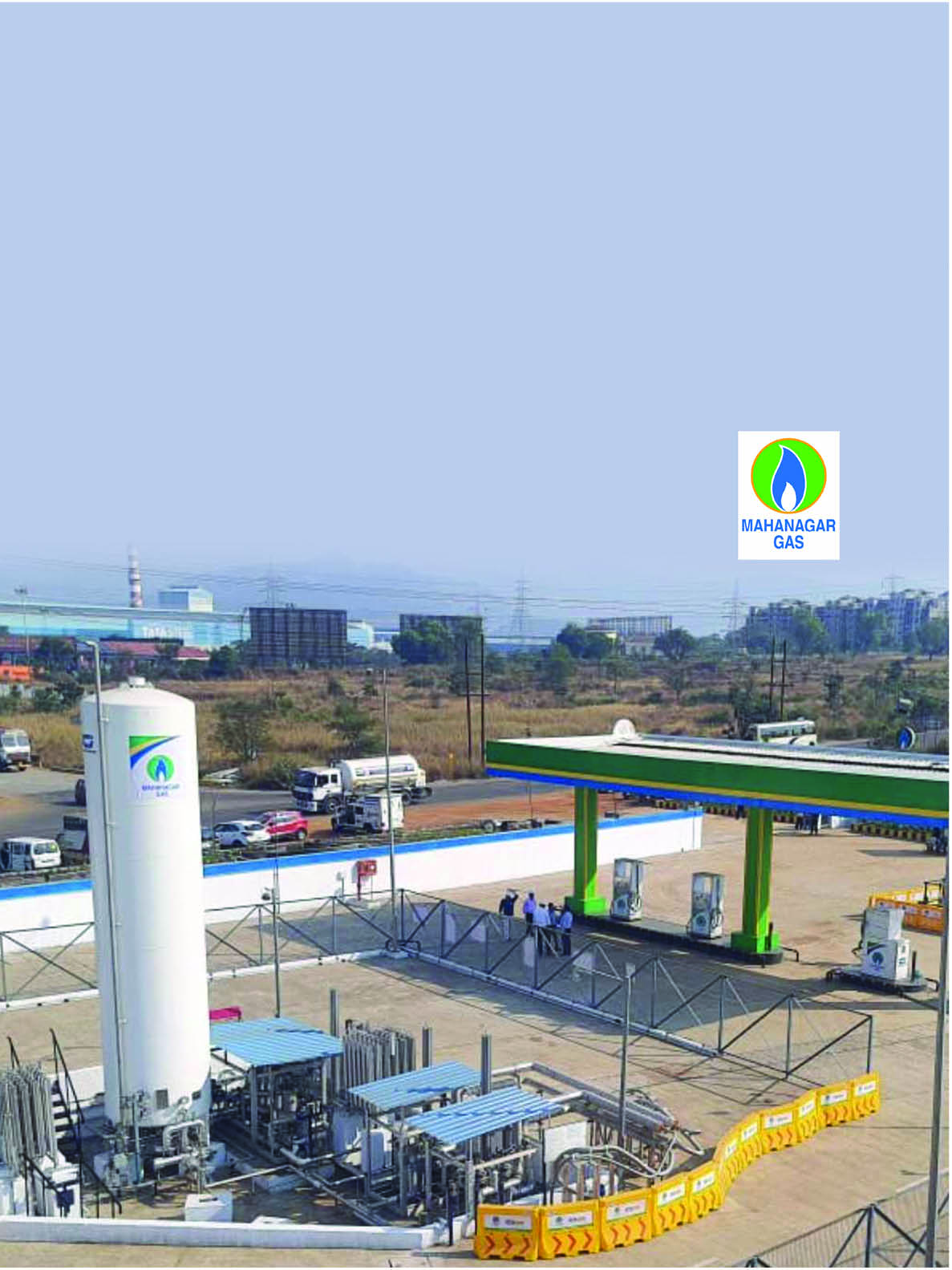
The Indian oil and gas value chain is a vast and interconnected network spanning upstream, midstream, and downstream segments.
Oil, the one word that never left the room in the ‘trade war’ between two major economies, India and the U.S. This, even as Donald Trump famously branded India a ‘dead economy.’ With India pushing back while safeguarding its policy and energy priorities, the sector now stands at the crossroads of geopolitics, policy and market cycles. Mandar Wagh unpacks the tariff overhang from India’s Russian crude buys, the tug-of-war in global demand and supply, shifting price dynamics, and the opportunities that still exist for investors, even as the road ahead remains slippery [EasyDNNnews:PaidContentStart]
Recent headlines have been dominated by U.S. President Donald Trump’s intensifying tariff war, with India placed at the heart of the storm. Washington has imposed a 25 per cent tariff along with additional penalties, which Trump claims are driven by one strong reason: India’s oil trade with Russia. The oil and gas sector has never been immune to global undercurrents, but the past year has brought an unusual combination of price volatility, shifting trade alliances, and policy recalibrations.
As India navigates its position between an increasingly assertive U.S. and its own economic priorities, the country’s energy strategy is under sharp focus. For investors, this backdrop is both challenging and rich with opportunity, provided one can cut through the noise. It is time to dive into how the financial numbers and stock movements of leading players reveal the sector’s story, uncover the challenges and opportunities shaped by shifting trade winds, and gauge what the future could hold for India’s oil and gas sector.
About the Sector
Oil and gas form the backbone of India’s energy ecosystem, fuelling economic growth and safeguarding energy security. As the world’s third-largest energy consumer, India leans heavily on this sector to power its fast-growing economy. Its significance is evident in its sizeable contribution to GDP, role in employment generation, and impact on the trade balance. Recognised as one of the country’s eight core industries, the crude oil and gas sector directly influences decision-making across industries from manufacturing to infrastructure. The Indian oil and gas value chain is a vast and interconnected network spanning upstream, midstream, and downstream segments.
Upstream covers exploration and production of oil and natural gas, where state-owned giants like Oil and Natural Gas Corporation (ONGC) and Oil India Ltd. (OIL) dominate, supported by strong private participation from players such as Reliance Industries. Midstream focuses on transportation and storage of crude oil, natural gas, and refined products, with GAIL (India) Ltd. and Petronet LNG Ltd. leading the charge. Downstream involves refining, distribution, and marketing of petroleum products. India is among Asia’s top refining hubs, home to major facilities run by Indian Oil Corporation Ltd. (IOCL), Bharat Petroleum Corporation Ltd. (BPCL), and Hindustan Petroleum Corporation Ltd. (HPCL).

The sector has witnessed robust expansion over the past decade, driven by policy support, infrastructure investment, and a push towards cleaner fuels. LPG connections surged from 14.51 crore in 2014 to 32.97 crore in 2025, reflecting the success of government initiatives in promoting cleaner cooking fuels to millions of households. The shift towards alternative and eco-friendly fuels is equally visible in the rapid expansion of the CNG network. The number of CNG stations has grown more than tenfold, climbing from 738 in 2014 to 7,720 in 2025, improving accessibility and supporting the adoption of gas-powered vehicles across the country.
Infrastructure development has also kept pace. Operational natural gas pipeline length has increased from 15,340 km in 2014 to 25,124 km in 2025, enhancing the country’s energy distribution capacity and enabling deeper market penetration in both urban and rural regions. This momentum is expected to continue, with the sector poised for further growth in the coming years. According to reports, the country’s primary energy demand is set to nearly double to 1,123 million tonnes of oil equivalent by 2040, as GDP is projected to rise to USD 8.6 trillion. Exploration acreage is expected to reach 1 million sq. km by 2030. India also plans to boost refining capacity to around 450 MMTPA and raise the share of natural gas in its energy mix to 15 per cent, both by 2030.

Financial Pulse: Two Sides of the Oil & Gas Story
To assess the financial performance of India’s leading oil and gas companies over a meaningful horizon, we went beyond a quarterly review and analysed results for the past two financial years. When examining the performance of the largest companies by market capitalisation and the constituents of the BSE Oil & Gas Index, the overall sectoral picture proved disappointing. On an aggregate basis, the sector reported a marginal 2 per cent revenue growth in FY25 compared to FY24, while net profit, instead of improving, fell sharply by more than 25 per cent year-on-year.
The steepest declines came from Indian Oil Corporation Ltd., Hindustan Petroleum Corporation Ltd., and Bharat Petroleum Corporation Ltd., with profits plunging 68 per cent, 58 per cent, and 50 per cent respectively. The underperformance of refiners can be attributed to a combination of unfavourable factors. After Western sanctions on Russia, Indian refiners were able to buy Russian crude at deep discounts of USD 25-30 per barrel (sometimes even more).
Over time, as demand from India and China surged and Russia rerouted its oil flows, the discount kept narrowing. Recently, this discount has fallen to just USD 3-4 per barrel and in some cases close to USD 1 per barrel, drastically reducing the cost advantage that had boosted profits earlier. As the discount eroded, their input costs rose, but product prices did not increase proportionately, causing Gross Refining Margins (GRMs) to contract sharply. On the other hand, gas-focused companies such as GAIL (India) Ltd. and Petronet LNG Ltd. posted strong bottom-line growth. Mahanagar Gas Ltd. reported healthy revenue growth of about 11 per cent in FY25 compared with FY24. The company also strengthened its operating profit margins over the past two quarters, reaching 25 per cent in June 2025, one of the highest levels in recent periods.
Their resilience was underpinned by steady demand in industrial and city gas distribution segments, improved LNG trading margins, and a favourable shift in the global LNG market. The sharp drop in international gas prices over the past year lowered procurement costs, enabling these companies to capture better spreads while maintaining robust offtake from domestic customers.
What Stock Performance Suggests
The subdued financial performance of leading companies has weighed on investor sentiment toward the sector for an extended period, a trend clearly reflected in stock movements. The BSE Oil & Gas index currently trades more than 20 per cent below its 52-week high, indicating the sharper declines seen at the individual stock level.
Over the past year, all constituents of the BSE Oil & Gas Index, barring Hindustan Petroleum Corporation Ltd., have posted notable declines, with upstream players such as Oil & Natural Gas Corporation Ltd. and Oil India Ltd. bearing the brunt, each plunging more than 30 per cent.

While shares of Reliance Industries Ltd. have staged a notable recovery in recent months, this does not necessarily signal a sector-wide recovery, as the company’s diversified operations extend beyond its oil-related businesses. Despite their stronger performance, gas companies also faced heavy selling pressure, leading to significant double-digit declines.
On the other hand, despite posting disappointing results, refinery companies fared comparatively better in stock performance, limiting losses to modest single digits and, in some instances, even delivering positive returns. You’ll see in the following sections why investors remain optimistic about the refining segment. For now, let’s examine the current tariff landscape, its impact, future demand-supply dynamics, and the likely winners and losers across the sector.

The Tariff Overhang and Geopolitical Chessboard
In August 2025, trade relations between India and the U.S. hit a rough patch. A volley of tariff measures on specific goods, followed by strong statements from both capitals, have injected a layer of uncertainty into multiple sectors. While crude oil itself has not been directly targeted, related factors such as financing, shipping insurance, and refined product exports could be indirectly affected if the spat intensifies. Washington’s discomfort with India’s continued purchases of Russian oil is no secret. If U.S. or European Union regulators extend restrictions to refined products originating from Russian crude, India’s high-complexity refiners and certain public-sector companies could face pressure on export realizations, particularly to Europe.
Global Demand, Supply, and the Price Deck
The International Energy Agency’s (IEA) most recent oil market report sends a clear message: the global oil balance is tilting towards oversupply in 2025 and 2026. This is not a sudden glut but the result of several years of steady capacity build-up in non-OPEC (Organization of the Petroleum Exporting Countries) countries coinciding with a slowdown in global demand growth.
Demand: Slowing but Not Stalling
The IEA projects global oil demand to rise by only 0.68 million barrels per day in 2025, marking the weakest growth rate in more than a decade. Almost all of this incremental demand is expected to come from non-OECD (Organization for Economic Co-operation and Development) economies, with India, China, and parts of Southeast Asia driving the increase.
In contrast, OECD countries, led by the U.S. and Europe, are witnessing either stagnant or declining consumption due to the growing adoption of electric vehicles, stricter efficiency standards, and structural changes in industrial activity. Within specific sectors, aviation and petrochemicals continue to be the primary engines of demand growth, while road fuel consumption is flattening in mature markets. Demand for LPG and naphtha remains supported by their use as key feedstocks in petrochemical production.
Supply: The Floodgates Outside OPEC
U.S. shale producers are maintaining record-high production levels by extracting more output from existing rigs through efficiency gains. Beyond the U.S., Brazil’s offshore pre-salt fields and Guyana’s deepwater projects are ramping up faster than anticipated, together contributing thousands of barrels per day to global supply. Despite this surge in non-OPEC output, OPEC+ still retains several million barrels per day of spare capacity, providing a cushion that can be deployed to manage market volatility.
If prices spike, the cartel can quickly release additional barrels to cap the rally, while sharp price declines can be countered by coordinated output cuts. However, the strength of non-OPEC supply growth makes it increasingly challenging for OPEC+ to exert the same level of price control as in the past.
Price Dynamics: Fundamentals vs. Geopolitics
Based purely on supply and demand fundamentals, oil prices would likely remain in a softer range of the mid-60s to low-70s per barrel, as rising supply continues to outpace relatively weak demand. However, geopolitical risks add a significant premium to the market. Disruption threats in key maritime chokepoints such as the Red Sea, impacted by Houthi attacks, and the Strait of Hormuz, affected by Iran-U.S. tensions, push traders to factor in the possibility of supply disruptions even if they do not materialise. Seasonal factors like winter heating demand, the hurricane season in the U.S. Gulf, and refinery maintenance cycles can also trigger short-term price volatility, although these influences are secondary to the broader structural oversupply narrative.
Implications for India
India’s heavy reliance on crude oil imports, at over 85 per cent of its total needs, means that softer prices are unequivocally positive for the macroeconomy. Lower prices reduce the import bill, ease pressures on the current account, and help keep inflation in check. They also provide the government with fiscal breathing room by lowering the fuel subsidy burden and offering more scope to adjust excise duties without hurting public finances.
At the sectoral level, the impact is uneven. Oil distribution and marketing companies such as IOCL, BPCL, and HPCL benefit from cheaper feedstock for refining and potentially enjoy better margins if retail prices are not cut in tandem. On the other hand, upstream producers like ONGC and Oil India face weaker realizations per barrel, which can weigh on profits, though the effect is partly cushioned by lower windfall taxes.
Risks to Monitor
Risks to the sector outlook stem from both domestic and global factors. A sharp depreciation of the Indian rupee could significantly raise the landed cost of crude, erode the benefits of softer international prices and pressure the trade balance. On the supply side, renewed production discipline by OPEC+ could push Brent crude above USD 80 per barrel, potentially prompting the Indian government to reimpose or increase windfall taxes on upstream producers. Meanwhile, any escalation in trade tensions with the U.S., especially measures that restrict energy financing or disrupt crude and product exports, could further unsettle the market.
On the demand front, a global recession remains a key downside risk, as slower industrial activity and weaker consumer sentiment would reduce demand for refined products, impacting margins for refiners. Domestically, policy shifts ahead of state elections, such as changes in fuel pricing formulas, subsidies, or tax structures, could affect sector profitability and investor sentiment. Together, these factors underline the importance of closely tracking geopolitical developments, macroeconomic indicators, and policy signals in the months ahead.
The Bottom Line
India’s oil and gas sector sits at the crossroads of geopolitics, market cycles, and domestic policy priorities. The landscape today reflects a mix of steady and growing domestic demand, advantageous refining capabilities that allow the country to serve both domestic and export markets, and a strategic shift toward cleaner fuels and energy efficiency. At the same time, it faces the uncertainties of ongoing trade disputes, evolving sanctions regimes, and policy adjustments in response to global price swings and geopolitical alignments.
For investors, this is a market that demands selectivity and a clear understanding of each company’s competitive edge. Broad-based buying across the sector could prove risky. Instead, the focus should be on businesses with visible earnings drivers, operational efficiency, resilience to policy changes, and flexibility in sourcing crude or adjusting product portfolios. In an industry defined by volatility, the leaders will be those who manage uncertainty better than their peers, leveraging both market opportunities and operational strengths.
Despite prevailing challenges, the long-term outlook for India’s oil and gas sector remains promising. Robust energy demand, driven by rapid urbanization, industrial growth, and rising per capita consumption, continues to provide a powerful structural push. Government efforts to enhance refining capacity, diversify import sources, and fast-track the transition toward gas-based and renewable energy solutions add significant strength to this trajectory.
Moreover, policy stability and ongoing infrastructure investments are expected to create an enabling environment for sustained growth. For discerning investors, the real opportunity lies in identifying companies with the resilience and foresight to capitalize on these structural drivers, while managing shortterm volatility with agility, strategic planning, and technological innovation.
[EasyDNNnews:PaidContentEnd] [EasyDNNnews:UnPaidContentStart]
To read the entire article, you must be a DSIJ magazine subscriber.
[EasyDNNnews:UnPaidContentEnd]