PG Electroplast
Ratin Biswass / 18 Sep 2025/ Categories: Analysis, Analysis, DSIJ_Magazine_Web, DSIJMagazine_App, Regular Columns
PG Electroplast Limited’s stock has faced significant headwinds
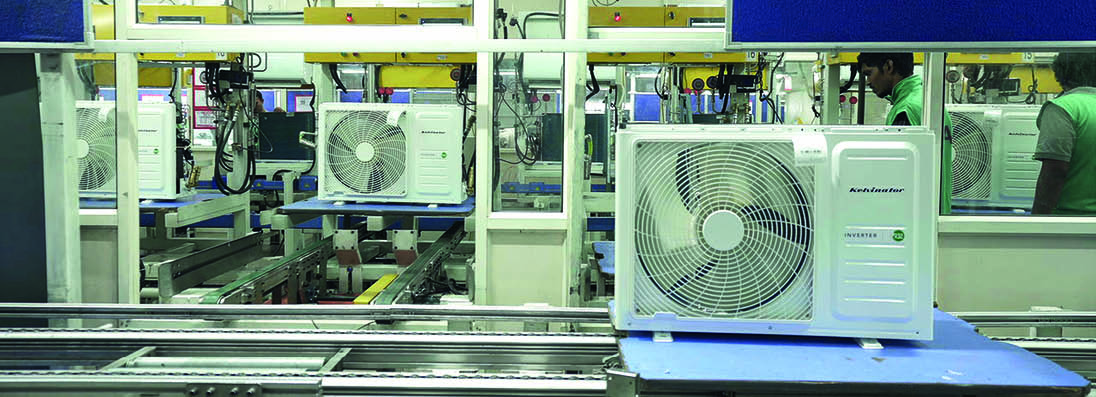
PG Electroplast Limited’s stock has faced significant headwinds, marked by a sharp 21 per cent single-day correction following a disappointing Q1 FY26 earnings report and a recent promoter stake sale. However, the outlook is shifting with a crucial GST tax cut on consumer durables, which is expected to spur demand and act as a powerful counter-narrative to the nearterm challenges [EasyDNNnews:PaidContentStart]
PG Electroplast Limited’s stock plunged 21 per cent in a single day, weighed down by disappointing quarterly earnings and a recent promoter stake sale. The sharp correction came despite the company posting a 13.9 per cent year-on-year rise in consolidated revenue to ₹1,504 crore in Q1 FY26, led by a 16.7 per cent jump in its core product business. Washing machines and room ACs were the bright spots, with sales rising 36 per cent and 15 per cent respectively. However, profitability took a hit, with profit after tax falling 20 per cent to ₹66.98 crore, as subdued demand in summer-linked segments like air coolers— hurt by an early monsoon—dragged margins. The weakerthan-expected performance has further deepened negative market sentiment around the stock. The company’s management cut its FY26 guidance sharply: product revenue growth is now 17–21 per cent versus 35 per cent earlier from FY25 revenue, electronics revenue growth is 29 per cent versus 43.4 per cent, total revenue growth is 17–19 per cent versus 30 per cent, and group revenue growth is 21–23 per cent versus 33 per cent.
However, a major industry-wide development has changed the outlook for the consumer durables sector. The GST Council recently announced a crucial tax rate cut, reducing GST on major home appliances like air conditioners, televisions, refrigerators, and washing machines from 28 per cent to 18 per cent, effective September 22. This reform is expected to make these products more affordable for consumers, with potential price reductions of ₹1,500–2,500 per unit. For a company like PG Electroplast, which manufactures components and finished goods for leading appliance brands, this tax cut is seen as a significant demand accelerator. The resulting upswing in consumer demand is likely to support the company’s revenue growth and long-term expansion, providing a strong counternarrative to its near-term profit challenges. Against this backdrop, PG Electroplast's strategic capacity expansions and diversification, alongside the positive impact of the GST tax cut and recent demand fluctuations, make it a compelling subject for further analysis.
About the Company
PG Electroplast Limited is the flagship company of the PG Group, which was founded in 1977 as a small electronic component manufacturing unit. Formally incorporated in 2003, PGEL has evolved into a leading, diversified Indian Electronic Manufacturing Services (EMS) provider. The company operates on a multifaceted business model, specialising in Original Design Manufacturing (ODM), Original Equipment Manufacturing (OEM), and Plastic Injection Moulding. It serves as a trusted one-stop solution provider for more than 50 leading Indian and global brands in the consumer durables and electronics space. The business strategy involves providing end-to-end solutions, from product conceptualisation and design to tool manufacturing, supply chain development, and final assembly. The company’s core business segments are strategically aligned with the growing Indian electronics market, which is experiencing a secular shift towards domestic manufacturing and import substitution. PG Electroplast Limited serves a prestigious and diverse client base comprising over 60 leading domestic and global brands in the consumer durables and electronics sectors. The company’s clientele includes renowned names such as Godrej, Blue Star, Bajaj Electricals, Croma, Acer, Voltas, Whirlpool, Daikin, LG Electronics, Havells, Hyundai, Onida, Orient Electric, and Flipkart, among others.
Business Segments
PGEL's operational framework is structured around five main business divisions: Products Business, Electronics, Plastic Moulding Solutions, Tool Manufacturing, and Other Manufacturing Capabilities.
■ Products Business (ODM/OEM): This division represents the company’s primary growth engine and focuses on high-volume, high-value consumer products. It includes Room Air Conditioners (RACs), Washing Machines (both semi-automatic and fully automatic), Air Coolers, and LED Televisions. The company’s focus on this segment has been a deliberate strategy to capture market share in categories experiencing robust demand. The Products business contributed a significant 72 per cent of the company's total sales in FY25.
■ Electronics: This segment primarily focuses on the manufacturing of Printed Circuit Board (PCB) assemblies, television and other electronic components.
■ Plastic Moulding Solutions: PGEL leverages its core competency in plastic injection moulding to supply components for consumer durables, sanitaryware, and automotive parts. The Products business contributed a significant 20 per cent of the company's total sales in FY25.
■ Tool Manufacturing: This division supports the company’s product development process by designing and manufacturing the necessary tools and moulds for its various products. This segment contributes a very small amount of total revenue of the company.
Business Updates – Last Five Years
PG Electroplast Limited has seen significant growth and strategic expansion over the past five years. In 2019, the company crossed ₹508 crore in revenue and entered the air conditioner business by commissioning an assembly line for AC Indoor Units and heat exchanger coils. In 2020, it launched assembly lines for AC Outdoor Units and developed ODM platforms for washing machines and air coolers, diversifying its product range. The following year, PGEL surpassed ₹1,000 crore in revenue and launched additional washing machine and air conditioner platforms, along with securing governmental approval under the PLI scheme for AC components.
From 2022 to 2023, the company’s total income grew at a remarkable 75 per cent CAGR, with consolidated revenues crossing ₹2,000 crore and a subsidiary, PG Technoplast, attaining ₹1,000 crore independently. The company also doubled manufacturing capacities for its key products during this period. In 2025, PGEL's subsidiary signed an MoU with the Maharashtra government to invest ₹1,000 crore in a new greenfield facility, enhancing integrated manufacturing capacities for air conditioners, washing machines, and refrigerators, reinforcing its long-term growth trajectory.
Sector Overview
The Indian consumer durable sector is witnessing robust growth, expanding at a 10 per cent CAGR from FY2019 to FY2024 and projected to maintain an 11 per cent CAGR to reach ₹3 lakh crore by FY2029. This growth is driven by rising disposable incomes, urbanisation, digital penetration into Tier 2 and Tier 3 cities, and increasing consumer preference for smart, connected appliances integrating AI and IoT technologies. Government initiatives like the Production Linked Incentive (PLI) scheme, Make in India, and Digital India missions underpin this momentum by promoting domestic manufacturing, encouraging component ecosystem development, and allowing 100 per cent FDI under the automatic route. The expanding contract manufacturing model further attracts foreign investment, aiding scale and cost efficiency. However, challenges like evolving regulations, supply chain disruptions, demand fluctuation, and procurement of some key parts from China remain.
Overall, the outlook is positive, which is supported by strong urban and rural demand, technological adoption, retail and e-commerce expansion, and enhanced infrastructure, positioning India as a rapidly growing, globally competitive consumer durable market with significant export potential.
Key Competitors
PGEL operates in the highly competitive EMS and consumer durables manufacturing space. Its top Indian competitors are well-established and significantly larger, including Dixon Technologies and Amber Enterprises.
Dixon Technologies, the industry leader, commands a market capitalisation nearly seven times that of PGEL and trades at a significantly higher price-to-earnings (P/E) multiple of over 126x. Amber Enterprises, while smaller than Dixon, is also larger than PGEL and trades at a higher P/E multiple of approximately 96x.
Strategically, both Dixon and Amber have strong footholds in their respective niches, with Dixon's robust presence in TVs and appliances and Amber's deep focus on the AC market. PGEL’s business model, in contrast, is characterised by a broad diversification across multiple product categories, which management has cited as a key strength that helps mitigate risk.
Financial Performance
PG Electroplast reported mixed results in Q1 FY26. Consolidated revenues grew 14 per cent to ₹1,504 crore, driven by a 15 per cent increase in RAC revenues and a strong 36 per cent jump in washing machine sales. However, profit was impacted by weaker AC volumes and higher costs, causing net profit to drop 21 per cent to ₹66.7 crore. EBITDA margins also declined to 9.3 per cent.
The company faced challenges from an early monsoon, which led to a sharp drop in AC sales and high inventory levels. Despite this, management remains optimistic, expecting the washing machine and TV segments to drive growth. The company revised its FY26 standalone revenue guidance to ₹5,700–5,800 crore and net profit to ₹300–310 crore. Group revenue, including its joint venture, is projected to grow 21–23 per cent to ₹6,550–6,650 crore. Capex plans were also revised down from ₹800–900 crore to ₹750–700 crore, focusing on key product expansions. The company expects margins to remain under pressure in the short term but is confident in its longterm growth targets.
Valuation and Outlook
As of June 2025, PG Electroplast Limited is valued at approximately ₹16,229 crore. The company is currently trading at a PE of 59.9x, which is high when compared with its industry PE of 30.5x. Moreover, its 3-year median PE is 49.1x. The PEG ratio of the company is 0.60, which is attractive and lower than the industry average. However, with the revised guidance of the management for FY26, the PEG ratio is expected to increase in a range of 2.9–3.2, which makes the stock expensive.
PGEL presents a complex investment case. The company has a compelling long-term growth narrative driven by India's structural manufacturing tailwinds and its aggressive expansion into high-growth consumer segments. However, this potential is counterbalanced by significant operational and governance risks. With weakening demand, a softer-than-expected quarter primarily due to an early monsoon abruptly ending the RAC season, the company’s shares have seen sharp declines, exacerbated by promoter stake sales in June, which unsettled investor confidence. While management is confident about the long-term potential, citing strong growth in washing machines (+36 per cent YoY) and televisions, as well as ongoing capacity expansions including a refrigerator campus, near-term headwinds remain significant.
The upcoming festive season and recently implemented GST tax cuts on key durable goods are expected to make products more affordable and likely boost sales volumes across categories. These factors should benefit PG Electroplast’s segments once channel inventories normalise and demand recovers. However, there is still current financial strain as the company has also increased short-term debt by ₹200 crore, elevated inventories of ₹1,300 crore, and cautious revised guidance reflect operational challenges and industry volatility. The management highlighted that the current inventory would be cleared only by December or January.
Given these circumstances, it is prudent to STAY AWAY from PG Electroplast stock until the company stabilises and demonstrates a clear recovery trajectory. Investors are advised to await sustained recovery in demand, margin improvement, and management’s delivery against growth and efficiency targets before reconsidering this stock.
[EasyDNNnews:PaidContentEnd] [EasyDNNnews:UnPaidContentStart]
To read the entire article, you must be a DSIJ magazine subscriber.
[EasyDNNnews:UnPaidContentEnd]