In conversation with Roop Bhootra, CEO, Anand Rathi Share and Stock Brokers
 आमच्यासोबत जोडा
 आम्हाला फॉलो करा

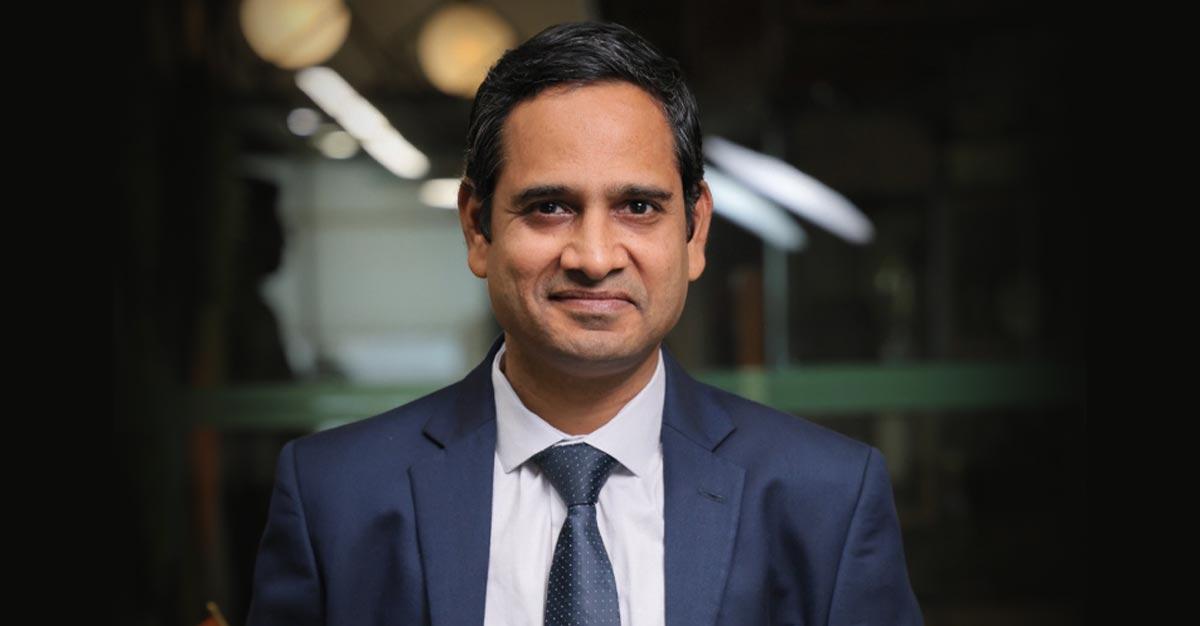
Hear from an industry expert on the brokerage industry's intensifying competition and pricing pressures, technology-led growth, the rising importance of Tier II and Tier III cities in India's capital-market ecosystem, and the key strategic priorities shaping the industry's future.
✨ महत्त्वाचे मुद्दे
The broking industry has witnessed intense competition on pricing. How do you see the business model evolving beyond transaction-based revenues?
Zero-brokerage price wars have fundamentally altered unit economics. Pricing competition has compressed pure brokerage margins sharply. Discount brokers normalised low and flat fees, exchange rebates have been curtailed, and SEBI’s tighter F&O rules reduced speculative volumes. Transaction income is no longer the dominant or most reliable engine. To survive and scale, pure-play transaction models must transition into comprehensive wealth-management, distribution, and credit platforms.
With the Indian securities brokerage market projected to grow from USD 6.98 billion in 2026 to USD 13.09 billion by 2031, the revenue pool is shifting towards a multi-product architecture focusing on:
a. Interest income from Margin Trading Facility (MTF): Industry MTF books have expanded dramatically, roughly sixfold since FY23, to levels around Rs 1.4–1.5 lakh crore recently. Interest income is now a meaningful and growing share of revenue for many firms, rising from approximately 8 per cent to 10–12 per cent or more of total revenues in recent periods. For leading players, it can approach or match broking income in certain periods.
b. Distribution and wealth management: Mutual funds, insurance, PMS, AIFs, and advisory fees provide stickier, AUM-linked income. Diversified players, those with less than 50 per cent of revenue from pure broking and trading, have shown greater resilience to volume shocks and regulatory changes.
c. Other fee income: Account maintenance, value-added services, and monetising intelligence and research through robo-advisory platforms, which are currently expanding at a rapid 15.2 per cent CAGR, provide premium insights for a flat recurring fee.
CRISIL and CareEdge analyses confirm that firms with multiple revenue sources, including interest, distribution, and wealth, navigate market and policy shifts far better than pure transaction brokers. Industry revenues, once heavily volume-driven, are moving towards a more stable mix where cash-market activity, MTF, and distribution offset F&O moderation. Long-term winners will be those who treat the brokerage relationship as the entry point to a full financial-services wallet rather than a pure trading platform.
Margin Trading Facility (MTF) allows investors to take larger positions by borrowing funds from brokers. What are the key risks investors should understand before using MTF during a market correction?
MTF lets clients borrow from the broker to take larger equity positions using cash or securities as collateral. The domestic MTF book has reached Rs 1.56 lakh crore as of October 2026, marking a 33.7 per cent YoY increase. While leverage amplifies buying power, investors must navigate three critical risks in a correction:
a. Magnified capital erosion: Because MTF uses borrowed capital to fund up to 60 per cent or more of a position, falling collateral values trigger additional margin requirements. Failure to meet them leads to automatic selling by the broker. A sharp market correction accelerates equity destruction.
b. Concentration in less liquid stocks: A large leveraged position in illiquid stocks is risky, especially when a correction starts. These stocks can hit successive lower circuits, making exits difficult or impossible and amplifying losses for the client.
c. The interest cost trap: MTF carries an annualised interest rate, charged daily on the funded amount. During a prolonged market correction or sideways consolidation, these compounding borrowing costs erode capital even if the stock price remains flat.
How do you balance technology-led scalability with the need for personalised service, particularly as clients increasingly expect seamless digital experiences?
Clients increasingly expect frictionless digital experiences, instant onboarding, real-time research, seamless order execution, and mobile-first interfaces, while still wanting human guidance for complex decisions, portfolio construction, and behavioural coaching. We address this with a hybrid model.
a. Technology for scale and consistency: Robust apps, API-driven platforms, AI-assisted research and alerts, local-language content, and straight-through processing handle the bulk of routine interactions and onboarding for the mass-retail base. This keeps costs low and service quality uniform.
b. Human overlay for high-value and complex needs: Relationship managers, branch and hybrid centres, and specialised advisory teams support HNIs and wealth clients seeking holistic financial planning, asset allocation, client return generation, and alpha, with a personal touch through research-backed ideas that aid in building trust and long-term relationships.
c. Segmented delivery: Self-service digital platforms serve active traders and simple SIP and mutual fund users, while assisted digital platforms with relationship manager support serve emerging affluent and Tier-II and Tier-III clients who value guidance.
The competitive edge is no longer pure price or pure technology. It is the combination of a superior digital core with trusted human advice where it adds genuine value.
How important are Tier-II and Tier-III cities for the next phase of growth in India's capital-market ecosystem, and what efforts is the company making to expand its presence in these markets?
The saturation of Tier-I metros means the next wave of capital-market expansion is rooted entirely in India. These markets are central to the next phase of growth. They already account for well over 50 per cent of new Demat accounts in recent years, a rising share of cash-market turnover, with BSE data showing non-top-city contribution rising from approximately 18 per cent to 32 per cent over a decade, and a growing portion of mutual-fund SIP registrations and AUM. B30 cities now contribute meaningfully higher shares of new SIPs, while individual AUM growth has outpaced T30 in several periods. Younger investors, women, and first-time participants are disproportionately coming from these centres.
Digital platforms have made geography far less relevant for onboarding, yet local trust, local-language communication, and physical presence still accelerate conversion and retention. We are executing a localised expansion strategy:
a. Deepening digital reach with local-language interfaces, local-language content, and simplified products.
b. Selective physical and hybrid presence, along with partnerships with local asset-light franchise networks in high-potential cities.
c. Investor-education programmes tailored to first-time and emerging investors.
d. Product design suited to smaller ticket sizes and SIP-led behaviour common in these markets.
e. Monitoring actual trading activity, rather than just KYC addresses, to focus resources where engagement is genuine.
How is the profile of the Indian retail investor changing, and how is this influencing the way broking firms design and deliver their services?
The retail investor base has transformed dramatically. Today’s retail investor is markedly younger, digitally native, and more aggressive in using leverage. Retail margin debt now sits at over 3 per cent of the total mutual-fund equity book, reflecting a high appetite for risk and short-term capital appreciation.
Demat accounts have grown from approximately 40 million in 2020 to well over 240 million recently. A majority of new accounts originate outside top metros. Younger investors, more women, and a rising middle class with increasing allocations to financial assets, along with a shift from pure speculation towards systematic investing through record SIP flows, greater mutual-fund and long-term equity participation, and demand for simple, transparent products, are features that define the current demographic.
This shifting profile drives our service and product engineering towards:
a. Mobile-first, intuitive platforms with strong educational content and goal-based tools.
b. Hybrid models that combine self-service scale with advisory for those who need it.
c. Broader product suites, including equity, mutual funds, insurance, and lending, so the relationship deepens beyond trading.
d. Risk management and behavioural nudges, especially around leverage and speculative products.
e. Localisation of language and content, along with selective physical touchpoints for Tier-II and Tier-III clients.
The firms that win will treat the retail investor not as a pure transaction customer but as a long-term wealth-creation partner whose needs evolve from the first SIP or trade into a full financial relationship. The winners will execute the transition fastest and most responsibly.
What are your strategic priorities for Anand Rathi Share and Stock Brokers over the next three to five years?
Our key strategic priorities over the next three to five years are centred on three clear pillars.
First, we are focused on diversifying our income streams, with the objective of achieving a balanced 50-50 contribution from broking and non-broking businesses, which will add sustainably and predictably to our growth.
Second, we aim to significantly grow trail revenues from our non-broking activities, with the target that these recurring revenues should fully cover the company’s operating costs.
Third, we will continue to strengthen client engagement, driving higher Assets Under Management (AUM) and improving revenue per client.
These priorities are designed to build a more resilient, scalable, and client-centric franchise over the medium term.