Agriculture Sector
Sayali Shirke / 08 Jan 2026 / Categories: DSIJ_Magazine_Web, DSIJMagazine_App, Special Report, Special Report, Stories
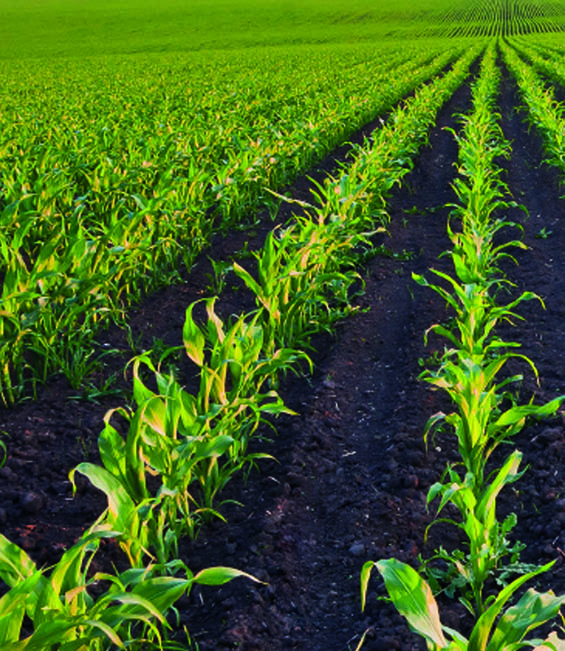
For investors, understanding the evolving contours of India’s agriculture sector is essential to identifying trends that drive growth in the coming years.
As the Union Budget approaches, the spotlight is firmly on agriculture sector announcements and allocations. Strong quarterly performance, improving rural demand, and easing inflation have already renewed investor interest in the space. Does this combination mark the right moment for long-term wealth creation opportunities? Let us explore this in detail [EasyDNNnews:PaidContentStart]
Agriculture has been the backbone of the Indian economy since independence. Despite rapid industrialization and the rise of services, farming remains deeply embedded in India’s socio-economic fabric. It supports livelihoods, feeds a growing population, contributes to exports, and increasingly attracts private and institutional capital. Over the past decade, the sector has witnessed structural shifts, policy reforms, and technological adoption that have begun transforming it from subsistence farming toward agri-business and value chain integration.
For investors, understanding the evolving contours of India’s agriculture sector is essential to identifying trends that drive growth in the coming years. Equally important is to gauge expectations from the upcoming Union Budget, especially at a time when farmers remain firmly at the centre of policy focus. A closer look at these expectations offers deeper insight into the sector’s priorities and challenges. Let us understand this in detail.
About the Sector
India’s agriculture sector contributes close to 18 per cent of the country’s Gross Domestic Product (GDP). This share has steadily declined over the decades as services and manufacturing expanded, yet agriculture remains critical because of its socio-economic impact. In absolute terms, at current prices, the sector’s annual output is estimated at around ₹29 lakh crore. The sector supports a significant portion of the country’s workforce, both directly and indirectly. A large segment of rural households depends on farming as their principal source of income. The importance of agriculture to rural demand cannot be overstated.
fertilizers, and technology adoption are becoming visible. Over the past decade, India’s agriculture sector has delivered a compound annual growth rate (CAGR) of approximately 4-5 per cent. However, certain sub-segments such as horticulture, fisheries, and high-value crops have been growing at 7 to 9 per cent annually. In the last few years, allied sectors like dairy and poultry have grown rapidly, driven by rising incomes, changing dietary preferences, and increasing consumption of proteinrich foods.

India is the world’s largest producer of milk, with output crossing 240 million tonnes, and it ranks among the top producers of fruits, vegetables, pulses, and spices. Another area of growth has been agricultural exports. India’s farm exports have steadily increased, reaching over USD 50 billion in recent fiscal years. Key export items include rice, spices, cotton, fresh fruits, and processed food products. Emerging markets in the Middle East, Africa, Southeast Asia, and Europe are absorbing these exports, supported by improved quality standards and Logistics. Let us examine the financial performance of agriculture companies to gauge the sector’s future growth trajectory.
Earnings Bloom: Sector Shows BroadBased Growth
To evaluate the sector’s financial performance in detail, we analysed the top 15 listed companies by market capitalisation across key agri-linked segments such as tea and coffee, sugar, packaged foods, fertilizers, pesticides, and agrochemicals. Collectively, these companies account for a combined market valuation of approximately ₹5 lakh crore. At an aggregate level, the sector reported a healthy 17 per cent year-on-year revenue growth in Q2FY26. The performance was largely broad based, with most companies delivering positive growth.
More than 60 per cent of the companies under review posted strong double-digit revenue growth, reflecting improving demand conditions across several sub-segments. CCL Products (India) and Chambal Fertilisers and Chemicals emerged as the standout performers in revenue growth terms, recording year-on-year increases of 53 per cent and 48 per cent respectively. Segment-wise, a clear divergence was visible. Pesticide companies reported relatively modest to weak growth during the quarter, impacted by subdued demand and pricing pressures.
In contrast, fertilizer manufacturers and food products companies delivered robust performance, supported by strong volumes and favourable pricing dynamics. On the profitability front, the sector posted a sharp 51 per cent year-on-year growth in net profit at the aggregate level. However, this surge was largely driven by exceptional turnarounds at UPL and Triveni Engineering & Industries, both of which rebounded strongly from losses to report robust profit numbers in Q2FY26.
Even after excluding these two outliers, the sector’s earnings performance remained resilient, with an 11 per cent year-onyear growth in net profit, indicating steady operational growth across the broader segment. Companies delivered a strong performance in the September quarter, supported by a combination of favourable demand, pricing, and operating conditions. A well-distributed monsoon improved crop prospects, boosting farmer sentiment and driving higher consumption of fertilizers, seeds, and agri-inputs.

Falling inflation eased cost pressures across the value chain, improved input affordability for farmers, and supported discretionary rural spending. Stable raw material costs and better capacity utilisation helped companies protect margins, while food and agri-processing players benefited from steady urban and rural demand. Together, these factors resulted in broad-based revenue and profit growth across several subsegments during the quarter.
Government Initiatives
The Indian government plays a central role in shaping the agriculture sector through policy interventions, fiscal support, infrastructure development, and income protection mechanisms. Over the years, policy focus has gradually shifted from food security alone to farmer income enhancement, value chain strengthening, and sustainability. This evolving approach has made government initiatives a key growth pillar for the sector. One of the most significant policy tools remains the Minimum Support Price (MSP) mechanism. MSP provides price assurance to farmers for key crops such as rice, wheat, pulses, and oilseeds.
By ensuring remunerative prices, the MSP framework protects farmers from market volatility and production risks. Largescale government procurement, especially for food grains, continues to support rural incomes and maintain buffer stocks for national food security. Direct income support has emerged as another critical intervention. The Pradhan Mantri Kisan Samman Nidhi (PM-KISAN) scheme provides eligible farmers with annual financial assistance of ₹6,000, paid in three installments. This scheme has improved liquidity at the farm level, enabling farmers to meet input costs such as seeds, fertilizers, and labour.
It has also helped stabilize rural consumption, which has positive spillover effects on the broader economy. Infrastructure creation has received increased policy attention. The Agricultural Infrastructure Fund was launched to provide medium and long-term financing for post-harvest assets including warehouses, cold storage facilities, grading units, and primary processing centres. By improving storage and logistics, the fund aims to reduce post-harvest losses, improve price realization for farmers, and strengthen rural supply chains. This initiative is particularly beneficial for horticulture, dairy, and fisheries. Market reforms have been another area of focus.
The National Agriculture Market, known as eNAM, integrates physical marketplaces with a digital trading platform. It enhances price discovery, promotes competition among buyers, and improves transparency. eNAM enables farmers to access a wider market beyond their local marketplaces, thereby reducing dependency on intermediaries. To address soil degradation and input inefficiencies, the Soil Health Card scheme provides farmers with scientific assesSMEnts of soil nutrients and crop-wise fertilizer recommendations. This promotes balanced fertilizer usage, improves soil productivity, and reduces input costs. Complementing this, the government has expanded support for micro-irrigation through schemes that encourage drip and sprinkler systems, improving wateruse efficiency.
Risk mitigation remains a policy priority. The Pradhan Mantri Fasal Bima Yojana offers crop insurance coverage against natural calamities, pests, and diseases. By reducing income uncertainty, the scheme encourages farmers to invest in higher-value crops and modern farming practices. In recent years, policy emphasis has also expanded toward agritechnology and innovation. Support for farmer producer organizations, agri-startups, and digital advisory platforms aims to improve scale, bargaining power, and access to technology. Together, these initiatives reflect a broader shift toward building a resilient, income-oriented, and marketlinked agricultural ecosystem.
What’s Driving Agriculture Growth
India’s agriculture sector is entering a phase where growth is increasingly driven by structural shifts rather than cyclical factors alone. Rising domestic demand, technology adoption, export opportunities, and improved rural infrastructure are collectively reshaping the sector and enhancing its long-term investment appeal. One of the strongest growth triggers is changing consumption patterns. Rapid urbanization, rising incomes, and greater health awareness are driving demand for fruits, vegetables, dairy products, protein-rich foods, and processed items.
Consumers are increasingly preferring branded, hygienic, and packaged food products, which is encouraging farmers to diversify away from low-margin staple crops toward highervalue horticulture, dairy, poultry, and fisheries. This shift is improving farm incomes and creating opportunities across the value chain. Technology adoption is emerging as a key structural driver. Digital platforms now provide farmers with real-time information on weather, crop prices, pest management, and input usage. Precision farming tools such as soil sensors, satellite imagery, drones, and automated irrigation systems are improving yield quality and reducing resource wastage.
Agri-tech startups are also playing a crucial role by connecting farmers directly with buyers, input suppliers, and financial institutions, thereby improving efficiency and transparency. Another important growth catalyst is the steady improvement in agricultural infrastructure. Export demand has become an increasingly important driver. India has strengthened its position as a global supplier of rice, spices, cotton, sugar, and marine products. Rising demand from markets in the Middle East, Africa, and Southeast Asia is supporting volume growth.
Government support for quality certification, traceability, and compliance with international standards is further improving export competitiveness. Wider access to institutional credit, crop insurance, and digital payment systems is enabling farmers to invest in better seeds, mechanization, and technology. The expansion of farmer producer organizations is helping small farmers achieve scale, improve bargaining power, and access markets more efficiently. Increased adoption of micro-irrigation, organic farming, and climate-resilient seeds is improving productivity while reducing environmental stress. Together, these growth triggers are transforming Indian agriculture from a subsistence-driven activity into a more market-linked, technology-enabled, and investment-worthy sector.
Clouds Over the Fields
Despite structural improvements and strong policy support, India’s agriculture sector continues to face several inherent risks that can affect growth visibility, farm incomes, and investor confidence. Many of these challenges are long-standing in nature and require sustained policy intervention and private participation to address effectively. One of the most critical risks remains the sector’s heavy dependence on monsoon rainfall. A large portion of India’s cultivated area is still rainfed, making crop output vulnerable to uneven rainfall, droughts, and floods.
Climate change has increased the frequency of extreme weather events, leading to unpredictable sowing patterns, yield losses, and income volatility for farmers. While irrigation coverage has improved, the pace remains uneven across regions. Fragmented landholdings continue to constrain productivity and scalability. The average farm size in India is small, which limits mechanization, technology adoption, and access to formal credit. Small farmers often lack the financial capacity to invest in modern inputs, high-quality seeds, and advanced equipment, resulting in lower yields and higher per-unit costs.
This structural issue also restricts the development of efficient contract farming and large-scale agri enterprises. Price volatility poses another significant challenge. While minimum support prices provide a safety net for select crops, many commodities remain exposed to market fluctuations. Sudden changes in supply, global prices, or trade policies can lead to sharp price swings, affecting farmer profitability. Supply chain inefficiencies remain a persistent risk, particularly for perishable produce. Inadequate cold storage, insufficient warehousing, and weak logistics infrastructure lead to high post-harvest losses.
These losses erode farm incomes and reduce the availability of quality produce for processing and export markets. India has navigated this risk commendably, though there remains ample scope for further improvement. Environmental stress is emerging as a long-term concern. Excessive use of chemical fertilizers and groundwater extraction has led to soil degradation, declining fertility, and water scarcity in several regions. These factors threaten sustainable productivity and increase input costs over time. Addressing these risks through technology adoption, infrastructure investment, climateresilient practices, and stable policies will be critical for sustaining long-term growth in India’s agriculture sector.
All Eyes on the Budget
The Union Budget remains a key policy event for India’s agriculture sector, as it sets the direction for rural income growth, infrastructure creation, and long-term productivity enhancement. With agriculture supporting a large share of the population and rural demand playing a crucial role in economic stability, expectations from the upcoming budget remain high across stakeholders. One of the primary expectations is a continued focus on capital expenditure rather than only revenue support.
Increased allocations for agricultural infrastructure, particularly cold storage, warehousing, and logistics, are seen as critical to reducing post-harvest losses and improving price realization for farmers. Expansion of the Agricultural Infrastructure Fund and faster project execution could significantly strengthen supply chains, especially for horticulture and allied sectors. Irrigation is another area likely to attract policy attention. Greater budgetary support for micro-irrigation, watershed development, and rainwater harvesting can reduce dependence on monsoon rainfall and improve crop productivity.
The Union Budget has become a litmus test for India’s agricultural priorities. Beyond subsidies, markets are watching for meaningful capital spending on irrigation, infrastructure and market access. Policy clarity on credit, risk cover and exports could determine whether rural growth remains cyclical or turns structurally resilient.
Accelerated implementation of pending irrigation projects and incentives for water-efficient technologies such as drip and sprinkler systems are widely expected. Market-linked reforms are also in focus. Stakeholders anticipate measures to deepen the National Agriculture Market by expanding its coverage, improving digital integration, and encouraging participation from private buyers. Simplifying interstate trade regulations and improving price discovery mechanisms would enhance farmer access to wider markets and attract private investment in agri-trading platforms.
Credit availability remains a key expectation. Enhancing the agricultural credit target, offering interest subvention on farm loans, and improving access to institutional finance for small and marginal farmers could support higher on-farm investment. Higher allocations for crop insurance schemes and faster claim settlement mechanisms could improve farmer confidence. Strengthening disaster relief funds to address climate-related risks such as floods, droughts, and heat stress is also anticipated.
Support for skill development programs focused on modern farming practices and supply chain management is also likely. Lastly, export-oriented measures are expected to gain prominence. Incentives for quality certification, testing infrastructure, and export logistics can enhance India’s competitiveness in global agricultural markets. A stable and predictable policy framework will be essential to encourage long-term investment and support sustainable growth in the agriculture sector.
Agriculture’s Road Ahead
India’s agriculture sector is poised for a gradual but meaningful transformation over the coming years, driven by policy continuity, technology adoption, and a growing focus on value creation rather than volume alone. While traditional farming will continue to anchor food security, the future growth trajectory will increasingly be shaped by diversification, efficiency, and market integration. One of the most significant shifts will be the move toward high-value agriculture. Farmers are expected to allocate more acreage to horticulture, dairy, poultry, fisheries, and specialty crops as income realization improves.
Rising domestic demand for fruits, vegetables, protein-rich foods, and processed products will support this transition. This shift will also enhance income stability by reducing dependence on a single crop or season. Agro-processing is likely to emerge as a major growth engine. Greater investment in food processing, storage, packaging, and branding will help capture value within the domestic economy while reducing wastage. As supply chains strengthen, India could evolve from being primarily a raw commodity exporter to a supplier of branded and processed agricultural products. This transition holds significant potential for employment generation and private investment.
Technology will play a defining role in the sector’s future. Precision farming tools, digital advisory platforms, satellitebased monitoring, and data-driven decision making are expected to gain wider adoption. These technologies will improve yield quality, optimize input usage, and reduce environmental impact. Climate resilience will become a central theme. Increased focus on water-efficient irrigation systems, climate-resilient seeds, soil health management, and sustainable farming practices will be critical to maintaining productivity.
From an investment perspective, opportunities will increasingly extend beyond primary farming into agri-inputs, mechanization, logistics, processing, exports, and digital platforms. While risks related to climate remain, a stable reform trajectory and rising domestic demand position India’s agriculture sector as a steady, long-term growth opportunity.
The coming years are likely to define agriculture as a more resilient, commercially viable, and investment-worthy segment of the Indian economy. Investors looking to capitalise on the agriculture sector should focus on companies with strong earnings visibility, healthy balance sheets, and consistent revenue growth.
Monitoring broad-based performance trends, understanding segmental strengths, and keeping an eye on policy and monsoon developments can help identify sustainable opportunities. Prioritising firms that combine operational efficiency with exposure to high-demand segments offers the best potential for long-term wealth creation.
Keep following Dalal Street Investment Journal for similar updates and in-depth analysis across sectors to stay ahead in identifying investment opportunities.
[EasyDNNnews:PaidContentEnd] [EasyDNNnews:UnPaidContentStart]
To read the entire article, you must be a DSIJ magazine subscriber.
[EasyDNNnews:UnPaidContentEnd]