Are Automotive Ancillary Stocks In A Bright Spot?
Ninad Ramdasi / 20 Apr 2023 / Categories: DSIJ_Magazine_Web, DSIJMagazine_App, Special Report, Special Report, Stories
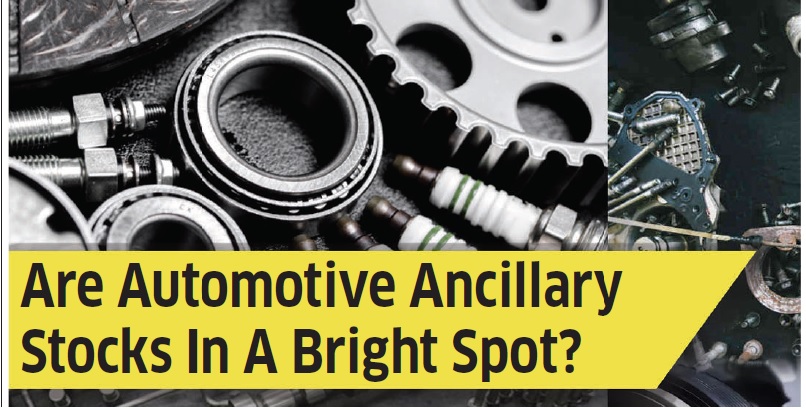
Automotive ancillary companies are an essential part of the automotive industry, playing a critical role in the manufacturing and maintenance of automobiles. As the demand for automobiles continues to rise, the demand for automotive ancillary products and services will continue to increase as well. Bhavya Rathod highlights the various factors that will spur further growth in this sector
The automotive ancillary industry plays a critical role in the growth and development of the automobile sector. It encompasses a wide range of companies that manufacture and supply various components, parts and systems required for the production and maintenance of automobiles. Automotive ancillary companies are important because they support the automobile industry by providing a diverse range of products such as engine parts, transmission parts, electrical parts, brakes, suspensions, and more.[EasyDNNnews:PaidContentStart]
The industry is highly competitive and constantly evolving with players continuously innovating to meet changing customer needs and comply with regulatory requirements. In addition, the growth of the automobile sector has been a key driver of the automotive ancillary industry. The increasing demand for passenger and commercial vehicles, coupled with the rising focus on sustainability and energy efficiency, has led to a surge in demand for high-quality and reliable automotive ancillary products.
Sector Performance
According to the Society of Indian Automobile Manufacturers (SIAM), the passenger vehicle sales of automotive companies within the country reached 3,792,356 in 2022, surpassing the previous record set in 2021. Maruti Suzuki India, which is the largest passenger vehicle manufacturer in India and a key industry indicator, exported 263,068 units, representing a 28 per cent increase over its previous record in 2021. Data provided by the Automotive Components Manufacturers Association (ACMA) indicates that the automotive component industry in India grew 34.8 per cent to ₹2.65 lakh crore during the first half of FY23, benefitting from the industry’s growth trend.
Additionally, automotive component exports during this period increased 8.6 per cent to ₹79,033 crore. In FY22, the automotive component industry was one of the few sectors in India with a trade surplus. ACMA’s President Sunjay Kapur reported that it contributes 2.3 per cent to India’s GDP. According to the Economic Survey 2023, the automotive industry as a whole contributes 7.1 per cent to the GDP and 49 per cent to the manufacturing GDP. The automotive industry has greatly benefited from the government’s focus on selfreliance and initiatives like the Production Linked Incentives (PLI) scheme with an outlay of ₹25,938 crore that have encouraged local manufacturing.
Under the scheme, financial incentives of up to 18 per cent of production are offered to promote the domestic production of automotive parts. In March 2022, the government announced that the PLI scheme for the automobile and automotive component industry has attracted investment proposals of ₹74,850 crore, exceeding the target of ₹42,500 crore over five years, with ₹29,834 crore coming from approved applicants under the Component Champion Incentive Scheme. The policies aimed at the automotive component industry are geared towards promoting the adoption of latest technologies. Such initiatives will encourage localisation, leading to a larger portion of OEMs’ spending being directed towards automotive component manufacturers.
The industry has been greatly benefiting from several regulatory changes, including the mandatory requirement of six airbags in cars starting from October. According to various industry experts, with each regulatory modification the value per component rises, leading to an advantage for component manufacturers. This trend of providing premium features such as the integration of telematics or connected car features has also resulted in an increase in realisations.
Kapur further adds that component manufacturers have been experiencing significant progress and that it will continue to do so in the future with an overall optimistic outlook. The automotive industry was pleased to hear that the Union Budget included reductions in Income Tax rates, such as raising the personal Income Tax rebate limit to ₹7 lakhs and other measures. These tax cuts are anticipated to generate greater demand. The new Income Tax regime’s rebates, along with measures to enhance farm profitability, are expected to revive momentum for commuter two-wheelers.
Automotive component companies have received positive news from the Union Budget in the form of a focus on skilling and the creation of centres of excellence and research laboratories in high-tech areas. This will assist them in becoming future-ready. The budget also addresses the challenges faced by MSMEs due to the pandemic and the inability to fulfil contractual obligations. Furthermore, the continuation of reduced duties on copper scrap and inputs for steel will increase the availability of raw materials for the automotive sector.

The table presents the key financial metrics of 10 Indian companies in the automotive ancillary space. The companies are ranked by their market capitalisation. Bosch Ltd. is the largest company on the list with a market capitalisation of ₹55,373.42 crore. The table also provides information on return on assets (ROA), return on equity (ROE) and return on capital employed (ROCE), which indicate a company’s profitability and efficiency in utilising its resources. Among the companies listed, Sundaram Clayton Ltd. has the highest ROE and ROCE while Sona BLW Precision Forgings Ltd. has the highest ROA.
Additionally, the table shows other financial indicators such as adjusted price-to-earnings ratio (PE), enterprise value-toEBITDA ratio (EV-EBITDA) and adjusted earnings per share (EPS). Finally, the table provides information on YTD and one-year returns, which indicate how well the company’s stock has performed over a given period. Overall, the table provides a useful snapshot of the financial health and performance of the selected 10 companies in the Indian market.
Recent Trends
Automotive ancillary companies are increasing in size and capabilities to confront new and disruptive trends like the shift towards electric vehicles and the integration of premium features. In order to stay competitive, they are advancing up the value chain and actively seeking out affordable, high-quality companies to acquire. This trend has been apparent as many automotive ancillary companies have announced partnerships and acquisitions with other businesses, highlighting the significance of such moves in their growth strategies. For example, Minda Corporation has announced its acquisition of a 15.7 per cent stake in Pricol Ltd. for approximately ₹400 crore.
The company has clarified that this is solely a financial investment and they will not have any special rights beyond those of a regular shareholder in Pricol. Minda Corporation’s acquisition of Pricol’s shares is viewed as a move to broaden its presence in the instrument cluster segment in which Pricol is a major player, particularly in the two-wheeler market. While the instrument cluster product line contributed 10 per cent to Minda Corporation’s revenue last year, it had no revenue share a year or two ago. Hence, the company is now looking to increase its exposure in this category.
Lumax Automotive Technologies announced that it has entered into an agreement to acquire a controlling stake in IAC International Automotive India from the International Automotive Components Group. The equity valuation of the acquisition is ₹587 crore and the majority stake of 75 per cent will be purchased through an acquisition vehicle at a cost of ₹440 crore. According to the company, this strategic partnership will enable it to expand its current business in the automotive plastics segment for four-wheelers and offer customers a wider range of products.
Sona BLW Precision Forgings, also known as Sona Comstar, has announced its plan to purchase a 54 per cent stake in Novelic, a company based in Serbia, for ₹356 crore in order to enter the advanced driver assistance systems’ sensor market. This market segment is rapidly expanding and could reach a potential market size of USD 43 billion by 2030. Through this acquisition, Sona Comstar will gain access to cutting-edge in-cabin radar-sensing technology. This will expand the company’s technology portfolio and help it to keep pace with the emerging technological revolution of increased vehicle autonomy and automation in the automotive industry.
Outlook
The Indian automotive ancillary industry has been growing steadily over the years, driven by factors such as increasing vehicle production, rising exports and favorable government policies. However, the industry has also faced several challenges such as the corona virus pandemic, rising raw material costs, Russia’s invasion of Ukraine and supply chain disruptions. Despite these challenges, the industry has shown resilience and adaptability, and is expected to continue growing in the coming years. Industry leaders in the automotive component sector had hoped that the government would utilise the Union Budget to tackle the need for a GST rate on automotive components.
Despite near-term challenges in both supply and demand, these leaders are optimistic about the future due to a shift in fundamentals. The Indian economy is in good shape and there has been robust demand across sectors. While the country may not be completely immune to global recession, inflation remains a concern. However, India is in a better position than other nations.
In the event of global inflation, commodity prices may be affected, but India is expected to perform better than others. The adoption of 5G and other advanced technologies like advanced driver assistance system (ADAS) will drive the automotive industry towards a higher level of digitisation. These developments have created new opportunities for the industry, both in domestic and global markets.
The concept of China + 1 has gained significant attention and the expansion of product lines, particularly in the electric vehicle segment, by companies reflects the resilience of the industry and its potential for further innovation. Due to recent acquisitions and government policies, automotive ancillary companies in India may outperform most of the automotive companies. Despite the competition, these companies exhibit fearlessness and determination to secure a larger market share. Such conditions offer an excellent opportunity for the automotive ancillary sector to flourish and achieve growth.
[EasyDNNnews:PaidContentEnd] [EasyDNNnews:UnPaidContentStart]
To read the entire article, you must be a DSIJ magazine subscriber.
Current print subscribers click here to login
Subscribe now to get DSIJ All Access
[EasyDNNnews:UnPaidContentEnd]