Are Indian Banks Safe?
Ninad Ramdasi / 06 Apr 2023 / Categories: Cover Stories, Cover Story, DSIJ_Magazine_Web, DSIJMagazine_App, Stories
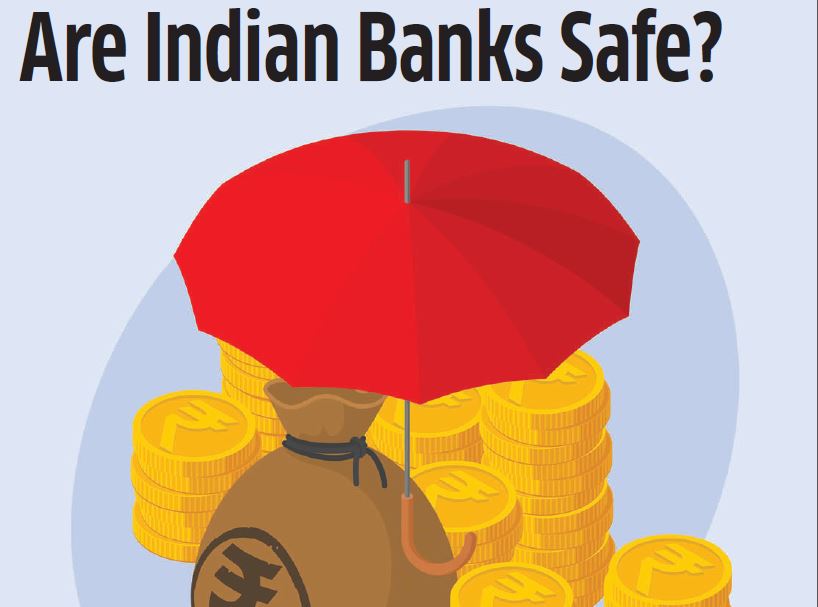
The fallout of Silicon Valley Bank and Credit Suisse has created enough doubts in investors' mind about the health of banks across the globe. Indian banks are considered safe but it would be interesting to find out if they are investible at the current prices. Yogesh Supekar, while analysing the current situation in the global banking industry, shares an outlook on the banking stocks for Indian investors
The fallout of Silicon Valley Bank and Credit Suisse has created enough doubts in investors’ mind about the health of banks across the globe. Indian banks are considered safe but it would be interesting to find out if they are investible at the current prices. Yogesh Supekar, while analysing the current situation in the global banking industry, shares an outlook on the banking stocks for Indian investors
The word ‘credit’ in Latin means ‘trust’. When the credit market is itself in a turmoil it means that the trust in the credit market is weakening and that is exactly what we have seen in 2023 so far, especially in the more developed economies. The stress in the banking system is clearly indicative of the economic risks. The banking crisis in the US has increased the odds of the economy running into a phase of recession. With the fallout of the Silicon Valley Bank (SVB) and the Signature Bank in the US, the bigger risk this creates is a feeling of distrust amongst the investors and depositors in the systems, which further leads to damaging the banking system in an irrecoverable manner. [EasyDNNnews:PaidContentStart]
In the given context it has become important to assess if the banks are a safe bet from a portfolio perspective. After all the FIIs have dumped IT and banking sector stocks in FY23 even though banks and financials remain the favourites of the FIIs when it comes to sectoral allocation in India. Do we need to worry about our investments in the banking stocks given the negative sentiment surrounding the sector? To take a larger view on investments in the banking sector it is important to understand the idiosyncrasies of the banking failure in the US and that of the Credit Suisse. It is also important to understand the business models of the modern banks to understand if they are vulnerable to the existing volatile business environment.
Turn of Events
If we look at the KBW Nasdaq Global Bank Index which is designed to track the performance of the world’s leading banks that have been classified as ‘globally systematically important’ by the Financial Stability Board (FSB) and Basel Committee on Banking Supervision, the index is down by almost 12 per cent in the past one month alone while shedding almost 3 per cent in 2023 itself. The equally weighted index that comprises those banks that are publicly traded on global-eligible exchanges is telling us that all is not well in the banking world. As we speak, there is a raging debate on the health of the US’ banks and whether the whole banking system is facing the risk of a collapse. After the global financial crisis a lot has changed and the banks in the US are more capitalised today than they were in 2009. The table below highlights the regulatory Tier 1 capital to risk-weighted assets in percentage terms in 2009 and 2022, country-wise.

The turbulence in the banking sector in the US is posing downside risks to the equity markets and to the economy as well. Even if we agree that the SVB and Credit Suisse were unique situations, one cannot ignore the problems of bank portfolio losses on long-term assets, deposit withdrawals and the contagion risk. These problems at least for now seem to be restricted to the western economies. The Indian banking system stands robust and is reflecting no such alarms and stress in the system. The liquidity ratios in the Indian banking system are well-maintained and the regulatory environment has ensured there is no excessive risk-taking. In the US and in Europe, owing to rapid increase in the interest rates, a financial accident was about to happen. However, very few would have been able to point out the weaknesses in SVB.
The banking business is all about accepting deposits in the short term and then lending it out in the long term for various commercial projects, including infrastructure development, thus adding value to the economy. The deposits collected also means that the excess money can be invested by the banks in long-term instruments which offer a better yield than the liability created by accepting the deposits, thus improving the profitability of the banks. However, with the rapid increase in the interest rates, the bond prices fell sharply, leading to heavy mark-to-market (MTM) losses for banks that were positioned aggressively.
The losses were so huge for SVB that it had to raise money to replay its depositors and it failed to do so as depositors and investors lost trust in the bank. This can happen with any bank from any nation and of any size. Even though the banks are well-capitalised, it is the sticky inflation and the sudden jump in interest rates that has caught the banks and financial institutions in the US (regional banks) on the wrong foot. It is the fear of poor risk management and asset-liability management (ALM) that is causing concern amongst the investors and depositors in the US. The trend of withdrawal of deposits has increased since the fallout of SVB.
However, in India the story is not the same. Take, for example, HDFC Bank. In Q4FY23 the deposits grew by 20.8 per cent YoY and 8.7 per cent QoQ with the retail deposits growing by an impressive 23.5 per cent YoY and 7.5 per cent QoQ. The wholesale deposits also saw a growth of 10 per cent YoY and 15.5 per cent QoQ. CASA grew by 11.3 per cent YoY and 9.6 per cent QoQ. There is no panic amongst the depositors in India nor is there any fear of poor ALM and risk management in the Indian banking system. The scenario stands true for other leading banks as well which are positioned in a safe space for now, notwithstanding the chaos created in the banking system of the US.
Failure of Credit Suisse
Credit Suisse found itself in a significant crisis with substantial losses and reputational damage. The bank’s troubles began when Archegos Capital Management (ACM), a family office that borrowed heavily from several banks to make concentrated bets on a handful of stocks, collapsed. This event led to Archegos Capital Management defaulting on its margin calls, leaving its lenders, including Credit Suisse, with billions of dollars in losses. Credit Suisse’s exposure to Archegos Capital Management resulted in a loss of USD 4.7 billion in the first quarter of 2021. Its losses were particularly severe and exposed flaws in the bank’s risk management practices.
In addition to the ACM debacle, Credit Suisse was heavily exposed to Greensill Capital, a significant client of Credit Suisse. When Greensill Capital filed for insolvency in March 2021, Credit Suisse was left holding billions of dollars in illiquid securities tied to the firm. The combination of losses from Archegos Capital Management and Greensill Capital was too much for Credit Suisse to bear. The bank faced regulatory scrutiny, with Swiss financial watchdog FINMA launching an investigation into its risk management and control processes. Adding to the problem was the role of SVB, which provided financing to ACM, allowing it to make larger and riskier investments. When these investments turned sour, it triggered a wave of margin calls, forcing several banks to liquidate their positions, thus leading to further losses. Credit Suisse was among the worst affected and has had to make several significant changes to its management and strategy in response to the crisis.
"Overall, despite the slowdown in the global economy and uncertainties in the financial system, CareEdge Ratings believes that Corporate India has remained relatively resilient. Going forward, CareEdge Ratings expects the credit outlook to be stable, aided by robust growth in domestic demand, deleveraged balance sheets, easing of commodity cost pressures and government’s thrust on infrastructure spending. However, increasing interest rates, prolonged slowdown in global demand, spill overs from the Russia-Ukraine war, inflationary pressures and emerging uncertainties in the global financial system are the key monitorables on the credit risk."
FII Holding in Indian Banks
As per the data as on December 31, 2022, Axis Bank emerges as the bank with the highest FII (foreign institutional investors) holding with a staggering 49.5 per cent of its shares held by FIIs. This figure highlights the growing confidence of foreign investors in the Indian banking sector, and particularly in Axis Bank’s ability to deliver strong returns. ICICI Bank, another leading private sector bank, comes in at a close second with 45.1 per cent FII holding. This is followed by IndusInd Bank which has an FII holding of 44.8 per cent and Kotak Mahindra Bank, which has an FII holding of 40.9 per cent.
Among the newer banks, AU Small Finance Bank has made a mark with 39.6 per cent FII holding, showcasing the growing investor interest in the small finance bank space. Bandhan Bank, which started operations as recently as 2015, has also managed to attract significant FII investment, with an FII holding of 32.4 per cent. Even the more established players like HDFC Bank and Federal Bank have not been left behind, with FII holdings of 32.1 per cent and 27.7 per cent, respectively. It is worth noting that FIIs often invest in banks due to their potential for growth and profitability.
The high level of FII holding in these banks is indicative of the perceived potential of the Indian banking sector. Overall, the data shows that several Indian banks are popular among foreign investors, indicating a positive outlook for the Indian economy in general and the banking sector in particular. With more reforms and investor-friendly policies on the horizon, it will be interesting to see how this trend evolves in the years to come. As of now, it can be said that the Indian banking sector is facing no huge threats and the confidence of the investors is quite high. Even the trend for the future is positive.
Checking a Bank’s Health
While checking the health of any bank one must study a few important ratios that can help compare the bank’s performance and understand the quality aspects of the banking business. For example, any investor who wants to invest in listed banks one can compares banks for its non-performing assets (NPAs) – net NPAs and gross NPAs, provisioning coverage ratio (PCR), capital adequacy ratio (CAR), current account savings account (CASA), net interest margin (NIM) and price to book (PB) ratio.
While PCR ratio helps us understand if the bank is vulnerable to NPAs or not, a PCR ratio of above 70 per cent is usually considered healthy for banks. CAR helps us understand if the bank will be able to manage sudden losses. A low CAR indicates that the bank carries the risk of failure. It is the Reserve Bank of India (RBI) which announces the CAR required for banks in accordance with BASEL norms. Usually, CAR between 8-12 per cent is considered healthy.

"An equity investment portfolio is like a bar of soap. The more you touch it, the smaller it gets."
Conclusion
When the share price of the First Republic Bank in the US falls owing to the concerns of default risk, it creates lot of panic and risk aversion amongst the depositors and equity investors when it comes to regional banks. The failure of SVB and other banks in the US shows there are holes in the US regulatory system. The banks in the US’ financial system have been demanding relaxed regulation, making an argument for strong growth. The SVB fallout is owing to its reliance on uninsured deposits and also due to its investment strategy to bet on safe long-duration bonds. SVB took the duration risk on its book and with interest rates increasing rapidly it led to losses that wiped out the equity of the bank, leading to panic amongst the depositors who rushed to withdraw all their deposits.
Noticeably, SVB had a specialised business model and the management failed in asset liability management. Credit Suisse had its own set of unique problems. While it is concerning that such large banks are failing, it would be a mistake to conclude that the banking system across the large economies is at risk. The relaxed regulatory aspects in the US and in the euro zone seem to be a problem and it is the same weakness in the western economies that is the strength of the Indian banking system. India has one of the most stringent regulatory systems and hence the stricter regulation could prove to be one of the strongest reasons for the banks in India to not fail.
There can be some failures like Yes Bank which was essentially a corporate governance issue. However, the banking system in India is robust and the growth story is intact, thus keeping the health of the banks in India in great shape. The banks in India are well-capitalised and to be fair even the global banks are well-capitalised today than they were during the global financial crisis. Another advantage in the financial system in India is the unavailability of the complex exotic derivatives products and mortgage products that have a potential to create risk for the financial system in a country. The financials in India are not trading cheap when compared to its peers.
For example, the one year forward PBV ratio according to a report by Jefferies is 2.7 for Indian financial companies when compared to 1.6 for US, 1 for UK, 0.5 for China and 1.3 for the world. Overall, despite the slowdown in the global economy and uncertainties in the financial system, Care Edge Ratings believes that corporate India has remained relatively resilient. Going forward, Care Edge Ratings expects the credit outlook to be stable, aided by robust growth in domestic demand, deleveraged balance-sheets, easing of commodity cost pressures and the government’s thrust on infrastructure spending. However, increasing interest rates, prolonged slowdown in global demand, spill-over from the Russia-Ukraine war, inflationary pressures and emerging uncertainties in the global financial system are the key monitorables on the credit risk front.
Indian Bank
CMP (₹ ): 288.10
BSE CODE: 532814
Face Value(₹ ) : 10
52 Wk High/Low : 310.00 / 137.20
Mcap Full ( ₹ Cr.) : 35,881.16
Here’s Why
✓ Margins have improved
✓ Growth in housing loans
✓ Deposit growth
Indian Bank is a public sector bank in India that was founded in 1907 and has its headquarters located in Chennai. With a staff of 39,734 employees, it serves a customer base of over 100 million people through its 5,721 branches and 5,428 ATMs and cash deposit machines. The bank’s total business as of March 31, 2022 amounted to ₹ 1,010,000 crore (USD 130 billion). Indian Bank also has overseas branches in Colombo and Singapore, as well as foreign currency banking units in Colombo and Jaffna, and 227 correspondent banks in 75 countries. The bank has been owned by the Indian government since 1969.
In August 2019, Finance Minister Nirmala Sitharaman announced the merger of Indian Bank and Allahabad Bank, which was approved by the Union Cabinet on March 4, 2020. As of April 1, 2020, Indian Bank had assumed control of Allahabad Bank and the merger is expected to create the seventh-largest public sector bank in India with assets totalling ₹ 8.08 lakh crore (USD 100 billion). The interest earned for Q3FY23 stood at ₹ 11,836.38 crore as compared to interest earned in Q3FY22 which stood at ₹ 9,930.42 crore.
The bank recorded a total income of ₹ 6,334.89 crore in Q3FY23 as compared to total income of ₹ 5,530.17 crore recorded in Q3FY22. The bank also recorded an astounding net profit of ₹ 1,407.54 crore, showing nearly tripledigit growth of 99.89 per cent in Q3FY23 as opposed to ₹ 704.18 crore in Q3FY22. On the annual front, the performance of interest earned has fallen by a small margin to ₹ 38,861.65 crore for FY22 from the FY21 interest reported at ₹ 39,108.08 crore. In FY22, the bank reported a slight increase in total income by 2.32 per cent to ₹ 46,268.15 crore compared to a total income of ₹ 45,219.48 crore in FY21.
The net profit increased by 32.44 per cent to ₹ 3,993.89 crore in FY22 as compared to net profit of ₹ 3,015.72 crore for FY21. The bank reported a steady quarter with net profit supported by an expansion in margin and a pick-up in loan growth, led by the retail, agriculture and MSME (RAM) segments. The management remains bullish on the RAM segment. Asset quality improved with lower slippages and healthy recovery and upgrades. The management expects 7-8 per cent growth in deposits in FY23. Within loans, the RAM segment is a key focus area and driver of growth.

The share of this segment has further increased to 62 per cent from 60 per cent. As a result, the CD ratio will move higher from the current levels and remain in the 72-74 per cent range. Indian Bank’s business has grown by 9 per cent with deposit growth at 6 per cent and advances growth at 13 per cent. Housing loans grew by 12 per cent, jewel loans by 23 per cent, automobile loans by 27 per cent and personal loans by 35 per cent. Margins have improved quarter-on-quarter, moving to 3.74 per cent in December. The margins expanded 54 bps sequentially due to reduced interest reversal and increased MCLR and business mix.
The bank expects to protect 3 per cent margins in the next quarter and partially benefit from the repo rate increase and MCLR increase. Capital adequacy is around 17 per cent. Indian Bank is focusing on opening accounts through tablets and targeting educational institutions, colleges, temples and RERA. The bank remains selective in corporate lending due to the bond market spread. The bank has given ECLGS close to ₹ 11,000 crore, with ₹ 439 crore of ECLGS NPA. The bank has shifted around ₹ 3,000 crore to the central or state government securities or bonds in treasury operations. Hence, we recommend BUY.
Axis Bank
CMP (₹ ): 858.45
BSE CODE: 532215
Face Value(₹ ) : 2
52 Wk High/Low : 970.45 /618.10
Mcap Full ( ₹ Cr.) : 2,64,105.62
Here’s Why
✓ Improved GNPA
✓ Asset quality among best-in-class
✓ Strong traction among clients
Axis Bank, the third-largest private sector bank in India, provides a comprehensive range of financial services to different customer segments, including large and mid-corporates, MSME, agriculture and retail businesses. As of March 31, 2022, the bank had a significant presence across the country with 4,758 domestic branches (including extension counters), 10,990 ATMs and 5,972 cash recyclers. Additionally, it has six virtual centres, employing over 1,500 virtual relationship managers. The bank also operates internationally with eight offices located abroad, including branches in Singapore, Dubai and representative offices in Dhaka, Dubai, Abu Dhabi, Sharjah and a subsidiary in London.
The international offices focus on corporate lending, trade finance, syndication, investment banking, liability businesses and private banking or wealth management offerings. The interest earned for Q3FY23 stood at ₹ 22,842.58 crore as compared to interest earned in Q3FY22 which stood at ₹ 17,653.35 crore, posting gain of 29.4 per cent. The total income came at ₹ 28,083.94 crore as opposed to ₹ 22,091.19 crore, showing a rise of 27.13 per cent. The bank recorded a net profit of ₹ 6,209.37 crore in Q3FY23, witnessing a stellar increase of 56.29 per cent as compared to net profit of ₹ 3,973.07 crore recorded in Q3FY22.
On the annual front, the performance of interest earned has jumped up to ₹ 68,846.06 crore for FY22 from FY21 interest reported at ₹ 64,397.36 crore. In FY22, the company reported a surge in total income by 10.44 per cent to ₹ 86,114.19 crore compared to total income of ₹ 77,974.28 crore in FY21. The net profit increased by 95.31 per cent to ₹ 14,164.35 crore in FY22 as compared to net profit of ₹ 7,252.39 crore for FY21. Axis Bank has shelled out ₹ 116 billion as purchase consideration for Citibank’s India consumer business. The bank’s wealth management business is among the largest in India with assets under management (AUM) of ₹ 283,762 crore as at end of December 31, 2022.

As of December 31, 2022, the bank’s gross NPA and net NPA levels were 2.38 per cent and 0.47 per cent, respectively, which is a slight improvement from the levels reported on September 30, 2022, which were 2.50 per cent and 0.51 per cent. In Q3FY23, the bank’s consolidated ROE stood at 19.81 per cent. Moreover, the bank’s net interest margins also improved significantly, increasing by 73 bps YoY and 30 bps QoQ to reach 4.26 per cent, which is a lifetime high. The operating profit grew by 20 per cent QOQ and 51 per cent YOY, the highest in the last 13 quarters. Building nextgeneration technology architecture for wholesale digital banking with NEO and enabling multi-product, multi-channel end-to-end digital experience for corporate clients has been of immense value.
Its next-generation mobile bank platform, Axis 2.0, has begun to fire at the MVP stage. Axis Bank plans to operate as a ‘true digitally generated business’ with zero paper, zero touch, and zero intervention, with strong growth in Axis 2.0. The bank has introduced several new capabilities for digital lending, allowing for underwriting and approvals without physical documents or human intervention. ‘Bharat Banking’ has shown strong growth in rural loans and deposits with an expanding network of village level entrepreneurs. Drive higher business growth and increase market share in Rural and Semi Urban markets through asset led liability strategy. The bank launched products like Quick overdraft which is collateral free. Also, it is Investing in equipment finance business where is has 15+ MOUs signed with top OEMs. Hence, we recommend BUY.
(Closing price as of Mar 31, 2023)
[EasyDNNnews:PaidContentEnd] [EasyDNNnews:UnPaidContentStart]
To read the entire article, you must be a DSIJ magazine subscriber.
Current print subscribers click here to login
Subscribe now to get DSIJ All Access
[EasyDNNnews:UnPaidContentEnd]