Are Manufacturing Companies Next In Line For Buybacks?
Ninad Ramdasi / 10 Aug 2023 / Categories: DSIJ_Magazine_Web, DSIJMagazine_App, Special Report, Special Report, Stories
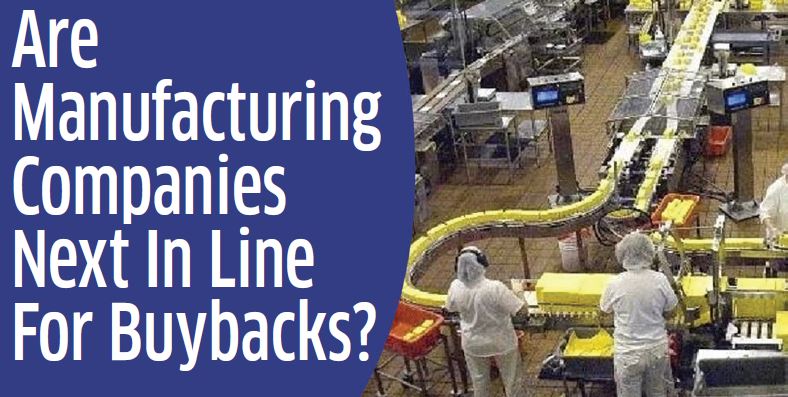
Buybacks, also known as share repurchases, involve a company buying back its own outstanding shares from the market, effectively reducing the number of shares available to the public.
Buybacks, also known as share repurchases, involve a company buying back its own outstanding shares from the market, effectively reducing the number of shares available to the public. Bhavya Rathod elucidates how recent buyback offer from Larsen and Toubro casts the spotlight on why manufacturing companies, following IT companies, are entering into this financial arena [EasyDNNnews:PaidContentStart]
Amidst the bustling chaos of the Indian stock markets, a captivating financial phenomenon is taking centre-stage – buybacks! These strategic manoeuvres, once the exclusive domain of the technology-savvy IT companies, have now caught the keen eye of a new contender – the manufacturing giants. With this enticing twist in the financial tale, the question on everyone’s lips is: Will the manufacturing sector be the next to dance to the buyback rhythm, leaving investors spellbound with newfound shareholder rewards?
Step into the dazzling world of buybacks as we unravel their allure and explore why manufacturing companies are eager to join the show! In recent times, buybacks have emerged as a prominent capital allocation strategy employed by companies in the Indian stock markets. While information technology (IT) companies have been at the forefront of this trend, manufacturing companies are increasingly considering buybacks as an attractive option. In July, India’s manufacturing sector experienced further expansion compared to the previous month, as indicated by the S and P Global Purchasing Managers’ Index (PMI) data released on August 1, 2023.
The PMI slightly decreased to 57.7, down from its June value of 57.8. However, it is important to note that the manufacturing PMI has remained above the critical threshold of 50 for 25 consecutive months, signifying sustained expansion in the sector. The Indian manufacturing sector demonstrated resilience, maintaining its growth momentum as production lines continued to operate robustly, supported by a notable surge in new orders. Remarkably, the Indian manufacturing sector stands out as a top performer on the global stage, defying the prevalent demand weakness observed in other regions around the world. So what does this mean for buybacks? Before delving into this, let’s explore buybacks.
Understanding Buybacks
Buybacks, also known as share repurchases, involve a company buying back its own outstanding shares from the market, effectively reducing the number of shares available to the public. The repurchased shares are then cancelled, kept as treasury shares, or used for employee stock options and other corporate purposes. The process of buybacks typically begins with a company’s Board of Directors authorising the repurchase of a certain number of shares. The company then announces the buyback plan, which contains details such as the number of shares to be repurchased, the duration of the buyback programme, the maximum price at which the shares will be bought and the sources of funding for the buyback.
Reasons for Companies Preferring Buybacks
1. Enhanced Earnings per Share (EPS) - By reducing the number of outstanding shares, a company’s earnings are divided among a smaller pool of shares, leading to an increase in the EPS. This can boost the company’s stock price and enhance shareholder value. Moreover, a higher EPS may signal stronger profitability to investors, making the company’s stock more appealing in the market.
2. Efficient Capital Deployment - When a company believes its stock is undervalued, a buyback allows it to invest in itself, signalling confidence in its future prospects. This is often viewed positively by investors, as it demonstrates management’s commitment to creating shareholder value. By reinvesting in their own shares, companies show that they believe their stock is a better investment than other potential uses of capital.
3. Flexibility in Timing and Amount - Unlike dividends that create an expectation of regular payouts, buybacks offer greater flexibility in timing and amount. Companies can choose when and how much to repurchase, allowing them to adapt to changing market conditions and financial circumstances. During periods of economic uncertainty or when a company needs to preserve cash for strategic investments, buybacks can be temporarily suspended, providing management with more control over capital allocation decisions.
4. Controlling Dilution - Companies often issue stock options and employee stock ownership plans (ESOPs) to attract and retain talent. These issuances increase the number of outstanding shares, potentially diluting existing shareholders’ ownership. Through buybacks, companies can offset the dilution caused by such equity-based compensation schemes, thereby maintaining or even increasing existing shareholders’ ownership stakes.
Buybacks versus Dividends: The Manufacturing Sector Perspective
While dividends have long been the traditional means of rewarding shareholders, manufacturing companies are now considering buybacks due to specific advantages in their industry:
• Cyclical Nature of Manufacturing - Manufacturing companies often experience cyclical revenue and profit patterns due to fluctuations in demand and input costs. During periods of economic downturns, maintaining a stable dividend payout may become challenging. In such scenarios, buybacks provide manufacturers with a more nimble tool to return capital to shareholders without committing to a fixed payout.
• Capital-Intensive Operations - Manufacturing companies may require substantial investments in research, technology and capital equipment to stay competitive. In such cases, retaining profits for reinvestment in the business becomes crucial. By using buybacks, manufacturers can reward shareholders while retaining the financial flexibility needed for strategic investments.
• Promoting Ownership Concentration - In some cases, manufacturing companies may aim to consolidate ownership and reduce the number of public shareholders through buybacks. By doing so, the management can concentrate decision-making power among a smaller group, potentially streamlining corporate governance and operational decision-making.
• Aligning Management Incentives - In the manufacturing sector, executive compensation is often tied to the company’s financial performance. Buybacks, by boosting EPS and increasing the stock price, can align the management’s interests with those of shareholders. When executives’ stock-based compensation is tied to the company’s stock price, they have an incentive to make decisions that drive long-term shareholder value.
Regulatory Framework for Buybacks in India
Buybacks in India are governed by the Companies Act, 2013 and the Securities and Exchange Board of India (SEBI) regulations. A company can repurchase up to 25 per cent of its paid-up capital and free reserves through the buyback route in any financial year, subject to certain conditions. The company must also meet the ‘debt-equity ratio’ requirement prescribed by SEBI and ensure that the ratio is not more than 2:1 following the buyback. Additionally, the maximum buyback size is 25 per cent or less of the aggregate of the paid-up capital and free reserves of a company based on the standalone or consolidated financial statements of the company, whichever sets out a lower number.
Potential Shift of Buybacks from IT to Manufacturing In recent years, the Indian IT industry has shown a notable trend of buybacks, driven by factors such as robust cash flow generation, increasing valuations and a focus on rewarding shareholders. For instance, in 2022, IT companies announced buybacks worth over ₹ 100 billion. During the early days of the IT sector, investing in companies associated with this flourishing industry proved highly lucrative for investors. However, as the manufacturing industry gains momentum, it presents a compelling growth opportunity. India’s manufacturing capabilities have matured, allowing for a competitive advantage on the global stage.
The country’s manufacturing sector is diversifying across various domains, including automotive components, specialty chemicals, defence equipment, garments, footwear and capital goods. This diversification indicates potential for import substitution and export-oriented growth. Indian manufacturing companies, driven by self-reliance initiatives and rising global demand, are well-positioned to capitalise on these opportunities. While some may question the sustainability of the manufacturing sector’s recent success, it’s essential to acknowledge the cyclical nature of the industry.
Throughout history, rapidly growing sectors have seen companies generate remarkable returns, and this trend is expected to persist. Wise investors who identify companies with strong capabilities and proven management track records stand to reap substantial benefits from this growth trajectory. Currently, the buyback trend is gaining momentum with Larsen and Toubro, a prominent Indian engineering major, announcing its first-ever buyback at a price of ₹ 3,000 per share. The size of L and T’s buyback programme has been set at ₹ 10,000 crore. Furthermore, Control Print has approved a buyback proposal representing 2.07 per cent of its equity at a price of ₹ 800 per share, summing up to a total of ₹ 27 crore.
Conclusion
As the Indian stock markets witness an increasing trend of buybacks, manufacturing companies are likely to embrace this capital allocation strategy after the IT sector. The manufacturing sector is currently experiencing a wave of optimism, positioning manufacturing companies as potential candidates for adopting buybacks as a strategic financial move. The positive sentiment surrounding the sector is being fuelled by several key factors that make buybacks an attractive option for manufacturers looking to optimise their capital allocation and enhance shareholder value. Furthermore, from a financial standpoint, investors may find buybacks to be a favourable choice due to their inherent tax efficiency, making them a more appealing option compared to receiving dividends.
Buybacks can be a tax-efficient strategy, allowing investors to retain a larger portion of their investment gains compared to receiving dividends. This tax-favoured treatment of buybacks, combined with the potential to benefit from long-term capital gains rates, makes them an attractive option for investors seeking to optimise their after-tax returns and grow their wealth over the long run. However, it’s essential for investors to consult with financial advisors or tax professionals to understand their unique tax situation and determine the most suitable investment approach based on their financial goals and risk tolerance. However, while buybacks may seem like a promising option, companies must approach this strategy with caution and prudence.
Balancing buybacks with reinvesting in growth opportunities is crucial to maintain long-term sustainability. Manufacturing companies should carefully assess their financial position, growth prospects, and future capital requirements before initiating a buyback programme. Investors, on their part, should carefully assess a company’s buyback rationale and financial health before making investment decisions in the ever-evolving landscape of the Indian stock markets. As the manufacturing sector continues to evolve, buybacks may become an integral part of their overall financial strategy to create value for stakeholders and navigate through dynamic market conditions.
[EasyDNNnews:PaidContentEnd] [EasyDNNnews:UnPaidContentStart]
To read the entire article, you must be a DSIJ magazine subscriber.
Current print subscribers click here to login
Subscribe now to get DSIJ All Access
[EasyDNNnews:UnPaidContentEnd]