Are Your Finances Crisis-Ready?
Arvind DSIJ / 28 May 2026 / Categories: DSIJ_Magazine_Web, DSIJMagazine_App, MF - Special Report, Mutual Fund, Special Report
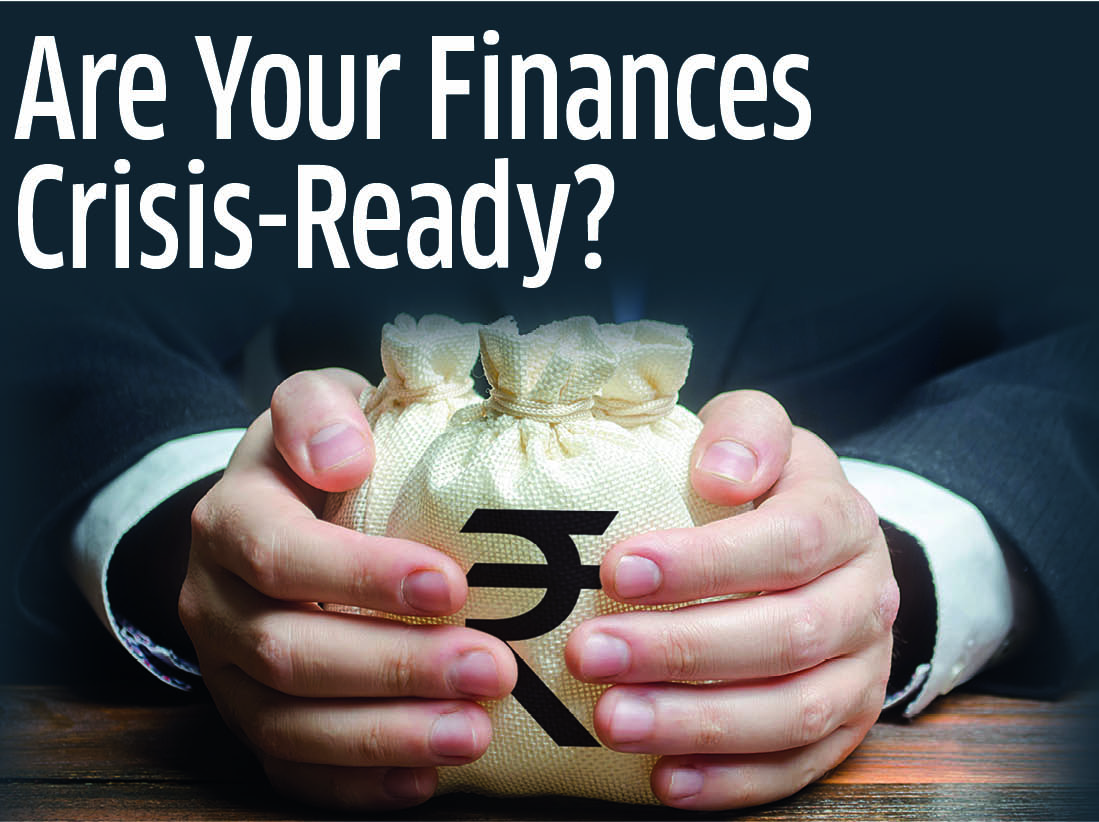
When will this conflict end? How will rising inflation affect me? Should I really cut down spending? With portfolios turning red and losses mounting, should I stay invested or exit the markets? Is rushing to ATMs really necessary during uncertain times? If these questions are worrying you too, then this story is worth reading. The situation may not change immediately, but your financial perspective and decisions certainly can, and that could shape your future far better [EasyDNNnews:PaidContentStart]
For years, Indian households followed a familiar financial pattern. Earn more, spend better, save steadily, and gradually build wealth. Rising incomes, expanding consumption, easy credit availability, and digital convenience created a comfort zone where spending often became a symbol of progress and aspiration. But economic cycles have a way of changing behaviour. Today, volatile crude oil prices, rising inflation, geopolitical tensions, and concerns around global economic slowdown are forcing households to think differently. Policymakers are increasingly acknowledging the importance of financial restraint.
Recently, the Prime Minister urged citizens to adopt austerity measures by reducing unnecessary fuel consumption, postponing non-essential foreign travel, limiting gold purchases temporarily, and encouraging work-from-home practices where possible. Essentials could become more expensive, discretionary purchases could come under closer scrutiny, and many families might quietly reshape their financial priorities. Middle-class families could postpone gadget upgrades and foreign holidays, while young professionals may turn more cautious about EMI-driven lifestyles.
Retirees are likely to become increasingly concerned about rising healthcare costs, and investors could start questioning whether traditional savings instruments are sufficient to protect purchasing power. The message is becoming increasingly clear. Economic uncertainty demands financial discipline. However, cautious spending does not mean abandoning aspirations or stopping wealth creation. It means building financial resilience. It means learning how to protect savings, manage inflation, and continue investing wisely without compromising long-term goals. The current environment is not about fear-driven saving. It is about smart financial prioritisation.
When Inflation Reaches the Kitchen Table
Recently, everyone came across news that India’s wholesale price index (WPI)-based inflation jumped to a 42-month high of 8.3 per cent in April on a year-on-year basis, compared with 3.88 per cent recorded in March this year. Inflation is often discussed through percentages and economic data, but households experience inflation very differently. People do not consume inflation averages. They consume groceries, fuel, electricity, healthcare, transport, and housing.
When petrol and diesel prices rise, transportation costs increase. Logistics costs eventually impact food prices. Edible oils become more expensive. Healthcare expenses continue climbing. The impact becomes even sharper when salary growth fails to keep pace with rising expenses. Consider a household earning `1 lakh per month. Five years ago, groceries, fuel, utilities, and leisure spending may have comfortably fit within the monthly budget.
Today, a significantly larger portion of that income goes toward essentials, leaving less room for savings and investments. Inflation quietly erodes purchasing power. A simple example explains this clearly. If a family spends `50,000 per month today and inflation averages 6 per cent annually, the same lifestyle could cost nearly `90,000 per month after ten years.

This is precisely why financial planning cannot remain static. Many investors underestimate this reality. Traditional savings habits may provide emotional comfort, but low-return instruments often fail to create meaningful real wealth after adjusting for inflation. Keeping excessive idle money in savings accounts or low-yield deposits may preserve capital temporarily, but long-term purchasing power may continue weakening. This is why the current environment is forcing households to rethink not just spending habits, but the entire structure of financial planning.
Is It Time to Cut Your Spending?
One may assume, following the government’s cautious spending remarks, that India is turning anti-consumption. However, the reality is different. The country is becoming more selective and conscious about consumption amid weak global macroeconomic conditions. Consumers should increasingly learn to differentiate between meaningful lifestyle upgrades and unnecessary lifestyle inflation. There should be an important difference between the two. A meaningful upgrade may improve long-term quality of life, financial security, or productivity. Excessive lifestyle inflation, on the other hand, could simply mean spending more as income levels rise.
This distinction is likely to become far more critical during uncertain economic periods. Hence, households should begin asking tougher questions before spending money:
- Is the purchase essential?
- Will it improve long-term well-being?
- Is the expense funded through savings or borrowing?
- Will it affect investment commitments or emergency reserves?
- Is this an emotional purchase or a planned financial decision?
This approach helps you understand exactly where your money is being spent every month. Essential expenses such as rent, groceries, healthcare, education, utilities, and insurance premiums form the core financial structure and should always receive priority. The second category includes lifestyle expenses that improve quality of life but still require moderation. Dining out, travel, entertainment, premium memberships, and gadgets are not necessarily negative, but they should remain aligned with affordability and long-term goals.
The final category consists of avoidable leakage expenses that silently weaken savings potential. Unused subscriptions, impulsive online shopping, excessive food delivery spending, and high credit card interest payments may individually appear small, but collectively they can significantly impact wealth creation. By cutting these expenses, you can strengthen savings, reduce financial stress, and channel more money toward productive investments.
What About Your Liabilities?
What About Your Liabilities? Easy credit has transformed consumption behaviour in India. Today, almost everything can be purchased through installments. Smartphones, electronics, furniture, vacations, and luxury goods are increasingly financed through EMIs. While responsible borrowing can support financial goals, excessive EMI dependence creates hidden financial stress. During stable periods, EMIs may appear manageable. But during uncertain economic conditions, fixed repayment obligations can quickly become burdensome. A salaried individual already managing home loan EMIs, car loans, credit card dues, and consumer durable loans may suddenly lose financial flexibility if income growth slows or expenses rise sharply.
This is why financial discipline today increasingly focuses on reducing avoidable liabilities. Individuals already managing multiple EMIs should start reviewing their liabilities more carefully and avoid taking fresh non-essential loans during uncertain times. High-interest obligations such as personal loans and credit card dues should ideally be prioritised for repayment, as they can significantly weaken monthly cash flows. Households may also consider reducing discretionary spending temporarily and redirecting surplus funds toward prepayment of expensive debt. Maintaining lower leverage could provide greater financial flexibility if macroeconomic conditions deteriorate further.
Should You Rush to ATMs?
News flow around potential energy lockdown, tightening liquidity conditions, and deteriorating macroeconomic indicators has started influencing public sentiment. According to reports, ATM cash withdrawals have risen sharply compared with average levels seen over the past few months, reflecting growing caution among households amid rising uncertainty. But is such a reaction really necessary? Is rushing to ATMs and reacting impulsively to social media-driven fears a prudent way to prepare for difficult times? Ideally, the answer should be no.
Instead of panic-driven actions during uncertain periods, individuals should focus on building an emergency fund well before any unfavourable situation arises. As several industry experts have started cautioning about potential economic challenges ahead, this could be the right time for households to gradually set aside contingency funds and strengthen financial preparedness. It is generally recommended to maintain at least six months of essential expenses in highly liquid instruments.
The primary objective of an emergency fund should be liquidity and safety rather than chasing aggressive returns. Hence, suitable avenues may include savings accounts, sweep fixed deposits, liquid Mutual Funds, or ultra-short duration Debt Funds. Investors should avoid the mistake of locking all available money into long-term investments while neglecting immediate liquidity needs. An emergency fund could prove extremely useful during unexpected situations such as job loss, medical emergencies, temporary salary cuts, business slowdowns, or sudden family obligations.
Alongside emergency reserves, adequate health and term insurance coverage should also become a financial priority during uncertain times. Rising healthcare costs and sudden income disruptions could significantly impact long-term financial stability if proper protection is absent. Health insurance may help manage unexpected medical expenses, while term insurance could provide financial security to dependent family members. Strong insurance coverage can help households navigate difficult periods without disturbing long-term investments or compromising important financial goals.
Investing When Fear Dominates Markets
economic periods is protecting purchasing power while continuing long-term wealth creation. Traditional savings instruments may appear safe, but if inflation remains close to or above deposit returns, real wealth generation could become limited over time. This does not mean investors should completely avoid safety-oriented assets. Instead, the focus should shift towards maintaining a balanced and diversified portfolio. Equity investments continue to remain among the most effective long-term tools for beating inflation.
Strong businesses generally possess the ability to gradually increase prices, expand earnings, and benefit from long-term economic growth. While markets may witness temporary volatility due to global conflicts, crude oil fluctuations, interest rate movements, or foreign investor activity, history suggests that disciplined investors have often benefited from staying invested through market cycles. At the same time, debt allocation becomes equally important during uncertain conditions. High-quality short-duration debt funds, or target maturity funds may provide better stability and liquidity compared with aggressive yield-chasing strategies.
Investors should also understand that rising interest rates can impact longer-duration debt instruments temporarily. Diversification may become even more critical during volatile periods. A sensible allocation across equity, debt, gold, and cash equivalents could help reduce portfolio vulnerability. Most importantly, investors should avoid making emotional decisions during market corrections. Red portfolios and mounting losses on a daily basis may naturally trigger panic selling, SIP stoppages, or a complete shift towards cash. Market corrections, although uncomfortable in the short-term, could often create attractive long-term investment opportunities for disciplined investors.
Falling markets may allow investors to accumulate fundamentally strong businesses at relatively lower valuations compared with euphoric market phases. This is where the averaging-out approach through SIPs or staggered investments becomes effective, as it helps reduce the overall purchase cost over time. Instead of reacting emotionally to temporary volatility, investors should focus on business fundamentals, earnings visibility, balance sheet strength, and long-term growth potential while making investment decisions.
Because You Still Have Goals to Achieve
During volatile economic phases, investors often struggle to separate temporary market noise from long-term financial priorities. It is widely believed that current economic conditions have weakened considerably and that the recovery process may take time. In such an environment, investors should remain cautious, but not pessimistic. Markets may remain volatile, inflation may continue fluctuating, and interest rate cycles may keep changing. However, personal financial goals generally remain unchanged despite economic uncertainty.
Retirement planning, children’s education, home ownership, wealth creation, and financial independence still require disciplined long-term planning. This is why goal-based investing becomes extremely important during volatile periods. Investors with longer investment horizons should avoid reacting emotionally to market corrections. Every investment decision should ideally align with individual financial goals, liquidity requirements, time horizon, and risk appetite. Long-term financial success is often built not by reacting to headlines, but by remaining disciplined through changing economic cycles.

Turning Caution into Financial Resilience
India’s long-term growth story remains intact. If viewed from a longer-term perspective, urbanisation will continue to expand, consumption will continue to grow, and the financialization of savings is likely to deepen further. However, the current environment is encouraging households to become financially smarter. The shift underway is not anti-growth. It is a transition from careless consumption towards intentional financial resilience. People are increasingly recognising that wealth is not built only through rising income, but also through disciplined financial habits.
Savings alone may not be enough if inflation steadily erodes purchasing power. Investments require patience, liquidity matters during uncertain periods, and debt must remain manageable. Financial planning is no longer a one-time exercise. It must evolve continuously with changing economic realities. Inflation-proofing finances is not about becoming fearful or excessively conservative. It is about ensuring that spending, saving, investing, and borrowing decisions remain aligned with long-term financial security.
The families that emerge stronger from uncertain periods are usually not those with the highest incomes. They are often the ones with better financial habits, controlled liabilities, consistent investing discipline, adequate liquidity, clear financial goals, and emotional stability during volatility. In many ways, the new age of cautious spending may ultimately create a healthier investing culture. A culture where investors focus less on short-term consumption and more on sustainable wealth creation. And in uncertain times, that may become the biggest financial advantage of all.
[EasyDNNnews:PaidContentEnd] [EasyDNNnews:UnPaidContentStart]
To read the entire article, you must be a DSIJ magazine subscriber.
[EasyDNNnews:UnPaidContentEnd]