Asian Paints
Ratin Biswass / 27 Nov 2025 / Categories: Analysis, Analysis, DSIJ_Magazine_Web, DSIJMagazine_App, Regular Columns
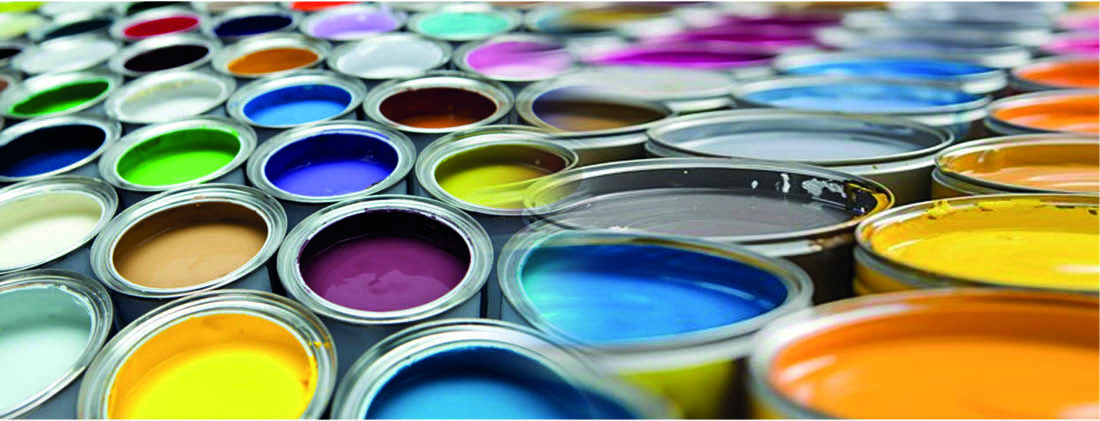
Asian Paints has long been considered a classic Indian wealth creation story
Asian Paints continues to lead India’s paint and decor market, driven by brand equity, distribution and innovation. With focus on premiumisation, backward integration and services, supported by a robust balance sheet and capacity expansion, it is positioned for sustainable growth [EasyDNNnews:PaidContentStart]
Asian Paints has long been considered a classic Indian wealth creation story, rewarding long-term shareholders with consistent compounding over decades. The stock, which traded around ₹54 in 2005, rose to approximately ₹830 by December 2015, before reaching an all-time high of ₹3,590 in January 2022. Since then, the stock has struggled to surpass this peak and has largely remained range-bound, reflecting a phase of consolidation amidst changing industry dynamics and rising competitive intensity.
In CY25, however, the stock has regained market attention. On a year-to-date (YTD) basis, Asian Paints has delivered returns of about 25 per cent, recovering sharply from its 52-week low of ₹2,125 in March 2025 to a recent high of ₹2,926 in November 2025. This revival has reignited the debate among investors: is this the beginning of a fresh structural uptrend or merely another cyclical rebound within a broader consolidation phase? This analysis examines the company’s fundamentals, competitive positioning and industry landscape to assess whether Asian Paints is preparing for a renewed growth phase or facing structurally heightened competition that could cap its valuation premium.
About the Company
Founded in 1942, Asian Paints has evolved from a small-scale enterprise into India’s largest home décor and paints company. Over the past eight decades, the company has built one of the strongest consumer brands in the country and has maintained its leadership position in the Indian paints market since 1967. Its success has been driven by a deep consumer focus, strong distribution capabilities, product innovation and operational efficiency.
Asian Paints manufactures a wide portfolio of products across decorative and industrial segments, while also expanding aggressively into home décor and allied categories. These include waterproofing solutions, adhesives, bath fittings and sanitaryware, modular kitchens and wardrobes, decorative lighting, wall coverings, furniture, fabrics, furnishings, rugs and uPVC windows and doors. This strategic diversification positions the company not just as a paints manufacturer but as a comprehensive home solutions provider.

Business Segments
1. Decorative Business (87.4 per cent of FY25 Revenue)
The decorative segment remains the company’s core engine, contributing nearly 87.4 per cent of total revenue in FY25. It includes interior and exterior wall paints, wood finishes, enamels, waterproofing solutions, adhesives and allied products. Within this segment, Asian Paints has also integrated its expanding home décor offerings such as modular kitchens, wardrobes, bath fittings, sanitaryware and lighting solutions. The home décor vertical currently contributes approximately 2.6 per cent of decorative revenue and is gradually scaling as part of the company’s premiumisation and lifestyle brand strategy. This segment benefits from strong urban and rural housing demand, renovation cycles, premium product migration and increasing consumer preference for branded, service-oriented solutions.
2. International Business (9.1 per cent of FY25 Revenue)
Asian Paints operates in 14 countries across four key regions and services more than 60 global markets. The international revenue distribution is well diversified. (Asia: 42.8 per cent, Middle East: 36.7 per cent, Africa: 15.8 per cent and South Pacific: 4.7 per cent.)
3. Industrial Business (3.5 per cent of FY25 Revenue)
The industrial coatings segment operates through a 50:50 joint venture with PPG Industries Inc., a global leader in coatings technology. This partnership has recently been extended for another 15 years (from 2026 to 2041), reinforcing long-term strategic alignment. The division supplies custom-formulated coatings for automotive, marine, packaging and industrial applications, including specialised protective coatings used in infrastructure and heavy industries. Though currently a smaller contributor, this segment provides technological depth and exposure to industrial and automotive recovery cycles.
Sector Overview & Competitive Landscape
The Indian paints and coatings market is estimated to reach USD 10.46 billion in 2025 and is projected to grow to USD 16.38 billion by 2030, implying a CAGR of 9.38 per cent. Growth is supported by rising Construction activity, housing demand, renovation trends, premiumisation, and increased waterproofing and protective coating usage. India’s position as the world’s third-largest construction market also continues to fuel structural demand for decorative and industrial coatings.
However, 2025 marks a structural shift in industry dynamics. Asian Paints, while retaining market leadership with a 52 per cent market share, has seen a noticeable decline from its earlier dominance of 59 per cent, indicating intensifying competition. Berger Paints has strengthened its position as the second largest player with a 20 per cent market share, driven by distribution expansion and product innovation. Kansai Nerolac follows with a 15 per cent share, benefiting from premium product positioning and Japanese technological expertise.
The most disruptive force has been Birla Opus (Grasim Industries), which has captured an estimated 10 per cent market share within just 16 months of launch, one of the fastest penetrations in the industry’s history. Its scale and aggressive capacity ramp-up have begun to reshape pricing and competitive strategies across the sector. AkzoNobel (Dulux) holds an 8 per cent market share and is undergoing ownership transition, with JSW Paints signing definitive agreements to acquire up to 74.76 per cent stake for ₹8,986 crore. The remaining 5 per cent of the market is fragmented among nearly 3,000 smaller regional players, highlighting the dominance of organised players.
This changing landscape raises a crucial question: can Asian Paints maintain its long-standing pricing power and margin superiority in the face of structurally intensified competition?
Financial Performance
Asian Paints delivered a mixed but improving performance in Q2FY26, highlighting underlying demand resilience despite short-term volatility. Revenue stood at ₹8,531 crore, reflecting a healthy year-on-year growth of 6.27 per cent, though sequentially it declined by 4.56 per cent due to seasonal softness and base effects. Operating profit rose sharply by 21.21 per cent year-on-year to ₹1,503 crore, indicating strong operating leverage and better cost management, even as it eased 7.51 per cent quarter-on-quarter. Net profit increased 46.69 per cent year-on-year to ₹1,018 crore, underscoring margin recovery and improved efficiency, although it moderated 8.86 per cent on a sequential basis compared to the strongQ1FY26 performance. EPS for the quarter stood at ₹10.36, up 43.09 per cent year-on-year but down 9.68 per cent quarter-onquarter.
FY24 marked a milestone year for Asian Paints, representing its strongest financial performance to date. The company crossed ₹35,000 crore in revenue for the first time, reporting sales of ₹35,495 crore, while net profit exceeded ₹5,500 crore, reaching ₹5,558 crore, setting a new benchmark in profitability.
FY25, however, saw a moderation phase. Revenue declined to ₹33,906 crore as demand softness, heightened competition, and pricing pressures impacted growth momentum. Net profit fell to ₹3,710 crore, while operating profit moderated to ₹6,006 crore, with operating margins compressing to 18 per cent. This dip highlights the impact of rising competition from new entrants and higher input costs, alongside a more challenging macro environment for discretionary spending.
Business Updates – Last Five Years
Asian Paints has undergone a phase of strategic recalibration and capacity-led expansion over the last five years, balancing growth initiatives with cost discipline and portfolio optimisation. The company strengthened its international footprint by setting up a new white cement plant and clinker units in Fujairah, UAE, while selectively pruning underperforming assets, including the divestment of its Indonesian operations, which helped improve overall international profitability.
A key focus area has been backward integration and manufacturing self-Reliance. Significant investments have been channelled into the VAM-VAE (Vinyl Acetate Monomer–Vinyl Acetate Ethylene) project, with a committed capex of ₹3,250 crore, aimed at creating next-generation emulsions and reducing dependency on external suppliers. One phase of this project is nearing completion and is expected to come on stream in Q1 FY27, enhancing both margin sustainability and product differentiation.
The company also expanded into advanced coatings by acquiring a majority stake in Harind Chemicals in 2022, entering the nanotechnology space to future-proof its innovation pipeline. Simultaneously, Asian Paints deepened its presence in the home improvement segment by scaling modular kitchens, bath fittings, decorative lighting, and furniture solutions, although this vertical has faced near-term performance challenges.
With surplus liquidity of over ₹4,900 crore and expected annual cash accruals of ₹2,400–2,900 crore, Asian Paints remains net debt-free and financially equipped to support its ongoing capex and growth strategy without balance sheet stress.
Valuation and Outlook
As of November 2025, Asian Paints commands a market capitalisation of approximately ₹2.75 lakh crore, cementing its premium positioning in the Indian consumer sector. The stock trades at a P/E multiple of 68.6x, far above the industry average of 42.5x and also exceeding its three-year median of 59x, indicating that a substantial portion of future growth expectations is already priced in. The PEG ratio stands at 8.16, highlighting valuation stretch relative to medium-term earnings growth. Financial leverage remains comfortable with a debt-to-equity ratio of 0.18, reinforcing balance sheet resilience. Three-year sales growth stands at 5.23 per cent, while profit growth tracks at 8.40 per cent, reflecting a moderation phase after FY24’s peak performance. A Piotroski score of 6 suggests a stable financial profile with moderate strength across profitability and balance sheet parameters.
Promoters continue to hold a majority stake of 52.6 per cent, underscoring ownership stability and strategic continuity. However, pledged share levels have increased in recent years, rising from 6.58 per cent in December 2023 to approximately 9.09 per cent by September 2025. These pledges have primarily been used to raise capital through secured borrowings, with part of the funds deployed to strengthen promoter holding and support financial commitments. While the level remains within manageable limits, the upward trend warrants ongoing monitoring from a governance and risk perspective.
Asian Paints is positioning itself for long-term sustainability through a series of forward-looking strategic initiatives aimed at strengthening its competitive edge and operational resilience. The company is executing the VAM-VAE backward integration project to enhance supply chain control and deliver product differentiation, while also advancing its ₹2,000 crore greenfield water-based paint manufacturing facility in Pithampur, Madhya Pradesh, with a planned capacity of 4 lakh kilolitres per annum. This facility, supported by government incentives, is expected to be commissioned within three years of receiving environmental clearance and will significantly augment domestic production capacity.
Simultaneously, Asian Paints is strengthening its B2B footprint by targeting factories, government projects, and institutional clients. Innovation-led premiumisation remains a core focus, with new products contributing over 15 per cent of revenues.
The company is also aggressively expanding its Beautiful Homes and service-led offerings across more than 650 towns, deepening regional customisation strategies to improve execution in micro-markets, and undertaking a strategic revival of the home décor vertical through operational restructuring. Sustainability remains a key pillar, with the company targeting 100 per cent renewable electricity usage by 2030.
Asian Paints continues to benefit from strong brand equity and an extensive distribution network, but premium valuations, rising competitive intensity, and short-term margin pressures reduce near-term upside potential. For long-term investors, its resilient business model and consistent profitability justify a HOLD stance with selective accumulation on corrections.
[EasyDNNnews:PaidContentEnd] [EasyDNNnews:UnPaidContentStart]
To read the entire article, you must be a DSIJ magazine subscriber.
[EasyDNNnews:UnPaidContentEnd]