Balanced Advantage Funds: The Pros & Cons
Ninad Ramdasi / 14 Dec 2023 / Categories: DSIJ_Magazine_Web, DSIJMagazine_App, MF - Special Report, Mutual Fund, Special Report
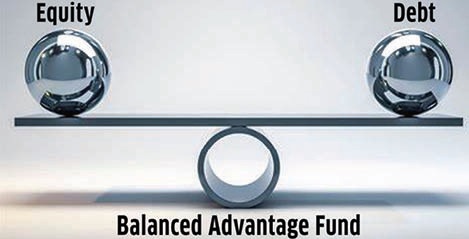
A prudent strategy for conservative to moderate investors involves considering funds that blend equity and debt, offering stability amid equity fluctuations.
A prudent strategy for conservative to moderate investors involves considering funds that blend equity and debt, offering stability amid equity fluctuations. Balanced advantage funds which invest in both equity and debt present an appealing option [EasyDNNnews:PaidContentStart]
The Indian equity market is currently trading at an all-time high. Most of the indices have soared by over 20 per cent since the fiscal year began. This presents a challenge for potential investors. Investing in equity at such elevated levels carries the risk of diminished future returns or in the worst-case scenario a market downturn, both unappealing prospects for any investor. While long-term investors may find pure equity mutual funds favourable, those seeking a less aggressive or conservative approach might face volatilityinduced discomfort in an overheated market.
Therefore, a prudent strategy for conservative to moderate investors involves considering funds that blend equity and debt, offering stability amid equity fluctuations. Balanced advantage funds which invest in both equity and debt present an appealing option. For those seeking incremental investments, these funds have shown resilience in navigating market fluctuations and have delivered good risk-adjusted returns.
Understanding Balanced Advantage Funds
Balanced advantage funds, also known as dynamic asset allocation funds, are a hybrid breed among mutual funds that actively manage their asset allocation between equity and debt based on market conditions. These funds utilise quantitative asset allocation models to dynamically adjust their portfolio mix. To qualify for equity-like tax treatment, they maintain at least a 65 per cent allocation in overall equity plus arbitrage, with the remainder invested in debt instruments. What sets them apart from conventional equity or Debt Funds is their adaptable approach to different asset allocations.
In times of market downturns, these funds allocate more to equities and less to debt, aiming to seize potential growth opportunities. Conversely, during market upswings, they tilt towards a higher debt allocation and reduce exposure to equities. This fluid strategy allows them to harness market potentials while curbing downside risks, making them particularly appealing to less experienced investors.
These funds typically employ two primary dynamic asset allocation models. The counter-cyclical model enhances equity exposure during market dips and decreases it in rising markets, essentially aiming to buy low and sell high. Various valuation metrics like price-to-earnings ratios or price-to-book values guide these decisions. The pro-cyclical model, on the other hand, follows market trends, increasing equity exposure in rising markets and reducing it during downturns, relying on trend indicators like daily moving averages and trend strength indicators.
Since March 2023, these Hybrid Funds have seen a continuous increase in their assets under management (AUM) except for the last month. It has increased from ₹1.53 lakh crore at the end of March 2023 to ₹1.71 lakh crore at the end of October 2023. There was a drop in the aggregate AUM of this category last month (October 2023) and it was due to a fall in the equity market indices. For the month of October, the frontline and broader market indices have fallen between 2.5-5 per cent. Hence, there was a fall in the average AUM in the month of October.
Besides, the debt component of the fund also might have witnessed some loss as yields moved up in the same month. There is an inverse relation between bond prices and yield. The fall in the AUM was despite a positive inflow in the month of October.

Over the past three months leading up to October 2023, this fund category has experienced consistent positive inflows. However, in the five months preceding this period, there was a persistent outflow amounting to ₹2,134 crore.

When it comes to returns, historically these funds have generated returns in double digits over the longer period. For example, in the last three years, on an average this category has generated return of 11.57 per cent. Even year-to-date it has generated return of around 14.8 per cent.

These returns are not generated by taking extra risk. The debt part of the funds has given a good cushion to the funds and this is reflected in both their risk factor as well as risk-adjusted returns factor. When it comes to evaluating balanced advantage funds, the risk and risk-adjusted parameters present a compelling picture. On an average, these funds exhibit an average Sharpe ratio of 1.87, indicating an attractive riskadjusted return profile. The average Alpha stands impressively at 10.10, suggesting that these funds have consistently outperformed their benchmark indices.
Additionally, with an average Beta of 0.16, these funds have showcased lower sensitivity to market movements compared to the benchmark, indicating a potential for lower volatility. The average standard deviation of 5.75 signifies relatively moderate volatility, further supporting the notion that these funds maintain a balanced approach between risk and returns, making them an enticing option for investors seeking stability with the potential for superior performance.

A deep analysis of individual funds shows that funds with higher allocation towards Large-Cap stocks have generated lower risk-adjusted return compared to those funds that have maintained a proper balance between large-cap, Mid-Cap and Small-Cap stocks. For example, Bank of India Balanced Advantage Fund – Reg (G) has a Sharpe ratio of 1.12 and weightage of 76 per cent in large-cap stocks as compared to HDFC Balanced Advantage Fund (G) with Sharpe ratio of 2.91 and weightage of 51 per cent in large-cap and 10 per cent in small-cap stocks. Hence, while selecting the funds you can chose funds based on your risk appetite.

Who Should Invest In Balanced Advantage Funds?
Every investment does not suit everyone and hence, if you are looking to invest in this category, you need to keep the following points in context to make an informed investment decision.
1. Capital Appreciation and Income over Long Horizons - These funds are designed to provide a balance between growth and stability. By investing in both equity and debt instruments, they aim for capital appreciation over the long term while generating income through dividends and interest payments. This strategy ensures a smoother ride towards your financial goals but may not be able to match the return of pure equity funds.
2. Moderate Volatility - For investors seeking growth but not comfortable with high volatility, balanced advantage funds are an excellent choice. They strategically manage the portfolio’s asset allocation, shifting between equity and debt based on market conditions or their predefined investment philosophy. This dynamic approach helps mitigate the impact of market fluctuations, providing a more stable investment experience compared to pure equity funds.
3. Moderately High Risk Appetite - These funds cater well to investors willing to take on moderate risk. The blend of equities and debt instruments helps balance out the risk exposure. While they do offer growth potential through equity exposure, the presence of debt instruments adds stability, making it an ideal fit for those comfortable with a moderately higher risk.
4. Minimum Three-Year Investment Tenures - Given their blend of asset classes and the focus on long-term growth, balanced advantage funds typically perform better over extended periods. A minimum investment horizon of three years aligns well with their strategy, allowing the fund manager to navigate market cycles and optimise returns across varying market conditions.
Considering these factors, a balanced advantage fund appears to be a prudent choice for a conservative to moderate risk-taking investor. It is the right choice for achieving financial goals for such investors while maintaining a balanced approach towards risk and returns over the long haul.
[EasyDNNnews:PaidContentEnd] [EasyDNNnews:UnPaidContentStart]
To read the entire article, you must be a DSIJ magazine subscriber.
Current print subscribers click here to login
Subscribe NOW to get DSIJ All Access!
[EasyDNNnews:UnPaidContentEnd]