Building Long-Term Wealth Through SIPs: The Power of Compounding!
DSIJ Intelligence-6 / 22 Aug 2025 / Categories: General, Knowledge, Trending
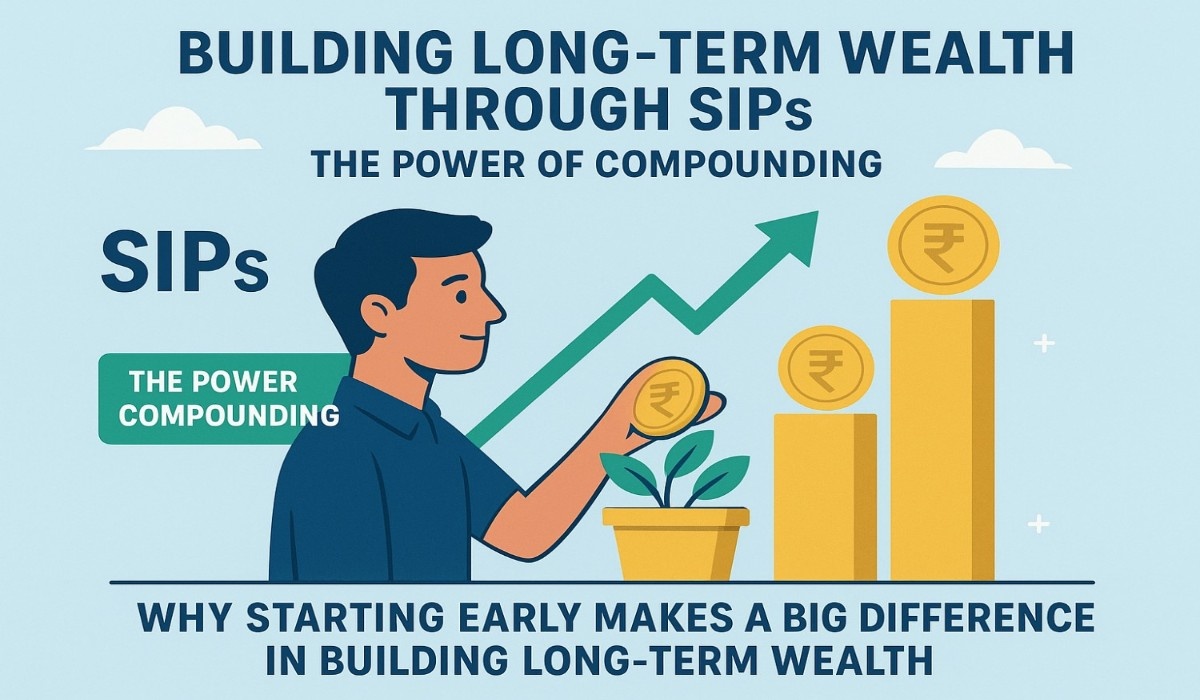
SIPs are a proven route to build long-term wealth in India. The combination of compounding, affordability, and disciplined investing makes them ideal for young earners.
Systematic Investment Plans (SIPs) have emerged as one of the most effective ways for Indian investors to build wealth steadily. By investing a fixed sum regularly into mutual funds, SIPs harness the power of compounding and instil financial discipline. Over the long term, even small monthly contributions can snowball into a significant corpus—especially if one begins early.
The Power of Compounding
Compounding is the process where returns earned on investments are reinvested, generating further returns. In SIPs, every rupee invested grows not only by itself but also adds to future growth. The longer the investment horizon, the more powerful compounding becomes.
For example, if you start an SIP of Rs 5,000 per month at an assumed 12 per cent annual return:
- In 10 years, you would invest Rs 6 lakh and accumulate around Rs 11.6 lakh.
- In 20 years, the same SIP grows to about Rs 49 lakh.
- In 30 years, it can reach nearly Rs 1.76 crore.
This demonstrates how staying invested for longer periods creates exponential growth.
The Advantage of Starting Early
The earlier you begin, the less you need to invest to achieve the same goal. Consider two investors:
- Rohan, who starts at age 25, invests Rs 5,000 monthly for 30 years at 12 per cent return. His wealth at 55 is about Rs 1.76 crore.
- Amit, who starts at 35, invests Rs 5,000 monthly for 20 years. His corpus at 55 is only about Rs 49 lakh.
Despite investing the same amount per month, Rohan ends up with more than 3.5 times Amit’s corpus—simply because he started earlier.
Why SIPs Work in India
SIPs are particularly suited for Indian investors for several reasons:
- Affordability: One can start with as little as Rs 100 per month, making it accessible.
- Rupee Cost Averaging: By investing regularly, investors buy more units when markets are low and fewer when they are high, averaging out costs.
- Convenience: Automated investments help build a habit of disciplined saving.
- Tax Efficiency: Equity mutual funds held for more than a year enjoy favourable tax treatment.
Conclusion
SIPs are a proven route to build long-term wealth in India. The combination of compounding, affordability, and disciplined investing makes them ideal for young earners. Starting early, even with small amounts, can create massive wealth over time. The key is patience—letting compounding work its magic over decades.