Capital Goods: Undervalued Opportunity or Mirage?
Sayali Shirke / 16 Oct 2025/ Categories: DSIJ_Magazine_Web, DSIJMagazine_App, Special Report, Special Report, Stories
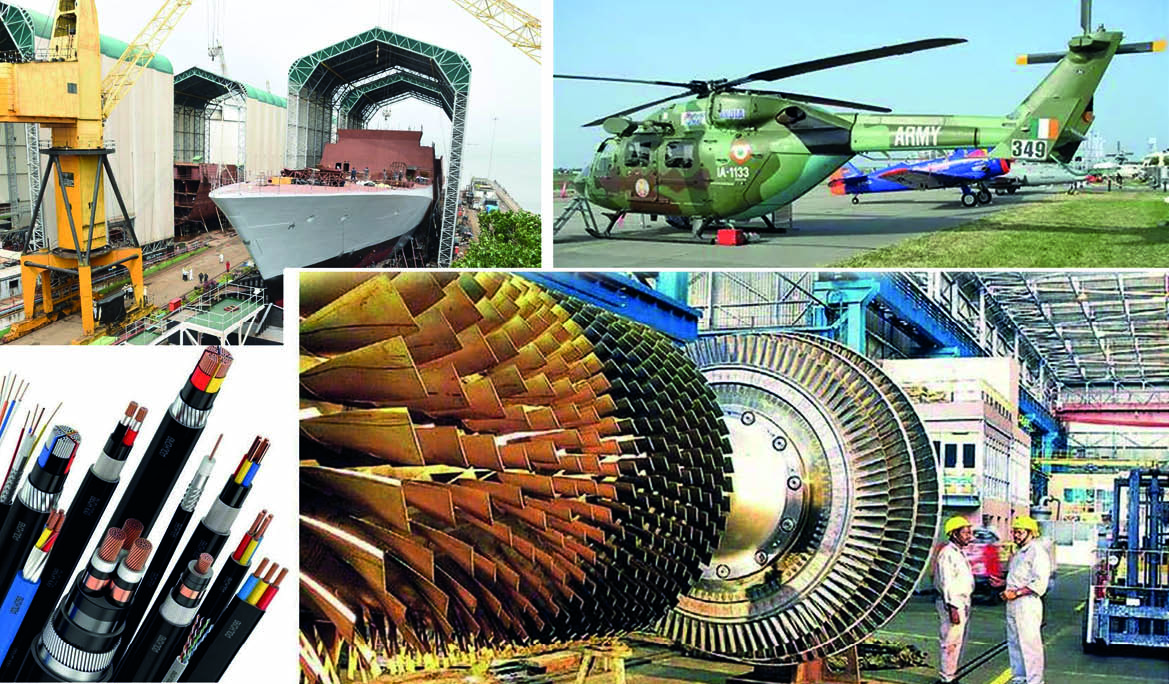
As public and private investments accelerate, the sector has emerged as one of the key beneficiaries of the government’s infrastructure and manufacturing push.
Once the market’s unstoppable force, with the index soaring over 500 per cent to record highs in just four years, India’s capital goods story is now facing one of its biggest reality checks. Is this a pause before another leg of the rally, or has the momentum truly faded? Mandar Wagh examines how the sector, long hailed as the backbone of India’s economy, continues to enjoy strong government support despite shifting budget priorities; what has caused sentiment to turn, and most importantly, whether the beaten-down capital goods stocks are genuinely undervalued or still priced high against muted fundamentals [EasyDNNnews:PaidContentStart]
The wheels of India’s economic engine are turning faster than ever, and at the heart of this transformation lies the capital goods sector, a space that manufactures the very tools and machinery needed to build everything else. From turbines and Transformers to Construction equipment and control systems, the capital goods industry is not just a supporting act but a protagonist in India’s growth narrative. As public and private investments accelerate, the sector has emerged as one of the key beneficiaries of the government’s infrastructure and manufacturing push.
It was also evident in the robust investor interest the sector had attracted. From the depths of the April 2020 market crash triggered by the Covid pandemic to the euphoric highs of July 2024, with optimism at its peak after the previous government sustained its power following the Lok Sabha elections, the BSE Capital Goods Index skyrocketed over 500 per cent, creating remarkable wealth for investors. Yet, the euphoria was not without turbulence.

The index later tumbled roughly 30 per cent, and despite a strong recovery in recent months, it still trades about 10 per cent below the record peaks it hit 15 months ago, reminding investors that even the most exhilarating rallies come with their share of twists and turns. The key question now is what has shifted so dramatically that investors are now weighing concerns about sustainability, valuations, and execution, making this an ideal moment to assess where the capital goods sector truly stands.
Capital Goods: India’s Industrial Backbone
Over the last decade, India’s capital goods industry has steadily expanded its footprint. Manufacturing output has surged significantly, fuelled by robust government spending, growing

private sector demand, and far-reaching structural policy reforms. The sector today contributes around 2 per cent to India’s GDP and roughly 8-10 per cent to the total manufacturing output. The sector plays a pivotal role in powering key industries through its wide range of machinery and equipment.
In the Railway segment, it provides advanced locomotives, coaches, signalling systems, and track-laying machinery that enhance efficiency and safety. For Defence, the sector manufactures cutting-edge weaponry, armoured vehicles, and precision equipment, supporting both modernization and strategic self-Reliance. Shipbuilding benefits from specialized machinery for hull fabrication, propulsion systems, and outfitting, enabling world-class naval and commercial vessels.
In the electric and industrial equipment domain, the sector produces transformers, switchgear, motors, generators, and industrial machinery that drive power generation, manufacturing, and automation. Transmission towers and associated infrastructure further underpin the energy distribution network, ensuring reliable power flow across regions. The government, too, has recognized this critical link, calling the capital goods sector the ‘backbone of manufacturing’ and a key driver of the ‘Make in India’ vision.
A Policy-Powered Engine
Recognizing the sector’s significance, the government has, over the years, maintained a dedicated focus, playing a key role in boosting investor confidence. The Union Budget 2025-26 allocated a record ₹11.21 lakh crore for capital expenditure,

marking a ten per cent increase over the previous fiscal. This follows four consecutive years of double-digit capex growth, reflecting the Centre’s commitment to building roads, ports, railways, and industrial corridors. The impact of this expenditure ripples across industries, from cement and construction to engineering and manufacturing, creating a multiplier effect that fuels demand for capital goods.
Complementing this fiscal push are several policy initiatives tailored to strengthen the sector’s competitiveness. The National Capital Goods Policy (2016) laid out ambitious long-term goals, including enhancing domestic production, improving technology depth, and boosting exports. Its follow-up, the Scheme for Enhancement of Competitiveness in the Indian Capital Goods Sector (Phase II), with an outlay of ₹1,207 crore, aims to promote indigenous technology, set up Centres of Excellence, develop test facilities, and encourage modern manufacturing infrastructure.
These policy interventions are helping local manufacturers move up the value chain and reduce dependence on imported machinery. India’s capital goods sector operates under a liberal policy framework, allowing 100 per cent Foreign Direct Investment (FDI) through the automatic route (barring investments from land-border nations). Production-Linked Incentive (PLI) schemes have emerged as a major catalyst for the capital goods sector, driving fresh investments, technological upgrades, and domestic manufacturing demand.
Covering 14 key industries from automobiles, specialty steel, and advanced chemistry cell (ACC) batteries to telecom,

electronics, and Solar modules, these schemes collectively carry an outlay of nearly ₹2 lakh crore. While they directly boost manufacturing in specific sectors, their ripple effect on capital goods is significant, as industries expand capacity and adopt advanced machinery, automation systems, and industrial infrastructure. Sectors such as auto components, electronics, and renewable energy are creating strong demand for equipment like machine tools, testing instruments, assembly lines, and power systems.
Moreover, with India’s policy focus on ‘Make in India’ and ‘Atmanirbhar Bharat,’ domestic manufacturers of machinery and equipment stand to benefit from import substitution and technology localization. By incentivizing large-scale production, value addition, and R&D, the PLI schemes are not only strengthening India’s manufacturing competitiveness but also positioning the capital goods industry as a vital enabler of industrial growth.
Boom to Slowdown: What Has Changed?
As a result, the capital goods sector has been on a remarkable winning streak, powered by government thrust, supportive policies, and resilient domestic demand. This cocktail of optimism translated into a stellar stock market performance, with the sectoral index soaring more than 500 per cent in just four years. Naturally, long-term investors enjoyed outsized gains, as individual stocks outperformed in spectacular fashion. But as every rally meets its reality check, the question soon became: what changed?
By mid-2024, profit-booking began to surface across the sector, a healthy correction at first after years of exuberance. However, what followed caught investors off guard. Consecutive quarters of weak earnings dented confidence, revealing a widening gap between lofty valuations and on-ground fundamentals. The correction deepened sharply, and the downturn turned into a sell-off. Then came February 2025, the Union Budget. Ironically, what had historically acted as a trigger for fresh rallies became a turning point for the worse.
Although the government announced a decent rise in capex, the overall focus shifted towards boosting consumption and rural welfare rather than accelerating large-scale infrastructure or capital expenditure projects. Markets, which had priced in another wave of capex-driven growth, were left disappointed. Although the sector has seen a partial rebound in recent months, many stocks still trade significantly below their earlier peaks. The key question now is whether these stocks are genuinely undervalued or if prices remain low while valuations are still stretched against muted fundamentals. To find out, let’s look closely at the financial performance of the sector’s leading players.
Growth Masks Profit Pressures
To understand the financial pulse of India’s capital goods sector, we analysed the top 15 listed companies by market capitalization, collectively accounting for around `22 lakh crore. At an aggregate level, the sector delivered a notable 15 per cent year-on-year revenue growth in Q1FY26, while net profit expanded by 8 per cent. However, a closer look reveals a more nuanced picture. Excluding Larsen & Toubro (L&T), which alone contributes nearly 45 per cent of the sector’s total net profit, the aggregate net profit actually declined by 2 per cent year-on-year.
L&T reported an impressive 25 per cent profit growth, lifting overall sector profitability and masking underlying weaknesses. Without this standout performance, the broader sector paints a more cautious story. Indeed, nearly 40 per cent of companies saw profits decline despite posting respectable revenue growth. This divergence between top-line and bottom-line performance

can be attributed to several factors: rising input costs, execution delays in projects, margin pressures in certain sub-segments like industrial machinery and transmission equipment, and subdued demand in some niche verticals.
Additionally, higher finance costs and inflationary pressures weighed on net profitability even as revenue expansion continued. The data underscores that while headline numbers suggest optimism, investors must look beyond aggregate metrics to understand the real health of individual companies in the capital goods space. Profitability remains uneven, highlighting the importance of stock-specific analysis rather than relying solely on sectoral averages.
Really a Rally, or Just a Recovery?
There is no denying that the lingering weakness has been mirrored in capital goods stock prices. Over the past month, performance has been mixed, largely confined to single-digit gains and losses. Six-month figures suggest a strong upward trend, but a closer look at the one-year data tells a different story: these six-month gains are recoveries rather than full-fledged rallies. Over the one-year period, six companies posted negative returns, while four others delivered only modest single-digit gains, highlighting continued caution and subdued investor sentiment toward the sector.
Challenges on the Horizon
Although the sector benefits from several strengths such as supportive government policies, the Make in India initiative, rising domestic demand, and increasing private investments, several structural challenges continue to weigh on its overall momentum. The most persistent among them is India’s dependence on imports for technologically advanced machinery and components. The Economic Survey 2024-25 noted that the country still imports a substantial portion of capital goods in high-precision areas such as CNC tools, robotics, and automation systems.
Bridging this gap will require higher investment in R&D, a more robust ecosystem of testing and certification facilities, and stronger linkages between academia and industry. Execution risks remain another concern. Large-scale infrastructure projects often face delays due to land acquisition issues, regulatory clearances, and cost escalations. Even though capex allocations have been rising, the pace of fund deployment and project completion will determine how much of that potential translates into real economic activity.
Additionally, rising input costs and currency fluctuations can affect profitability, particularly for companies that rely on imported raw materials. On the human capital front, the sector faces a shortage of skilled workers proficient in advanced manufacturing technologies such as robotics, IoT-based maintenance, and predictive analytics. Without significant upskilling, India’s ambitions to become a global manufacturing hub could face constraints.
The Final Word The story of India’s capital goods sector is, in essence, the story of India’s own transformation. Every bridge constructed, every metro line laid, and every renewable plant commissioned adds to its momentum. As the country builds the physical framework of its future economy, the capital goods sector stands as both the builder and the beneficiary, powering growth, driving innovation, and, most importantly, laying the foundation for India’s next phase of industrial ascent. The structural tailwinds are undeniable, with India’s infrastructure and industrial expansion shaping up as a multi-decade theme rather than a cyclical story.
For investors, the sector represents a long-term play, a bet not just on profits but on progress. However, the upcoming quarters could witness a phase of consolidation until companies demonstrate bottom-line growth alongside revenue expansion, where scale and technology will ultimately determine leadership. Hence, while the sector presents a compelling opportunity, it remains a selective one. Experts and brokerage houses stay bullish on leading names, citing robust order inflows and expanding profit margins. Yet, they advise caution in Mid-Cap and Small-Cap counters where valuations have raced ahead of earnings.
The consensus view is to favour companies with strong execution capabilities, diversified business portfolios, and balance-sheet resilience to weather policy or demand fluctuations. Companies with exposure to renewables, transmission, defence, and automation are expected to outperform as demand deepens. Investors should keep a close watch on government policy continuity, interest rate movements, and global growth trends to make well-informed investment decisions. Keep reading Dalal Street Investment Journal for sectoral insights, potential investment opportunities, and timely updates to guide your wealth creation journey.
[EasyDNNnews:PaidContentEnd] [EasyDNNnews:UnPaidContentStart]
To read the entire article, you must be a DSIJ magazine subscriber.
[EasyDNNnews:UnPaidContentEnd]