Conflict, Crude, and a Market Crash
Ratin DSIJ / 19 Mar 2026 / Categories: DSIJ_Magazine_Web, DSIJMagazine_App, Editorial, Market Moves, Market Watch
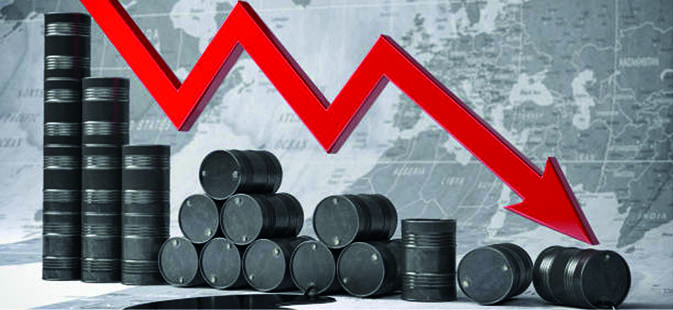
The past fortnight has unsettled investors, with fear and pessimism dominating market sentiment.
Rising crude, falling markets, and heightened volatility test investors. Those who stay patient can turn corrections into long-term opportunities.[EasyDNNnews:PaidContentStart]
The past fortnight has unsettled investors, with fear and pessimism dominating market sentiment. March began on a volatile note as geopolitical tensions in the Middle East escalated sharply following strikes by Israel and the United States on Iran. In retaliation, Iran intensified its response, disrupting the Strait of Hormuz and launching counterattacks across the region. This escalation sparked widespread concerns over a potential supply shock, pushing crude oil prices sharply higher.
As anticipated, crude oil prices surged to nearly USD 120 per barrel in the first week, raising alarm over inflationary pressures and the potential slowdown in global economic growth. The ripple effects were immediately visible across financial markets. The Indian rupee continued its downward trajectory, breaching the 92 mark against the U.S. dollar, its weakest level on record. Domestic equity markets mirrored the global turmoil.
The Nifty VIX, often referred to as the fear gauge, spiked nearly 65 per cent during the period, reflecting heightened uncertainty and risk aversion among investors. Benchmark indices witnessed a sharp correction, with both the BSE Sensex and Nifty 50 declining over 8 per cent within just nine trading sessions, one of the steepest short-term falls in recent times. The Nifty 50 breached key psychological levels of 25,000 and 24,000 before finding some support around the 23,000 level.
The broader markets were not spared, declining in tandem with frontline indices. Sectoral performance remained weak across the board, with most indices ending deep in the red. BSE Auto and BSE Bankex emerged as the worst hit sectors, recording double digit losses, while oil and gas, Real Estate, and metals also witnessed significant selling pressure. Foreign institutional investors (FIIs) turned aggressive sellers once again, offloading equities worth approximately ₹56,900 crore during the fortnight.
In contrast, domestic institutional investors (DIIs) played a stabilising role, infusing nearly ₹70,500 crore and cushioning the downside to some extent. In such volatile phases, investors often fall prey to emotional decision making, exiting markets amid sharp declines. However, for long-term investors, such corrections can present meaningful opportunities to accumulate quality stocks at more attractive valuations. Timing the exact market bottom remains elusive, and those who remain on the sidelines risk missing the eventual recovery. As uncertainty persists, staying disciplined and focused on long-term fundamentals remains crucial. Investors should remain watchful and prepared to capitalise on opportunities that emerge during this phase of market weakness.

[EasyDNNnews:PaidContentEnd] [EasyDNNnews:UnPaidContentStart]
To read the entire article, you must be a DSIJ magazine subscriber.
[EasyDNNnews:UnPaidContentEnd]