Decoding Order Books and Execution Cycles in Capital Goods Companies!
DSIJ Intelligence-6 / 11 Sep 2025 / Categories: General, Knowledge, Trending
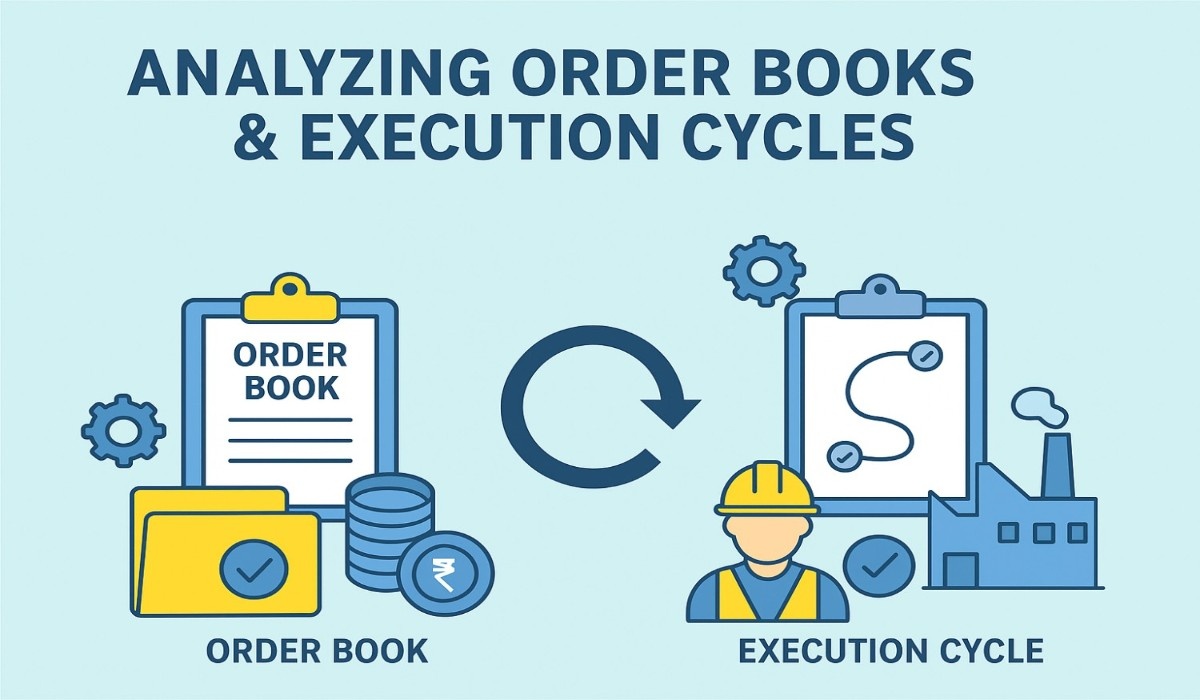
For capital goods companies, order book strength signals growth potential, while execution cycle efficiency drives actual earnings.
Understanding the Order Book
The order book represents the total value of contracts that a capital goods company has secured but not yet executed. It is a crucial indicator of future revenue visibility. A healthy order book suggests steady demand, while a thin one signals potential slowdown. Investors should focus on:
- Order book size vs annual revenue (Book-to-Bill ratio): A ratio above 2x often implies strong revenue visibility for the next 2–3 years.
- Order diversification: Orders from multiple sectors (power, railways, oil & gas, defence, etc.) reduce dependence on a single industry.
- Quality of orders: Government or PSU orders are generally lower-risk but lower-margin; private sector orders may carry higher risk but better profitability.
Evaluating Execution Cycles
Execution cycle refers to the time taken from order win to project completion. It affects working capital needs, cash flows, and revenue recognition. Key points to assess:
- Project duration: Long-cycle projects (like power plants) tie up capital longer and may delay revenue. Short-cycle projects (like equipment supply) are executed faster, improving cash turnover.
- Execution pace: Companies that consistently convert order backlog into revenue on time demonstrate strong operational efficiency.
- Order slippages: Frequent delays or cancellations erode margins and investor confidence.
Financial Metrics to Track
Certain metrics help measure how effectively a company is converting its order book:
- Order inflow vs revenue growth: Rising order inflow should translate into revenue growth over time; persistent mismatch indicates execution challenges.
- Working capital days: High working capital requirements can strain cash flows, especially in long-cycle projects.
- Advance payments and milestone billing: Companies receiving upfront advances manage execution risks better and reduce dependency on external financing.
Risk Assessment
A large order book alone doesn’t guarantee profitability. Investors must evaluate:
- Execution capability and past track record
- Cost escalation clauses and contract terms
- Dependency on subcontractors or imported components
- Geopolitical or regulatory risks impacting large projects
Conclusion
For capital goods companies, order book strength signals growth potential, while execution cycle efficiency drives actual earnings. Investors should analyse both aspects together to assess business sustainability. A robust, diversified order book combined with timely execution, disciplined working capital management, and strong client credentials indicates a resilient and scalable capital goods business. This approach helps identify companies with predictable cash flows and lower project risk, ensuring better long-term investment outcomes.