Digital Gold: Shiny on the Outside, Risky on the Inside?
DSIJ Intelligence-6 / 14 Nov 2025 / Categories: Knowledge, Trending
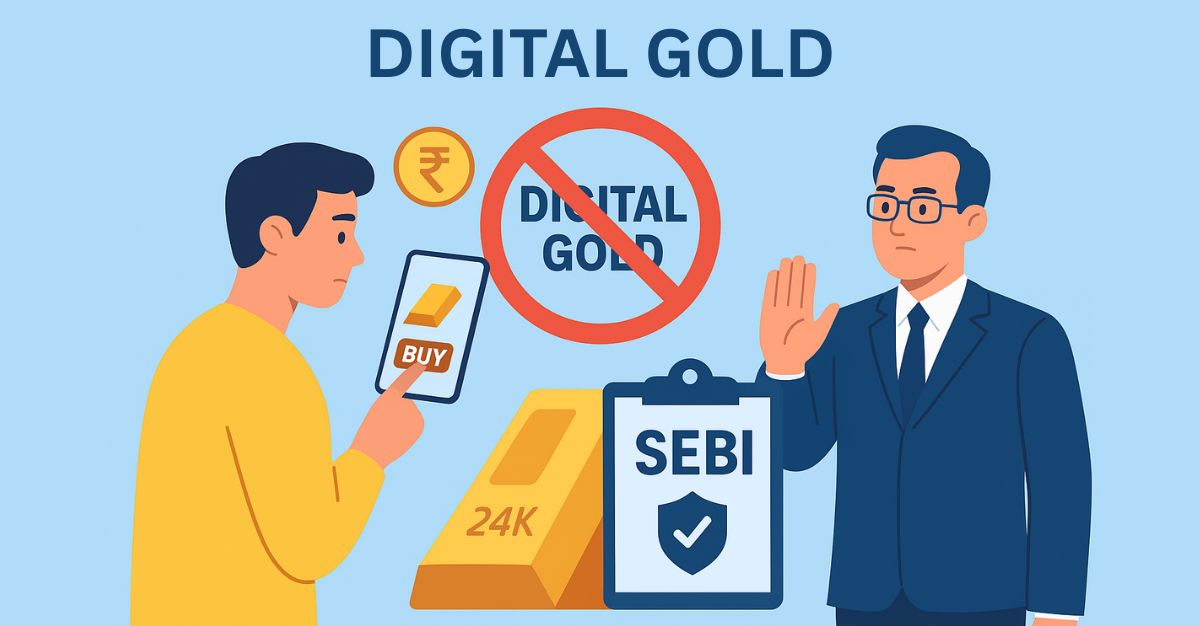
Digital gold may be convenient, but SEBI’s warning makes the core point clear: it is an unregulated product with no safety net.
Introduction: The Rise of Tap-and-Own Gold
Over the last decade, India has seen a flood of simplified investment products—one-tap SIPs, round-up investing, gamified rewards, and more. Riding this wave was “digital gold,” marketed as pure, 24-karat gold that you could buy instantly with as little as Rs 100. For a country that culturally treasures gold, this pitch worked brilliantly. As per ET Wealth, UPI transactions in digital gold jumped from about Rs 760 crore in January to nearly Rs 1,180 crore by August 2025.
But despite its shine, digital gold has structure-level flaws that most buyers don’t see. And that’s exactly why SEBI issued a strong caution note in November 2025. The message? Not all that glitters is gold—especially when it’s not regulated.
What SEBI Warned About
SEBI reminded investors that India already has regulated ways to invest in gold—Gold ETFs by Mutual Funds, electronic gold receipts (EGRs) tradable on exchanges, and gold-linked derivatives. These come with formal oversight, disclosure norms, custodians, trustees, and investor protection mechanisms.
Digital gold, on the other hand, is outside SEBI’s jurisdiction. It is not classified as a security, not a commodity derivative, and not regulated by any financial authority. The platforms selling it operate entirely on private contracts, meaning investor rights depend solely on what the company promises—nothing more.
If a digital gold platform shuts down, collapses, or mismanages assets, you have no regulatory system to fall back on. No depository. No trustee guarantee. No investor protection fund. You simply join the queue with all other creditors, hoping to recover your claim through lengthy civil proceedings.
Where the Real Risk Lies: Regulation (or the Lack of It)
When you buy a stock, it sits safely in your demat account with CDSL/NSDL—not with your broker. If the broker goes down, your shares remain untouched. Gold ETFs function similarly. They are supported by custodians, trustees, daily NAV disclosures, auditing frameworks, and strict separation of assets.
Digital gold looks similar but is entirely different beneath the interface. Any company can launch an app, partner with a vaulting entity, and sell digital gold. They may claim to hold gold on your behalf, but:
- Is your gold segregated or pooled?
- Do you own specific bars or just a portion of an undifferentiated bulk quantity?
- Is the gold audited?
- What happens if the company goes Bankrupt?
There are no mandatory answers. No standardization. No oversight. Your investment depends entirely on the platform’s credibility—not on law-backed protection.
This is classic counterparty risk: you’re betting that the platform you’re using will never fail.
The Pricing Problem: A Loss from Day One
Even if you trust the platform, digital gold carries structural cost disadvantages:
- 3 per cent GST: Legally, digital gold is treated like buying physical gold. So, every purchase attracts 3 per cent GST—instantly putting your investment in the negative.
- Wide Spreads: Unlike Gold ETFs that trade at transparent market prices, digital gold platforms set their own buy/sell quotes. Typically, the spread itself is another 2–3 per cent.
This means:
- On a Rs 10,000 purchase, Rs 300 disappears as GST.
- Another Rs 200–Rs 300 is lost to platform spreads.
You effectively start with Rs 9,400–Rs 9,500 worth of gold despite paying Rs 10,000.
Conclusion: A Shiny Shortcut That Isn’t Worth the Risk
Digital gold may be convenient, but SEBI’s warning makes the core point clear: it is an unregulated product with no safety net. If a platform collapses, your gold isn’t protected by SEBI, exchanges, depositories, or any regulated market mechanism.
If you genuinely want exposure to gold, regulated options like Gold ETFs or EGRs offer the same economic benefit—without counterparty risk, without opaque pricing, and without worrying about whether your gold actually exists in a vault.
In the long run, “easy” shouldn’t come at the cost of “unsafe.”