Driving Growth: The Significance of India's Automotive Sector
Ninad Ramdasi / 13 Jul 2023 / Categories: DSIJ_Magazine_Web, DSIJMagazine_App, Special Report, Special Report, Stories
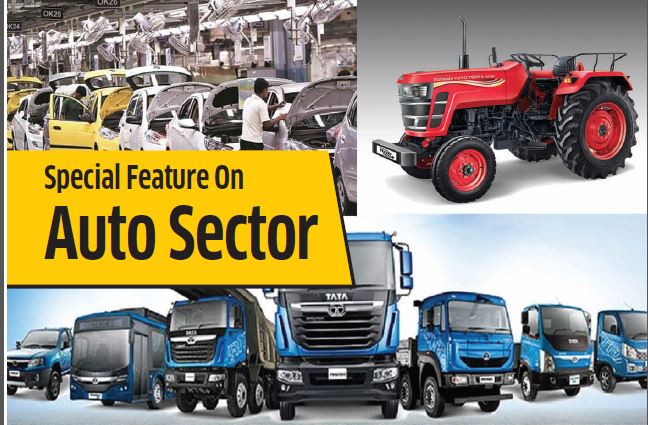
The automotive industry in India plays a vital role in the country's economy, serving as a major pillar of growth. With strong backward and forward linkages, it contributes significantly to the overall development.
The automotive industry in India plays a vital role in the country's economy, serving as a major pillar of growth. With strong backward and forward linkages, it contributes significantly to the overall development. [EasyDNNnews:PaidContentStart]
In recent years, the auto sector has witnessed considerable progress due to liberalisation efforts and strategic policy interventions. These initiatives have fostered a dynamic and competitive market, attracting new players and driving capacity expansion within the automobile industry. As a result, there has been a substantial increase in employment opportunities, with the sector providing direct and indirect livelihoods to over 19 million people. The automotive industry's contribution to the national GDP has risen impressively from 2.77 per cent in 1992-93 to around 7.1 per cent currently.
Within the Indian automobile market, two-wheelers hold the largest market share, accounting for approximately 77 per cent, followed by passenger cars at 18 per cent during the 2021-22 period. Among passenger cars, the market is predominantly dominated by small and midsized vehicles. Furthermore, the export of automobiles has witnessed substantial growth, with the total number of exported vehicles increasing from 4,134,047 in 2020-21 to 5,617,246 in 2021-22, reflecting a significant positive growth rate of 35.9 per cent. While in FY23 it increased by 15 per cent on a yearly basis.
The electric vehicle (EV) market in India is also on the rise, projected to reach Rs 50,000 crore (USD 7.09 billion) by 2025. This growth can be attributed to factors such as rising middleclass incomes and a growing youth population, leading to increased demand for vehicles. Foreign direct investment (FDI) has played a crucial role in the development of the automobile sector in India. The sector attracted equity inflows from FDI totalling USD 33.77 billion, accounting for 5.48 per cent of the total equity FDI during that period.
India has set ambitious goals for its automotive industry, aiming to double its size to Rs. 15 lakh crore by the end of 2024. This expansion plan reflects the government's commitment to further strengthen and enhance the sector's contribution to the economy. Moreover, the industry has attracted substantial foreign direct investment (FDI), with a cumulative inflow of USD 33.77 billion from April 2000 to September 2022. This FDI inflow accounts for around 5.48 per cent of the total FDI inflows in India during the same period, highlighting the industry's continuous development, supported by favourable policies and increased investments, positions it for further expansion and success in the coming years.

Earnings Expectation for Q1FY24:
We anticipate strong year-on-year (YoY) revenue growth in Q1FY24, primarily driven by price hikes, volume growth, and improved product mix. However, sequentially, we expect revenues to remain relatively flat due to the seasonal decline in volumes. We also expect a YoY improvement in EBITDA margins, supported by lower raw material costs and higher operating leverage. However, on a sequential basis, we anticipate EBITDA margins to remain flat. Profitability is expected to be lower sequentially, particularly for commercial vehicle (CV) players who experienced a decline in volumes due to seasonality and pre-buying in the previous quarter.
Overall, we expect Q1FY24 to be a robust quarter for the automotive sector, with double-digit YoY growth in revenues, EBITDA, and profit after tax (PAT). Key drivers for this impressive earnings growth include more than 15 per cent volume growth in both two-wheelers and four-wheelers, as well as a reversal in raw material costs. We believe that two-wheeler original equipment manufacturers (OEMs) will experience earnings growth due to improved export volumes, enhanced operating leverage, and a better product mix. CV-centric players, on the other hand, may deliver weaker revenue and lower EBITDA margin sequentially due to seasonality and pre-buying in the previous quarter.
Export-oriented ancillary players are expected to show sequential improvement in performance, although year-onyear growth may still be subdued due to a higher base. Domestic automotive tyre businesses are likely to report strong earnings with improved margins, despite lower sales volumes sequentially. However, ancillary players dependent on domestic two-wheelers and domestic CV volumes may experience weaker earnings sequentially.
In the passenger vehicle (PV) and two-wheeler (2W) segments, we anticipate impressive earnings growth YoY. With approximately 15per cent YoY volume growth in both segments, we expect revenue and EBITDA growth of around 20 per cent and 40 per cent respectively. However, on a sequential basis, 2Ws are projected to grow by around 10per cent while PVs are expected to remain flat. CV players, due to seasonality and pre-buying in the previous quarter, may witness a significant decline of approximately 45per cent in earnings sequentially, primarily due to lower scale impacting operating leverage. Despite this, we anticipate CV players to maintain EBITDA margins at around 8per cent compared to approximately 11per cent in Q4FY23.
In the forthcoming earning season, key factors to watch out for in the management commentary include the outlook on volumes across segments for FY24, the pipeline for new product launches, the revival of exports (particularly in the 2W and ancillary segments), inventory levels, the supply chain situation, and the outlook on discounting. Other important factors include working capital management, trends in debt reduction, outlook on input commodity costs, and the competitive intensity building up in utility vehicles, premium bikes, and electric two-wheelers.
Road Ahead
The Indian automotive industry has undergone remarkable progress in the past 20 years, garnering global attention and positioning itself as a formidable player in the sector. It has secured prominent rankings on a global scale, being the second-largest producer of two-wheelers, the seventh-largest in commercial vehicles, the sixth-largest in passenger vehicles, and the largest in tractors. This ascent has been fuelled by India's emergence as a highly sought-after destination for manufacturing top-quality automotive components and vehicles, gradually closing the gap with established manufacturing hubs worldwide.
Looking ahead, the automotive industry is poised for significant transformations on a global scale in the coming decade. One key transformation will be the shift in demand for automobiles, with growth predominantly driven by developing nations, particularly the BRICS countries, as opposed to developed nations. Additionally, there will be a notable increase in the integration of electronics in automobiles, effectively transforming them into "computers on wheels" connected to the internet. This trend will reshape the industry and drive innovation.
Furthermore, there will be a relentless pursuit of economies of scale and scope in automobile design and engineering, as well as a focus on finding low-cost manufacturing destinations. This dual approach aims to optimize production costs while delivering high-quality products. The industry will strive for efficiency, leveraging advanced technologies and global supply chains to achieve economies of scale, ensuring competitiveness in the global market.
Overall, the Indian automotive industry has made remarkable strides and is well-positioned to capitalize on the evolving dynamics of the global automotive landscape. With its strong manufacturing capabilities, growing domestic market, and increasing focus on innovation and technology, India is set to play a crucial role in shaping the future of the automotive industry.
[EasyDNNnews:PaidContentEnd] [EasyDNNnews:UnPaidContentStart]
To read the entire article, you must be a DSIJ magazine subscriber.
Current print subscribers click here to login
Subscribe now to get DSIJ All Access
[EasyDNNnews:UnPaidContentEnd]