EaseMyTrip’s EV Power Play: From Booking Tickets To Building Electric Buses
DSIJ Intelligence / 25 Sep 2026 / Categories: Mindshare, Trending
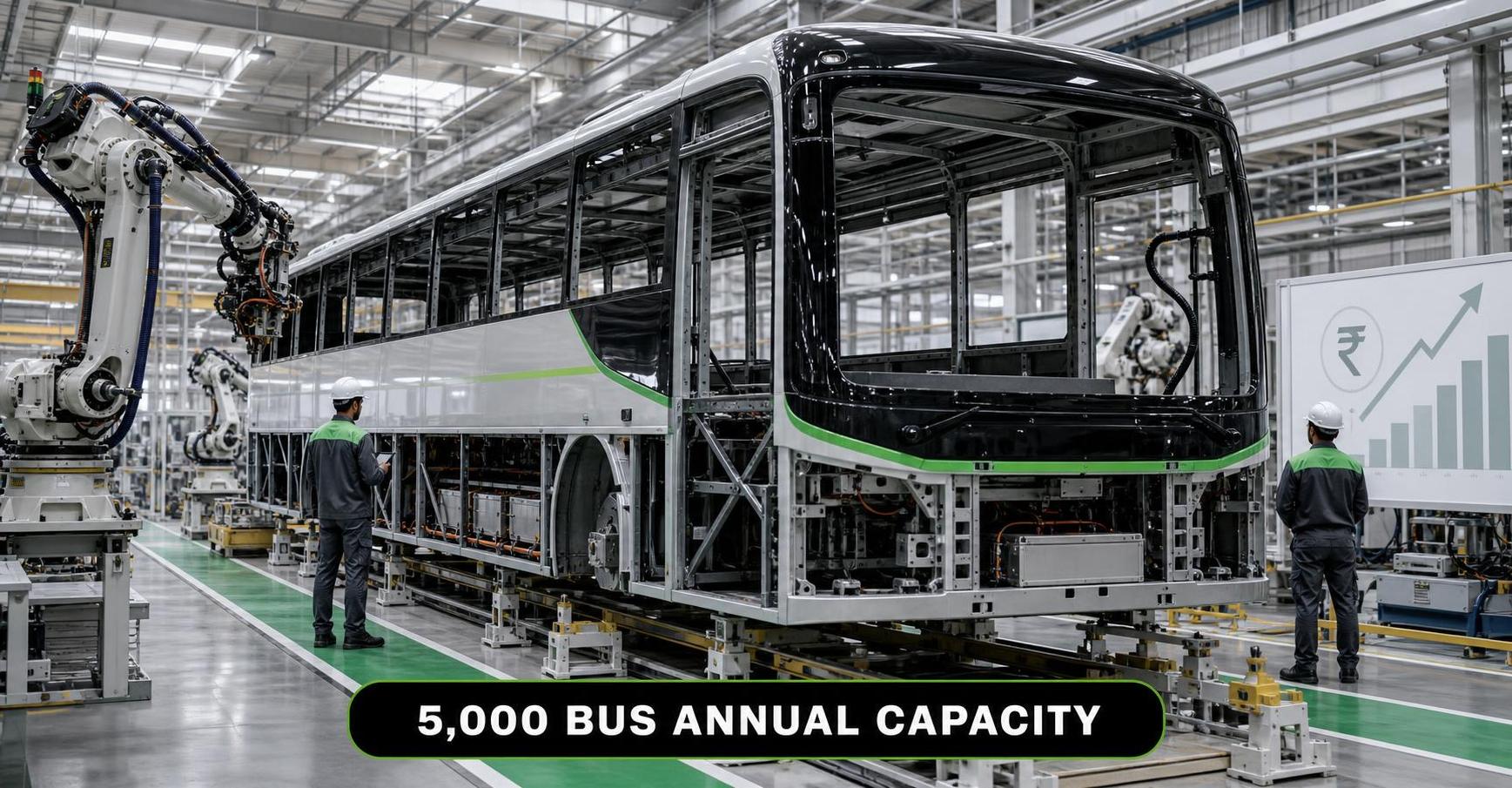
EaseMyTrip has launched its electric bus programme in Bhopal through EMTev, setting a five-year target to build annual manufacturing capacity of 5,000 buses under Vision 2030.
EaseMyTrip has marked the Bhopal debut of its electric bus business through Easy Green Mobility, or EMTev, moving the travel technology company further into asset-heavy mobility operations as it pursues a Vision 2030 target of manufacturing 5,000 electric buses annually within five years.
The rollout gives greater operational shape to EaseMyTrip’s planned diversification beyond online travel bookings. EMTev is being positioned as an integrated electric mobility business spanning bus manufacturing, fleet operations, service support and phased localisation of components. The company said its immediate priority is to meet committed electric bus deliveries and develop the service and operating infrastructure needed for larger-scale deployment.
EMTev’s initial product line includes a 12-metre electric seater coach configured for 45+D passengers. The bus has a 423.9 kWh lithium iron phosphate battery, a permanent magnet synchronous motor, air suspension, an electronic braking system with electronic stability control and electro-hydraulic power steering.
The company has stated a driving range of up to 350 km and a top speed of up to 100 km per hour. The fixed-battery vehicle uses liquid cooling and supports fast charging through a dual-gun configuration at designated charging locations.
The proposed manufacturing ambition is sizeable, although EaseMyTrip has not disclosed planned capital expenditure, plant location, investment commitments or a timeline for reaching intermediate capacity milestones. Manufacturing 5,000 buses annually would require the company to build capabilities materially different from its core online travel agency model, which has historically operated through supplier partnerships and digital distribution rather than industrial production.
EMTev said both its 12-metre and 13.5-metre electric bus models have received type approval. The buses will also use camera-based monitoring systems and a central control tower that tracks vehicle and battery data, allowing the operator to identify potential issues before deployment. The company is developing artificial intelligence-based driver monitoring and blind-spot detection systems, while advanced driver-assistance features remain part of its broader technology roadmap.
The electric bus programme builds on the operating experience of YOLO Bus, EaseMyTrip’s conventional intercity bus subsidiary, which runs services across southern Indian markets. This link could help EMTev develop fleet-management, passenger-service and route-operations capabilities, though electric fleets also require charging infrastructure, maintenance systems and battery-performance management.
Looking for High-Growth Stocks Below ₹100?
Explore DSIJ’s Penny Pick - a research-driven service focused on uncovering fundamentally strong low-priced stocks with long-term growth potential.
Download Service BrochureManoj Soni, chief executive of EMTev, said the company’s focus was to develop intra-city and intercity electric buses combining long-range batteries, fast charging, safety systems and passenger comfort at lower operating costs. He said the adoption of electric mobility would depend not only on sustainability considerations but also on long-term efficiency and total cost of ownership.
The move comes as EaseMyTrip seeks additional growth engines while its travel business remains under profitability pressure. In the June 2026 quarter, Easy Trip Planners reported net sales of Rs 134.71 crore, up 18.38 per cent year-on-year, but posted a net loss of Rs 11.13 crore compared with a profit of Rs 1.08 crore in the year-earlier quarter. Its annual consolidated loss for FY26 stood at Rs 47.60 crore.
Easy Green Mobility itself reported a loss after Tax of Rs 1.14 crore in FY26, while YOLO Bus recorded a loss after tax of Rs 17.47 crore. These figures underline that the electric bus initiative remains at an early investment and execution stage rather than being a proven earnings contributor.
Rikant Pittie, chief executive and co-founder of EaseMyTrip, said Vision 2030 reflected the company’s intention to participate in mobility infrastructure opportunities beyond travel technology. Progressive localisation of electric vehicle components will be a central part of the plan, though EMTev said this would be pursued through a phased domestic sourcing and manufacturing approach.
As of 12:32 pm on September 25, 2026, Easy Trip Planners shares were trading at Rs 5.83, up 0.52 per cent from the previous close. The stock was about 39.5 per cent below its 52-week high of Rs 9.64 and only around 1.2 per cent above its 52-week low of Rs 5.76, indicating that investors remain cautious on the company’s broader execution and profitability trajectory.
Disclaimer: The article is for informational purposes only and not investment advice.