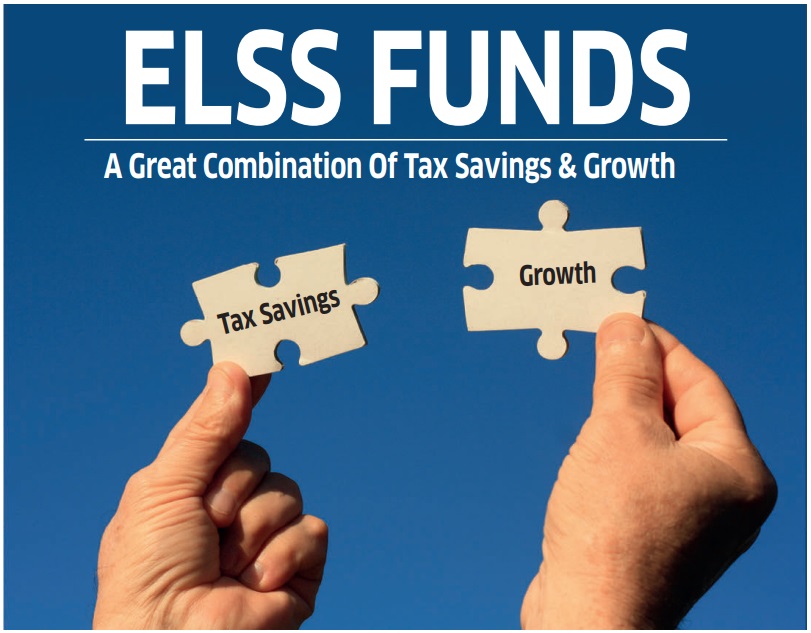
ELSS FUNDS A Great Combination Of Tax Savings & Growth
R@hul Potu / 23 Jan 2025/ Categories: Cover Stories, DSIJ_Magazine_Web, DSIJMagazine_App, MF - Cover Story, Mutual Fund
Tax loss harvesting and tax gain harvesting are powerful tools that can help investors optimise their portfolio returns by minimising the tax liabilities. While tax loss harvesting enables investors to offset losses strategically to reduce their tax burden, tax gain harvesting allows them to book profits without incurring taxes, promoting long-term tax efficiency
Tax loss harvesting and tax gain harvesting are powerful tools that can help investors optimise their portfolio returns by minimising the tax liabilities. While tax loss harvesting enables investors to offset losses strategically to reduce their tax burden, tax gain harvesting allows them to book profits without incurring taxes, promoting long-term tax efficiency [EasyDNNnews:PaidContentStart]
Rohan Mehta, a 30-year-old IT professional, was living his dream life in Bengaluru, working for a top-tier technology firm in the city’s vibrant Electronic City. With a well-paying job and a comfortable lifestyle, Rohan had everything going for him. However, despite his financial stability, Rohan was struggling to make sense of his finances. He had no clear plan for saving and investing, and his spending habits were starting to get the better of him. “I was making good money, but I had no idea where it was all going,” Rohan admits. “I was spending a lot on luxuries, and I knew I needed to start saving and investing for the future,” he adds.
That’s when Rohan began to explore his investment options. He spoke to friends, family members, and even financial advisors, but nothing seemed to stick. It wasn’t until he stumbled upon ELSS funds that he finally found a solution that made sense to him. ELSS, or equity-linked savings schemes, are a type of mutual fund that offers tax benefits under Section 80C of the Income Tax Act, 1961. By investing in ELSS funds, Rohan could claim a tax deduction of up to ₹1.5 lakhs per year, which would help him save thousands of rupees in taxes. Under the old tax regime, investors qualified for tax rebates by factoring in savings up to ₹1.5 lakhs under Section 80C.
However, the new tax regime, ushered in by changes in direct taxes as per the Union Budget 2023, operates without such provisions. But what really drew Rohan to ELSS funds was their potential for long-term wealth growth. Since these funds invest primarily in equities, they offer the potential for higher returns over the long term compared to other tax-saving options like fixed deposits or public provident funds. Also, ELSS has the shortest lock-in period of just three years.
Unlike the 15-year commitment of PPF or five years for fixed deposits, ELSS provides the freedom to access funds sooner. It’s like having a superhero that responds to your call without making you wait. Then comes the second good part: the potential for significantly higher returns. Traditional options may offer guarantees, but they struggle to keep up with inflation. ELSS, fuelled by the dynamism of the stock market, has the potential for robust growth. It not only saves but also multiplies your wealth. And the ultimate perk? The first ₹1.25 lakhs of ELSS returns are completely tax-free provided you have not booked any other long-term capital gain.
Rohan decided to invest ₹1,00,000 in an ELSS fund every year, which had a lock-in period of three years. He chose a fund with a good performance track record and a low expense ratio. Now, let’s fast-forward to five years from now. Rohan’s ELSS fund has grown to ₹6,75,283, providing a return of 14 per cent per annum (median return of 25 existing ELSS in the last 10 years). He can now redeem his investment and use the proceeds to fund his goals, such as buying a car, making a down payment for new home, or starting a family
But here’s the best part. Rohan can also claim the long-term capital gains tax benefit on his ELSS investment. Since he has held the investment for more than three years, he is eligible for tax exemption of ₹1.25 lakhs on the gains. For Rohan, investing in ELSS funds was a game-changer. Not only did it help him save taxes, but it also helped him develop a disciplined approach to saving and investing. “ELSS funds helped me achieve my financial goals, and they also taught me the importance of long-term investing. I would definitely recommend ELSS funds to anyone looking to save taxes and grow their wealth,” he says.
Return Analysis of ELSS
The performance of ELSS has relatively been steady across different timeframes. Over the past year, ELSS has returned 15.65 per cent, placing it mid-table among the various categories. In the longer term, ELSS has delivered returns of 14 per cent over three years, 18.36 per cent over five years, and 13.34 per cent over 10 years. While it has not outperformed categories like Mid-Cap, Small-Cap, Large-Cap and mid-cap, ELSS has still managed to hold its own, offering a relatively stable investment option for those seeking tax benefits and long-term wealth creation. Overall, ELSS funds have demonstrated their ability to deliver competitive returns while providing tax benefits, making them an attractive option for investors seeking to optimise their tax liability.

AUM and Inflows
The data reveals a notable trend in ELSS funds, with the first quarter of each year witnessing higher net inflows. This seasonality can be attributed to the tax-planning strategies of investors, who typically invest in ELSS funds during the initial months of the year to avail tax benefits. For instance, in 2023, the net inflows in January, February and March were ₹1,390.50 crore, ₹952.24 crore and ₹2,657.28 crore, respectively. Similarly, in 2024, the first quarter saw net inflows of ₹ 500.89 crore, ₹312.95 crore and ₹1,731.52 crore.

In terms of assets under management (AUM), ELSS funds have shown a steady growth trajectory. The AUM has increased from ₹1,62,361.69 crore in November 2022 to ₹2,48,534.94 crore in November 2024, representing a growth of over 53 per cent. Although the net inflows have been volatile, with some months witnessing outflows, the overall trend suggests that ELSS funds remain a popular investment option for tax-conscious investors. The consistent growth in AUM underscores the attractiveness of ELSS funds as a long-term investment avenue.
Conclusion
Although the introduction of the new tax regime has somewhat diminished its appeal, ELSS remains a viable investment option for wealth creation. While tax benefits are no longer the sole driving force, ELSS can still help achieve long-term financial goals. In today’s evolving tax landscape, ELSS continues to offer potential for wealth accumulation, providing investors with the flexibility to adapt to changing tax scenarios while staying focused on their financial objectives. Next, we will explore the top five ELSS funds.
Canara Robeco ELSS Tax Saver Fund (G)
Large-cap stocks in the last few years have grossly underperformed the broader market. However, in the coming years, it is expected that this category may recover its lost ground and outperform. Canara Robeco ELSS Tax Saver Fund is one such fund that has higher weightage towards large-cap stocks compared to its peers and hence has underperformed the category in the last three years. When evaluating the fund’s returns against the category average, we see that over the one-year and three-year periods, the fund has slightly underperformed with returns of 12.02 per cent and 11.55 per cent compared to the category averages of 13.8 per cent and 13.9 per cent, respectively. However, over longer horizons like five years and seven years, the fund has demonstrated superior performance, delivering 20.14 per cent and 16.53 per cent compared to the category averages of 19.36 per cent and 14.03 per cent, respectively. The portfolio is strategically diversified across various sectors, with the largest allocation to financials at 24.32 per cent while the technology sector accounts for 9.6 per cent, aligning with the current market trends of digital transformation. The fund also includes services (8.74 per cent), energy (7.81 per cent) and consumer staples (7.57 per cent), showcasing a balanced approach towards the cyclical and defensive sectors. The fund’s top holdings underline its emphasis on established blue-chip companies. HDFC Bank Limited leads with 6.91 per cent allocation, followed by ICICI Bank Limited at 6.38 per cent, ensuring strong exposure to the banking sector. Other major contributors include Infosys Limited (4.67 per cent), Reliance Industries Limited (3.3 per cent) and Bharti Airtel Limited (3.27 per cent). In terms of risk-adjusted performance, the Sharpe ratio of the fund stands at 0.68, far below the category average of 6.81, signifying poorer risk-adjusted returns. Despite its underperformance in the short term, the fund shows potential for long-term wealth creation due to its strong sectoral diversification and a portfolio dominated by resilient, blue-chip stocks. What also favours the fund is its very low expense ratio of just 0.56 per cent.


HDFC ELSS Tax Saver Fund (G)
After four years of exceptional performance, the market is showing some sign of fatigue. We can expect the value theme to do better now. One such fund that is overweight on this theme is HDFC ELSS Tax Saver Fund, which has outperformed its category averages across several time periods. Over one year, the fund has delivered 15.32 per cent, surpassing the category average of 12.72 per cent. For three years, its returns stood at 19.41 per cent compared to 13.65 per cent. Over five years, it achieved 20.19 per cent against the category average of 19.17 per cent, reflecting consistent performance. Beyond this period, the fund has trailed returns of its peers purely because its value-oriented strategy fell out of favour. Nevertheless, after a new fund manager took over in 2022, the performance has improved for the better as she avoids deep-value opportunities that take time to materialise and perform. The fund’s portfolio is heavily tilted towards the financial sector, which constitutes 35.41 per cent of its holdings, followed by healthcare at 11.39 per cent and automobiles at 9.84 per cent. Other significant sectors include technology (7.86 per cent) and communication (5.65 per cent), indicating a diversified yet strategically focused approach to capitalise on growth in critical industries. The fund boasts an alpha of 6.75, outperforming its benchmark more than the category average alpha of 6.18. Its beta of 0.87 indicates lower sensitivity to market fluctuations than the category average of 1.05. Furthermore, its standard deviation of 12.14 signifies slightly higher volatility compared to the category’s 12.02. The top five company holdings showcase a strong banking focus, with HDFC Bank Limited (9.92 per cent), ICICI Bank Limited (9.78 per cent) and Axis Bank Limited (7.85 per cent) leading the portfolio. Non-banking names like Cipla Limited (5.25 per cent) in healthcare and Bharti Airtel Limited (5.05 per cent) in communication add diversification. In summary, the HDFC ELSS Tax Saver Fund is ideal for investors seeking tax savings with the potential for high returns, driven by its strategic sector allocations and strong alpha generation.


Kotak ELSS Tax Saver (G)
If you are an investor with a little higher risk appetite and expectations, Kotak ELSS Tax Saver Fund might be the right ELSS for you. The reason being the fund’s comparative larger exposure towards the momentum theme. Over the past few months, momentum has been underperforming, which is reflected in its recent performance where it unperformed the category in one, three and six months. Over the past year, the fund has achieved a return of 15.78 per cent, surpassing the category average of 13.8 per cent. In the three-year period, the fund continued to outperform, generating 14.37 per cent compared to the category average of 13.9 per cent. Its five-year performance remains almost on par, with a return of 19.38 per cent versus 19.36 per cent. This consistent track record showcases the fund’s ability to generate superior returns over the long term. The fund’s portfolio is strategically diversified across various sectors. Financials form the largest portion, accounting for 23.37 per cent of the portfolio, reflecting a strong preference for stability and growth potential in banking and related industries. The energy and technology sectors hold significant weights at 12.95 per cent and 12.64 per cent, respectively. Capital goods and services make up smaller portions at 6.54 per cent and 6.05 per cent, respectively, ensuring a balanced exposure across various market segments. The fund’s top holdings underscore a robust selection of leading companies. HDFC Bank Limited leads the portfolio with an 8.55 per cent allocation. Infosys Limited and ICICI Securities Limited follow with 5.44 per cent and 3.92 per cent allocations, respectively, reflecting confidence in the technology and financial services sectors. Tech Mahindra Limited (3.7 per cent) and State Bank of India (3.45 per cent) round out the top five, further diversifying the portfolio across leading players in the technology and banking industries. When comparing risk-adjusted returns, the Kotak ELSS Tax Saver fund underperforms its peers in certain metrics. This may be due to higher volatility in NAV of the fund reflected in the standard deviation of 12.37, which is higher than the category average of 12.02.


Motilal Oswal ELSS Tax Saver Fund (G)
Contrary to many other funds in this category, Motilal Oswal ELSS Tax Saver Fund carries higher weightage towards small-cap stocks. And this is the reason why this fund has performed exceptionally well in recent years but not in recent months. In terms of YTD performance, it lies in the fourth quartile in its category. Nevertheless, over the past one year, the fund’s return stands at 30.34 per cent, more than double the category average of 13.8 per cent. Over longer periods, such as three years, five years and seven years, the fund has consistently surpassed its peers with returns of 22.66 per cent, 22.84 per cent and 16.94 per cent, respectively, compared to the category averages of 13.9 per cent, 19.36 per cent and 14.03 per cent. A major share of the performance may be attributed to its recent performance that has lifted its long-term performance. The fund’s portfolio is strategically allocated across various sectors, demonstrating diversification and growth potential. The highest allocation is in the capital goods sector (23.44 per cent), reflecting a focus on infrastructure and manufacturing. This is followed by services (16.43 per cent), consumer discretionary (11.53 per cent), financials (10.21 per cent) and construction (6.74 per cent). The fund’s top five holdings represent a robust selection of high-growth potential companies. Trent Limited leads with a 6.86 per cent allocation, followed by Zomato Limited at 6.25 per cent. Kalyan Jewellers India Limited (5.44 per cent), Kaynes Technology India Limited (5.0 per cent) and Prestige Estates Projects Limited (4.05 per cent) round out the portfolio, highlighting a focus on consumer, technology and real estate sectors. These companies are well-positioned for future growth, aligning with the fund’s investment philosophy. In terms of risk-adjusted performance, the fund exhibits a strong alpha of 11.94 compared to the category average of 6.18. However, the Sharpe ratio of 1.46 is notably lower than the category average of 6.81, indicating higher volatility. The fund is suitable for high-risk investors with investment horizon of more around five years due to its asset allocation which is higher towards more volatile stocks.


Parag Parikh ELSS Tax Saver Fund (G)
If expense ratio is one of the deciding factors to select a fund, Parag Parikh ELSS Tax Saver Fund remains at the top in the ELSS category. It’s not only the cost but even the performance of the fund that has placed it in the top quartile in its category. The fund has consistently outperformed its peers across all the key time periods. Over six months, the fund has recorded a smaller decline of -1.16 per cent compared to the category average of -5.73 per cent. Over longer durations, the fund truly shines with three-year returns of 16.33 per cent versus 13.65 per cent. It has also posted an impressive five-year return of 23.23 per cent, well above the category average of 19.17 per cent. This strong performance across various time periods reflects the fund’s superior stock selection and management capabilities. In terms of sectoral allocation, the fund adopts a diversified approach, with a strong tilt toward financials (30.35 per cent), which remains the backbone of the portfolio, capitalising on the growth of India’s financial ecosystem. The technology sector (14.48 per cent) represents another significant allocation, leveraging the potential of India’s IT services and digital transformation trends. The fund also has exposure to automobiles (12.46 per cent). At the individual holding level, the fund exhibits a strategic mix of established, high-quality companies. Bajaj Holdings and Investment Limited constitutes the largest holding at 8.94 per cent. A leading private sector entity, HDFC Bank Limited (8.24 per cent) underscores the fund’s reliance on financials to drive returns. Power Grid Corporation of India Limited (6.77 per cent) and Coal India Limited (6.03 per cent) provide a defensive tilt to the portfolio, ensuring consistent returns even during market volatility. Lastly, ITC Limited (5.53 per cent), a diversified FMCG giant, adds stability and consumer-driven growth potential to the mix. The combination of consistent outperformance, diversified sectoral exposure, high-quality stock selection and lower risk makes this fund an excellent choice for investors seeking a stable yet high-performing investment avenue.


[EasyDNNnews:PaidContentEnd] [EasyDNNnews:UnPaidContentStart]
To read the entire article, you must be a DSIJ magazine subscriber.
[EasyDNNnews:UnPaidContentEnd]