Funds in Portfolio: Quality Over Quantity
R@hul Potu / 03 Oct 2024/ Categories: DSIJ_Magazine_Web, DSIJMagazine_App, MF - Special Report, Mutual Fund, Special Report
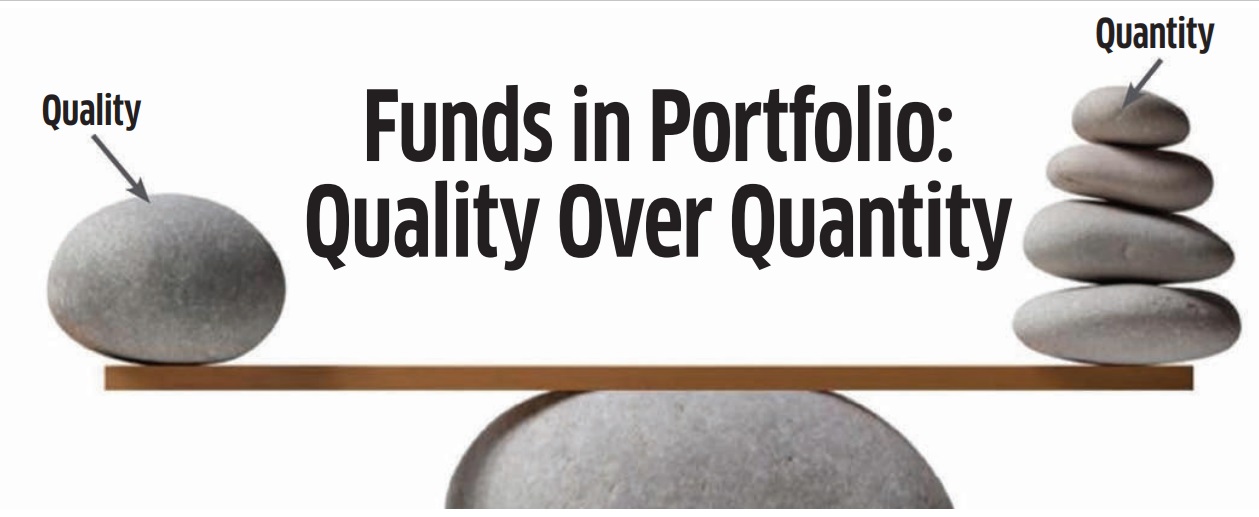
There are many investors who, lured by the low price of new fund offers, turn into collectors, assuming that the more the number of mutual funds in their portfolio, the higher will be the overall return. But nothing can be further than this theory. Investing in NFOs must be driven by a goal-based, style-diversified approach that ensures your investments are purpose-driven, thus helping you stay on track to achieve your financial aspirations without unnecessary complications [EasyDNNnews:PaidContentStart]
Picture this: A young investor, whom we shall call Raj Mehta, is sitting in front of his laptop, excitedly subscribing to the latest new fund offerings (NFOs). To him, NFOs seem like a steal, priced at ₹10 per unit. His inbox is flooded with notifications from mutual fund houses announcing new schemes, and Raj, driven by the fear of missing out, invests in most of them, believing that they are cheap and promising. Months go by, and Raj realises that his portfolio is cluttered with over 30 different mutual funds across categories.
His returns are barely beating the index, and he’s left wondering whether he really did make a smart choice? This story isn’t unique. Many investors fall into the trap of assuming that more funds equal better diversification, or that NFOs are a golden opportunity just because they seem ‘cheap’.(See Box: Why NFOs at ₹10 Aren’t Necessarily Cheap) In reality, over-diversification and an unstructured portfolio can dilute potential returns, add complexity, and make tracking difficult. So, how many mutual funds should you really hold in your portfolio? Let’s break it down.
Too Many Funds, Too Little Focus
After a few years of investing, many individuals find themselves saddled with 20 or more mutual funds, with some of them performing well counterbalanced with many that don’t perform or simply duplicate the same strategies. At this point, the portfolio becomes unwieldy, difficult to manage and lacks focus. Investors are often left unsure of what to do next. This collector’s mentality—adding funds without purpose—often leads to ‘diworsification’ rather than ‘diversification’. Having too many funds, especially ones that overlap in strategy, can dilute potential gains and make tracking performance a nightmare.
Diversification: The Sweet Spot Between Too Few and Too Many
When deciding how many mutual funds to include in your portfolio, it’s essential to strike balance between diversification and manageability. Diversification is important because it helps spread risk across different asset classes, sectors and geographies, reducing the impact of any single underperforming investment. But excessive diversification, or owning too many funds, can lead to diworsification.
In such a case, the portfolio is so spread out that it essentially mirrors the market at a much higher cost than a simple index fund. So, how many funds are ideal? The number of mutual funds you need depends on your financial goals, time horizon and risk tolerance. There isn’t a one-size-fits-all answer, but the general guideline is between five and ten funds for most investors. This range allows for enough diversification to reduce risk without overwhelming the portfolio.
1: Find the Balance
The key isn’t just the number of funds but the right mix of styles and strategies for each goal. Simply put: one goal and one portfolio with enough diversification. When beginning your investment journey, it’s critical to recognise that the number of funds alone doesn’t determine success. The key lies in aligning your portfolio with specific financial goals. For instance, if you are investing for retirement, your portfolio should include a mix of growth-oriented and stable funds that align with your time horizon and risk tolerance.
In contrast, a portfolio for a vacation, which may have a shorter time frame, might demand a different strategy. By using a ‘one goal – one portfolio’ approach, you ensure that each financial goal is treated uniquely, with adequate diversification to mitigate risks. This not only allows for better focus but also prevents overlap or excessive exposure to similar assets. Sufficient diversification across asset classes, sectors and regions further ensures that your investment is resilient to market fluctuations, reducing the overall risk while optimising returns.
2: Mix the Styles
Thus, the goal-based, style-diversified approach ensures that your investments are purpose-driven. Once your portfolio is goal-focused, mixing styles and keeping the number of funds optimal becomes easier. It’s fine to use the same fund for multiple goals. Creating a goal-oriented portfolio makes managing your investments significantly easier. Once you identify a clear financial target—whether it’s saving for a home, a vacation or long-term retirement—you can focus on selecting funds that align with that specific objective.
As you choose funds, mixing different investment styles, such as growth, value or index funds, becomes a natural extension of tailoring your strategy to meet each goal’s requirements. This structured approach not only optimises the number of funds but also simplifies portfolio management. You can avoid unnecessary complexity by keeping your fund selection concise and effective, rather than spreading investments too thin across numerous funds.
Moreover, it’s completely acceptable to use the same fund for multiple goals, especially if the fund aligns with your risk tolerance and time horizon for those objectives. For example, a well-performing Large-Cap fund can be used for both your child’s education and retirement plans, provided the timeframe and risk profile suit both goals. By leveraging this strategy, you ensure that your investments are streamlined, manageable, and aligned with your overall financial plan.
3: Choose a Timeframe
The strategy to mix depends on your goal’s timeframe. Investment strategies should be carefully selected based on the timeframe for achieving each financial goal. For short-term goals, typically those spanning less than three to five years, low-risk, conservative strategies like debt mutual funds, liquid funds or bank fixed deposits may be more suitable. These investments prioritise capital preservation while offering modest returns, which align well with the shorter investment horizon.
Conversely, for long-term goals such as retirement, which may be 20 to 30 years away, a more aggressive investment strategy, focusing on growth-oriented assets like equity mutual funds, becomes appropriate. Over a longer period, equities have historically delivered higher returns, helping to outpace inflation and build significant wealth.
However, the strategy should be diversified, blending different investment styles like growth and value stocks, as well as domestic and international funds, to spread risk. By considering the goal’s timeframe, you can effectively mix styles and strategies to balance risk and reward, ensuring that you maximise returns while protecting your capital. This tailored approach allows for a well-rounded portfolio that evolves with your financial goals.
4: Decide the Amount
The quantum of money you plan to invest will decide how many funds you need. The amount of money you plan to invest is a critical factor in determining the number of funds you should include in your portfolio. If you are just starting your investment journey with a small amount—say ₹500—investing in a single mutual fund is sufficient. As your investment grows, you can consider adding more funds, but only with a clear strategy in mind.
Here’s a simple guide based on your SIP (systematic investment plan) amount:
■ For amounts between ₹500 and ₹5,000, one fund is enough.
■ For SIPs between ₹5,000 and ₹15,000, consider 2-3 funds.
■ For SIPs above ₹15,000, spread your investments over 3-5 funds.

5: Widen the Canvas
As your corpus builds, it’s advisable to have funds managed by 3-5 different fund managers to mitigate the concentration risk. The goal is to strike a balance between diversification and manageability, as too many funds can become difficult to track and might lead to over-diversification, diluting the overall returns. Therefore, the quantum of investment should guide your portfolio structure for optimal performance. It’s best to avoid excessive exposure to a single fund in high-risk categories, especially in debt, where liquidity, default or volatility risks are higher.
When investing in high-risk categories, particularly in Debt Funds, it’s important to avoid excessive exposure to a single fund. Debt funds, while generally perceived as safer than equities, can carry significant risks related to liquidity, default and volatility. For example, in cases where a fund is heavily invested in lower-rated corporate bonds or in sectors with liquidity constraints, market conditions can quickly turn against you, leading to steep losses. Diversifying your debt portfolio across different types of funds—such as corporate bond funds, government securities and short-term debt funds—can help mitigate these risks.
Why NFOs at ₹10 Aren’t Necessarily Cheap
Many investors subscribe to NFOs simply because of the enticing idea that the fund is available at ₹10. The thought process is simple: ₹10 per unit seems cheaper than buying a well-established fund where the NAV (net asset value) might be ₹50, ₹100, or even ₹500. However, this is a misunderstanding. The price of a fund, whether it’s ₹10 or ₹100, doesn’t determine its value. An NFO’s price of ₹10 is arbitrary— it’s merely the starting point for a new mutual fund.
What matters is how the fund will perform in the future. Established funds with higher NAVs have a track record you can assess. They have weathered market ups and downs and generated returns. An NFO, on the other hand, comes with no such history. It’s a gamble on future performance, and its ₹10 price is no bargain if the fund fails to perform. There were funds launched in 2007-08 which took years to even reach ₹10, especially those that invested in infrastructure funds.
For example, Quant Infra Fund launched in August 2007 saw a surge initially but took more than a few years to reach ₹10. Additionally, NFOs often come with higher marketing costs and expense ratios, especially during the early years, which can erode returns. Rather than getting drawn in by the allure of something ‘new’ or ‘cheap’, it’s important to assess whether the fund aligns with your investment goals and risk appetite. To sum it up, your portfolio need not be weighed down by the number of mutual funds. Rather, keep it trim but keep it strong!

Each category carries its own risk and return profile, so spreading your investments reduces the impact of any single adverse event. In high-risk categories, like credit risk funds, the chances of a default can also be higher. Limiting exposure to such funds ensures that your portfolio remains balanced, reducing the potential for significant capital loss. Thus, prudent allocation across different debt fund types, with a focus on quality and diversification, is essential for safeguarding your investment against market volatility and credit risks.
Factors for Choosing Funds
There is also a different way to find the number of funds that you can have in your portfolio as aligned with your risk appetite and return expectations.
1. Risk Appetite and Return Expectations
■ Conservative Investors (Low Risk): A portfolio with 3–5 funds, mainly consisting of large-cap, debt, or balanced funds, can provide sufficient diversification without too much risk.
■ Moderate Risk Investors: Aim for 5–7 funds, with a mix of large-cap, Mid-Cap and debt funds. This balance provides the potential for growth while maintaining stability.
■ Aggressive Investors (High Risk): Around 7–10 funds focusing on Small-Cap, sectoral or international funds can provide exposure to higher returns but with more volatility.
2. The 5-10 Per Cent Rule
A simple formula to manage diversification is the 5-10 per cent rule:
■ 5 Per Cent Allocation Minimum: If you hold a fund, make sure you allocate at least 5 per cent of your total portfolio to it. Anything lower is too small to make a meaningful impact.
■ 10 Per Cent Allocation Maximum: Avoid having more than 10 per cent of your portfolio in any single fund, as it could expose you to too much risk. Remember to rebalance your portfolio periodically to get the best of the results of investing.
Conclusion:
Thoughtful and Focused Investing
Investing is not just about accumulating funds but more about thoughtful decision-making. Avoid the temptation to become a collector of mutual funds. More funds do not necessarily mean better returns. Focus on quality over quantity, and ensure each fund in your portfolio serves a specific purpose tied to your financial goals. When in doubt, a simpler, well-diversified portfolio with fewer funds will often serve you better in the long run.
So, the next time you are faced with a barrage of new fund offers, take a step back, evaluate your portfolio, and ask yourself whether you really need that particular fund.

[EasyDNNnews:PaidContentEnd] [EasyDNNnews:UnPaidContentStart]
To read the entire article, you must be a DSIJ magazine subscriber.
Current print subscribers click here to login
Subscribe NOW to get DSIJ All Access!
[EasyDNNnews:UnPaidContentEnd]