Gallantt Ispat
Ratin / 23 Jul 2026 / Categories: Analysis, Analysis, DSIJ_Magazine_Web, DSIJMagazine_App, Regular Columns
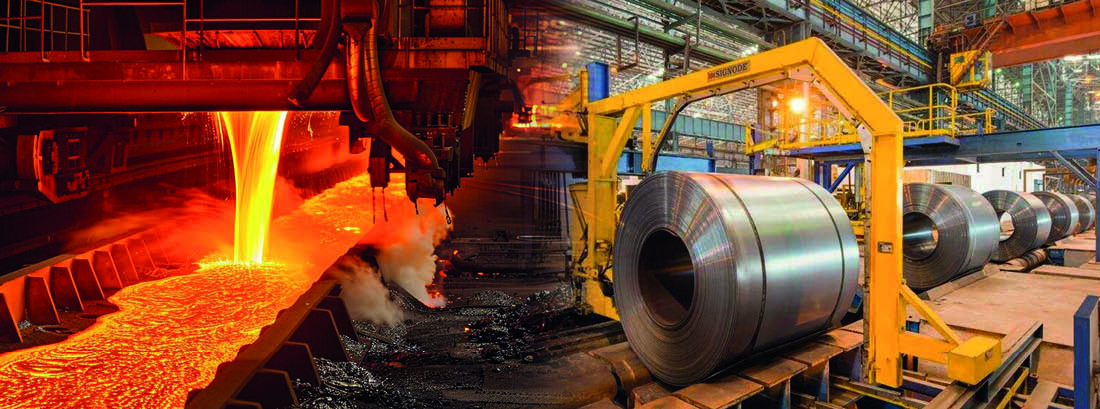
New steelmaking facilities, captive mines and solar power could support the next phase of earnings growth after a sharp improvement in profitability
Gallantt Ispat has emerged as one of the more striking re-rating stories in India’s steel sector. Over the three years ended July 13, 2026, the stock delivered a return of approximately 858 per cent, translating into a rise of nearly 9.6 times. The appreciation has been supported by stronger profitability, deeper integration across the steelmaking chain and expectations surrounding the company’s next phase of expansion. After this steep rise, however, the investment question has become more demanding. The market is valuing Gallantt not only on its existing earnings and assets but also on steel capacity under implementation, captive iron ore mines that are yet to become operational and cost savings expected from renewable power and raw material security.[EasyDNNnews:PaidContentStart]
The central question is whether earnings, cash flows and return ratios can grow sufficiently to justify the expectations reflected in the stock price.
What Drove the Re-rating?
Gallantt’s share price rise was not accompanied by a comparable increase in finished steel capacity, which remained broadly stable at approximately 1 million tonnes per annum during the main period of earnings improvement. Instead, the company generated substantially higher profits from its existing manufacturing base.
A key turning point was the commissioning of a pellet plant with annual capacity of 7.92 lakh tonnes in 2023. Pellets are an important feedstock for sponge iron production. By producing them internally, Gallantt reduced its dependence on externally purchased inputs and gained greater control over raw material availability, quality and cost.
Its integrated value chain now extends from iron ore fines and pellets to sponge iron, billets and TMT bars. The company has supported this chain with captive power, Railway rakes, a private railway siding and automated material handling facilities. Together, these investments improved utilisation, reduced Logistics dependence and spread fixed costs over higher production.
The financial impact was significant. EBITDA increased from ₹367.36 crore in FY23 to ₹776.04 crore in FY26, while EBITDA margin expanded from 9.1 per cent to 17.6 per cent. PAT increased from ₹140.91 crore to ₹484.27 crore, representing growth of approximately 3.4 times.
Revenue growth was much more moderate, indicating that Gallantt’s transformation was primarily margin-led rather than volume-led. The company improved profitability by producing more intermediate inputs internally, increasing plant utilisation and extracting greater operating leverage from its existing assets.
However, earnings growth remained well below the nearly 9.6 times rise in the share price. A considerable portion of the re-rating therefore came from valuation expansion as investors assigned greater value to Gallantt’s integration, balance sheet position and future growth potential.
Integrated Manufacturing Model
Gallantt operates integrated steel facilities at Gorakhpur in Uttar Pradesh and Kutch in Gujarat. The Gorakhpur plant has finished steel capacity of approximately 6 lakh tonnes per annum, while Kutch has around 4 lakh tonnes, taking combined capacity to approximately 1 MTPA.
TMT bars are the principal finished product and are sold mainly to the Construction, housing and infrastructure markets. However, Gallantt is not merely a rolling mill operator that purchases billets and converts them into bars. It manufactures pellets, sponge iron and billets internally before producing TMT bars.
This structure gives the company greater control over key costs. It also has 129 MW of captive thermal power capacity, which supports energy intensive processes such as pelletisation, sponge iron production, steel melting, casting and rolling.
The two plants provide distinct locational advantages. Gorakhpur serves Uttar Pradesh and northern India, while Kutch benefits from proximity to Kandla Port and access to Gujarat, Rajasthan and Maharashtra. This matters because freight can materially affect the delivered cost of bulky steel products.
Owned railway rakes, a private railway siding and automated handling systems further support the movement of coal, iron ore and other inputs. Replicating this combination of production, power and logistics infrastructure would require significant capital, creating an entry barrier in Gallantt’s core markets.
Financial Performance
Gallantt’s financial performance over FY22 to FY26 reflects moderate revenue growth but a substantially stronger improvement in operating profit and net earnings.

Revenue from operations registered a four-year compound annual growth rate of approximately 10 per cent between FY22 and FY26. EBITDA grew at a much faster CAGR of around 22 per cent, while PAT increased at approximately 28.8 per cent.
This divergence shows that margin expansion, improved capacity utilisation and deeper integration were more important earnings drivers than revenue growth alone.
The improvement was particularly visible from FY24 onwards. EBITDA margin increased from 10.8 per cent in FY24 to 16.5 per cent in FY25 and further to 17.6 per cent in FY26. PAT margin rose from 5.3 per cent to 11 per cent during the same period.
In FY26, EBITDA per tonne increased to approximately ₹8,785 from ₹8,308 in FY25 despite softer steel realisations. According to management, this improvement reflected raw material efficiencies, greater integration and better operating leverage rather than favourable steel prices alone.
Capex to Drive the Next Phase
Gallantt is entering its next growth phase through a capital expenditure programme of approximately ₹3,000 crore. It combines three objectives: adding finished steel capacity, securing captive iron ore and reducing long-term energy costs.
Around ₹1,200 crore is being invested in steelmaking and related facilities. Finished steel capacity is expected to increase from 9,93,300 tonnes to 12,29,000 tonnes per annum, an expansion of approximately 23.7 per cent. Management generally rounds the post-expansion capacity to 1.3 MTPA.
Production is expected to commence progressively during the second half of FY27. Management has indicated that sustainable utilisation could be around 90 to 92 per cent, implying potential annual production of approximately 1.17 to 1.20 million tonnes once the facilities are fully ramped up.
The largest allocation, approximately ₹1,500 crore, has been earmarked for iron ore mines in Uttar Pradesh and Rajasthan. Proposed mining capacity is around 7 million tonnes per annum, with operationalisation targeted by FY28, subject to approvals, infrastructure development and execution.
Captive mining is expected to be a key margin lever for Gallantt. The company currently relies on external iron ore purchases, which exposes it to supplier margins, freight costs and price volatility. Management estimates that captive iron ore could improve EBITDA by approximately ₹2,000 per tonne, although the actual benefit will depend on extraction costs, royalties, ore quality, utilisation and prevailing iron ore prices.
Gallantt is also developing 78 MW of Solar capacity, comprising 18 MW in Gujarat and 60 MW in Uttar Pradesh. The latest project estimate is approximately ₹225 crore, although the broader capex plan provides up to ₹300 crore. Solar power could reduce Reliance on conventional energy, but the company has not disclosed a definitive annual saving.
Illustrative Earnings Potential
The combination of higher capacity and captive mining creates a meaningful earnings opportunity. At 90 to 92 per cent utilisation of approximately 1.3 million tonnes, Gallantt could produce 1.17 to 1.20 million tonnes annually. Applying illustrative EBITDA of ₹10,785 per tonne indicates annual EBITDA potential of around ₹1,260 to ₹1,290 crore.
Solar savings could provide an additional benefit, potentially taking EBITDA towards ₹1,300 crore under a favourable scenario. This would represent growth of approximately 65 to 70 per cent over FY26 EBITDA of ₹776 crore. At 100 per cent utilisation, theoretical EBITDA could approach ₹1,400 crore. However, this is an aggressive assumption because management considers 90 to 92 per cent utilisation more sustainable.
These figures are scenario analyses rather than earnings forecasts. They assume timely commissioning, successful ramp-up, full realisation of the estimated mining benefit and stable operating conditions. Management’s broader indication offers a more conservative base case. Revenue could rise to approximately ₹5,300 to ₹5,400 crore after the capacity expansion, while operating margin could move towards 20 per cent after mining integration. This would imply EBITDA of approximately ₹1,060 to ₹1,080 crore.
The difference between these scenarios shows that the final outcome will depend heavily on utilisation, steel realisations, mining economics and project execution.
Distribution and Demand
India’s finished steel consumption increased by approximately 7.6 per cent to 163.7 million tonnes in FY26. Demand should remain supported by construction, housing, urbanisation and investment in roads, railways, airports and other infrastructure.
According to the company, Gallantt is the largest rebar producer in Uttar Pradesh and holds approximately 25 per cent of the market in its addressable geographies. It has more than 3,000 active dealers and 34 distributors, with approximately 80 per cent of sales routed through this network.
The established distribution platform should help absorb additional production. Nevertheless, actual volume growth will depend on regional construction activity, pricing discipline, competitive additions and Gallantt’s ability to retain market share.
Balance Sheet and Funding
Gallantt entered the expansion phase with a net cash position and no term loans as of March 31, 2026. Borrowings were largely limited to normal working capital facilities.
This provides financial flexibility, but the ₹3,000 crore programme remains sizeable relative to annual cash generation. Management prefers internal accruals but may consider debt or equity capital where appropriate.
Investors should monitor leverage, interest costs, working capital requirements and capital raising decisions. A sharp increase in debt before the projects contribute to earnings could weaken return ratios and reduce the balance sheet strength that supported the re-rating.
Valuation Reflects Strong Expectations
At a closing price of ₹700.95 on July 13, 2026, Gallantt had a market capitalisation of approximately ₹16,913 crore and was trading at around 34.9 times FY26 earnings based on EPS of ₹20.07. This is significantly higher than the industry benchmark of about 22.3 times, indicating that the market has already factored in a substantial portion of the expected gains from capacity expansion, captive mining and renewable power.
While earnings have grown meaningfully, the stock’s rise has been much sharper, implying that valuation expansion has played a major role. As a result, the current pricing leaves limited room for execution delays or weaker operating conditions.
Key Risks and Monitorables
Gallantt remains a commodity business. Steel realisations, iron ore prices, coal and power costs, imports and industry capacity additions can cause sharp movements in profitability. Backward integration can reduce volatility but cannot eliminate the steel cycle. Execution is another major risk. Delays in commissioning the expanded steel capacity, developing the mines or completing solar projects could postpone the expected earnings contribution. Cost overruns would reduce returns on the capital deployed.
Mining also carries regulatory and operating risks related to environmental approvals, infrastructure, royalties, extraction costs and ore quality. The stock hit a 5 per cent Lower Circuit following the sudden resignation of CFO Pradyumna Kumar Satpathy on 15th July after a brief five-month tenure, creating corporate governance noise and execution risks for Gallantt’s ₹3,000 crore steel capex program.
Investment View
Gallantt’s re-rating has been supported by genuine operational improvements. Greater backward integration, higher utilisation, stronger margins, healthy cash generation and a net cash position have improved the quality of the business.
The next phase could be meaningful. Higher steel capacity can support volumes, while captive mines and renewable power may structurally improve the cost base. Under a favourable scenario, EBITDA could move towards ₹1,300 crore compared with ₹776 crore in FY26.
However, the opportunity is accompanied by substantial execution, commodity cycle and valuation risk. The PE of around 34.3 to 34.9 times indicates that considerable future growth is already reflected in the price.
Fresh investors may prefer to wait until greater clarity emerges regarding the CFO’s resignation and its possible implications for the company. A more informed view can be taken once the management provides adequate explanation and visibility improves.
Existing investors may consider HOLDING the stock while closely monitoring project execution, EBITDA per tonne, debt levels, operating cash flow and valuation.
[EasyDNNnews:PaidContentEnd] [EasyDNNnews:UnPaidContentStart]
To read the entire article, you must be a DSIJ magazine subscriber.
[EasyDNNnews:UnPaidContentEnd]