Garden Reach Shipbuilders & Engineers Ltd. (GRSE)
Ratin Biswass / 16 Oct 2025 / Categories: Analysis, Analysis, DSIJ_Magazine_Web, DSIJMagazine_App, Regular Columns
If Pakistan dares take action, they know what we are going to do
“If Pakistan dares take action, they know what we are going to do,” stated Vice Admiral A.N. Pramod during Operation Sindoor, reflecting the strength and readiness of the Indian Navy. Behind this power are the indigenously built warships crafted by Garden Reach Shipbuilders & Engineers Ltd. (GRSE), the strategic force quietly enabling this confidence. But can GRSE’s performance turn this strategic edge into sustained growth and value for the company?[EasyDNNnews:PaidContentStart]
About the Company
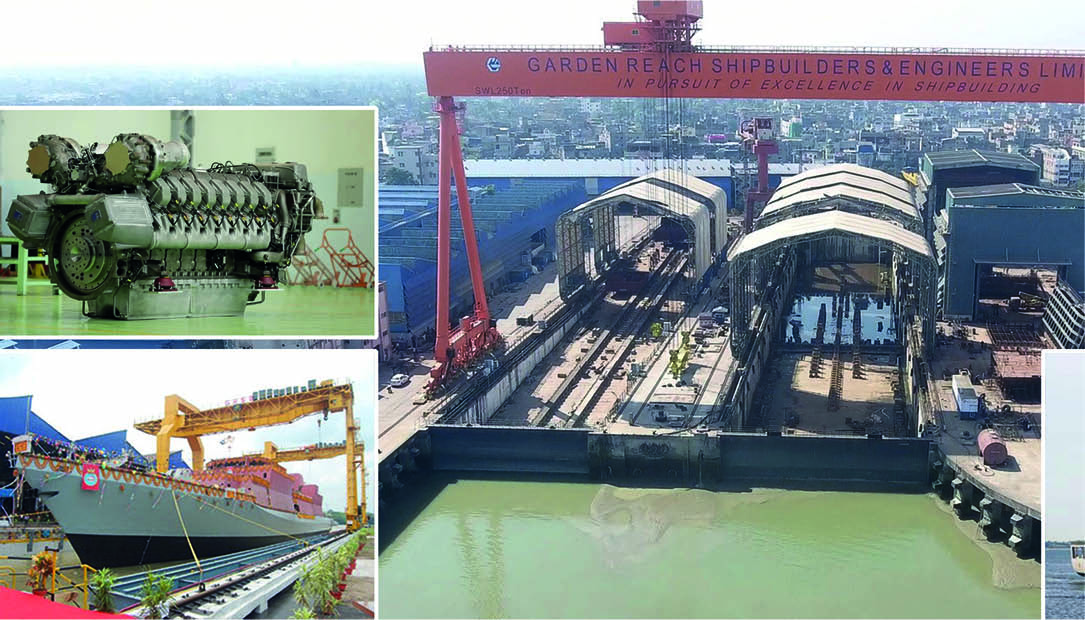
Founded in 1884 and later taken over by the Government of India in 1960, GRSE is a Defence Public Sector Undertaking (PSU) under the Ministry of Defence and a Schedule ‘A’ Mini Ratna Category-I company. As the country’s first independent warship builder, it has delivered over 800 platforms, including 114 warships for the Navy, Coast Guard, and friendly nations, while also diversifying into ship repair, marine engines, bridges, and naval guns. With four shipyards, modern infrastructure, and strong in-house design capabilities, GRSE continues to lead in quality and innovation, living up to its motto: ‘In Pursuit of Excellence and Quality in Shipbuilding.
Before we turn to how a company earns its revenue from shipbuilding, first we have to understand how big the Indian shipbuilding industry is and how the Indian Navy has to play an important role in it.
Industry Overview
India currently ranks 22nd globally in shipbuilding, but under the Maritime India Vision 2030, the nation aims to be among the top 10 by 2030 and within the top five by 2047. The domestic shipbuilding market, valued at USD 90 million in 2022, is projected to reach USD 8.1 billion by 2033, representing a remarkable ~60 per cent CAGR, according to Finextra Research. This growth is driven by a strong policy push towards self-Reliance in defence manufacturing, increased infrastructure spending, and rising naval modernisation requirements.

India’s defence budget has increased from ₹6.22 lakh crore in FY2024 to ₹6.81 lakh crore in FY2025, reflecting a 9.5 per cent year-on-year rise. The capital outlay of ₹1.8 lakh crore, accounting for 26.4 per cent of the total defence budget, grew 4.7 per cent year-on-year, highlighting the government’s focus on strengthening infrastructure, equipment, and indigenous capability development, providing a clear tailwind for the shipbuilding and defence sectors.
On the procurement front, the Indian Navy is expected to issue a ₹80,000 crore tender for four Landing Platform Dock (LPD) warships. Such large-scale projects underscore the government’s emphasis on fleet modernisation and indigenous production.
The Indian shipbuilding industry is dominated by three key players: Mazagon Dock Shipbuilders (₹1,15,090 crore market cap.), Cochin Shipyard (₹47,723 crore), and Garden Reach Shipbuilders & Engineers (₹31,101 crore), collectively holding the majority of domestic market share. As of Q1FY26, the combined Order Book stands at ₹74,700 crore, against TTM (trailing twelve months) sales of ₹21,871 crore, implying ~3.4 years of revenue visibility at current run rates.
Overall, robust policy support, rising defence allocations, and strong order inflows position the Indian shipbuilding sector for sustained long-term growth and enhanced strategic importance in the global maritime landscape.
Business Model of GRSE
Once a contract is awarded, GRSE initiates pre-production activities, which include finalising the ship design, selecting and procuring critical equipment, and completing all preparatory engineering work. These activities form the foundation for actual ship Construction, which begins after design approval as per the contractual schedule.
In a typical Indian Navy project spanning over five years, payments are structured across 15 milestones, with the 14th payment linked to the ship’s delivery and the final payment released after the guarantee period. This stage-based payment model ensures consistent cash flow throughout the project execution cycle while aligning revenue recognition with progress milestones.
How Shipbuilding is Done : Use of Key Compartments
■ Float: Comprises the hull and essential systems ensuring buoyancy, fully indigenised, including specialised steel and structural components.
■ Move: Encompasses propulsion and power generation systems, largely indigenous except for main engines and gas turbines, which still rely on imports.
■ Fight: Covers weapons and sensors; currently about 65 per cent indigenised, driven by growing domestic capabilities in defence technology.
■ Survive: Includes firefighting and safety systems; nearly 100 per cent indigenised, reflecting strong local manufacturing maturity.
Overall, equipment and material costs form around 65 per cent of total shipbuilding cost.
GRSE Business Segments
Shipbuilding (88 per cent of revenue): Building of unmanned surface, underwater vessels, research vessels and green vessels; key customers include the Indian Navy, Coast Guard, state transport authorities and DRDO research organisations.
Bridges, Repairs, Engines & Others (12 per cent of revenue): Manufacture of proprietary bridge designs for defence and infrastructure; supplied to the Indian Army, Border Roads Organisation, and NHIDCL, along with providing ship repairs and diesel engines.
Financials
In Q1 FY26, GRSE reported a strong financial performance, with Total Income rising to ₹1,382 crore from ₹1,084 crore in Q1 FY25, marking a 28 per cent year-on-year growth. Revenue from operations increased to ₹1,310 crore versus ₹1,010 crore in Q1 FY25, a 30 per cent year-on-year growth. EBITDA stood at ₹184 crore, up 42 per cent from ₹130 crore, while Profit After Tax (PAT) rose to ₹120 crore compared to ₹87 crore in Q1 FY25, reflecting a 38 per cent year-on-year growth.
Order Book Breakup
As of now, GRSE’s total order book stands at around ₹21,700 crore, comprising 10 projects with 40 marine platforms. The order mix, once entirely defence-driven, is now more diversified-about 86 per cent defence and 14 per cent nondefence. The non-defence segment, built over the last few years, includes research vessels (9 per cent) and export orders (5 per cent), while the remaining 2 per cent comes from ship repair, bridge construction, and the diesel engine plant.
Capacity Expansion
GRSE has increased its shipbuilding capacity to 28 vessels (8 large, 20 medium/small) and targets 32 next year, aiming to deliver around 40 ships by FY2029. It is also in talks to acquire a dry dock at Syama Prasad Mookerjee Port, Kolkata, to boost ship repair, and planning a new greenfield shipyard on the east or west coast to expand domestic and export opportunities.
Peer Comparison

Mazagon Dock Shipbuilders Limited (MAZDOCK), Cochin Shipyard Limited (COCHINSHIP), and Garden Reach Shipbuilders & Engineers Limited (GRSE) are leading Indian shipbuilders, each specializing in different segments - MAZDOCK in submarines and destroyers, COCHINSHIP in large platforms such as aircraft carriers, and GRSE in warships, research vessels, and frigates, though all remains heavily dependent on Indian Navy contracts.
GRSE trades at an attractive valuation with a Market Cap./ Order Book ratio of 1.43, lower than MAZDOCK (3.63) and COCHINSHIP (2.3), indicating value potential. Its Order Book/Sales ratio of 4.01 reflects strong revenue visibility, while a healthy ROCE of 37 per cent shows efficient capital use. However, with an Operating Profit Margin of 9 per cent versus MAZDOCK's 15 per cent and COCHINSHIP's 19 per cent, GRSE has room to enhance profitability through cost optimization and higher-value projects.
Outlook
GRSE stands at the forefront of benefiting from India’s heightened focus on national security, defence modernisation, and maritime self-reliance. The company’s operational discipline, execution efficiency, and consistent capital returns have positioned it as one of the most reliable players in the defence shipbuilding ecosystem.
The P-17 Alpha Project, GRSE’s largest and most valueaccretive contract, continues to drive revenue visibility. With two frigates scheduled for delivery by August 2026, this project is expected to anchor growth through FY26–27, ensuring sustained top-line momentum. Beyond this, the Next Generation Offshore Patrol Vessels (NGOPVs) are progressing well; two vessels have achieved 60 per cent completion, while the remaining are at 48 per cent, with all four on track for timely delivery by FY29.
We expect execution strength to remain robust, with sales projected to grow at a CAGR of ~40 per cent over FY26-27, in line with the company’s historical performance over the last three years. The structured delivery pipeline through FY2029 provides clear revenue visibility, reinforcing GRSE’s ability to maintain steady operational and financial performance.
On the profitability front, the planned reversal of ₹430 crore in provisions (₹100 crore done in FY25 and the balance ₹330 crore evenly across FY26–27) is expected to meaningfully lift earnings during the forecast period. At a required rate of return of 18 per cent and a five-year median P/E of ~25x, the implied earnings growth of 35 per cent CAGR aligns with management’s optimistic guidance of sustaining growth near the 40 per cent trajectory achieved over the past three years.

Looking ahead, GRSE’s growth runway remains strong, supported by upcoming defence opportunities worth over ₹1.03 lakh crore, including: P-17 Bravo Frigates: ₹70,000 crore, Mine Countermeasure Vessels (MCMVs): ₹32,000 crore, Multipurpose Vessels: ₹1,200 crore.
Additionally, GRSE has emerged as the L1 bidder for the ₹25,000 crore Next Generation Corvettes (NGC) project (covering 5 out of 8 ships), with contract negotiations currently in the final stage. In addition, the company is in line to secure the Multipurpose Vessel order valued at approximately ₹1,200 crore. Together, this ₹47,900 crore pipeline, comprising a mix of confirmed and highly probable contracts along with the existing order book, represents a strong foundation of revenue visibility. Successful conversion of these projects would extend GRSE’s revenue outlook by 8–10 years, firmly positioning it as a key beneficiary of India’s naval modernisation programme.
We recommend a BUY rating on GRSE, supported by robust execution visibility through a ₹21,700 crore order book, a consistent 35 per cent earnings CAGR potential over FY26–27, margin improvement driven by provision reversal-led profit uplift, and a multi-year growth pipeline anchored by upcoming defence tenders.
[EasyDNNnews:PaidContentEnd] [EasyDNNnews:UnPaidContentStart]
To read the entire article, you must be a DSIJ magazine subscriber.
[EasyDNNnews:UnPaidContentEnd]