Get A Better Grip On Tyre Stocks!
Ninad Ramdasi / 18 May 2023 / Categories: DSIJ_Magazine_Web, DSIJMagazine_App, Special Report, Special Report, Stories
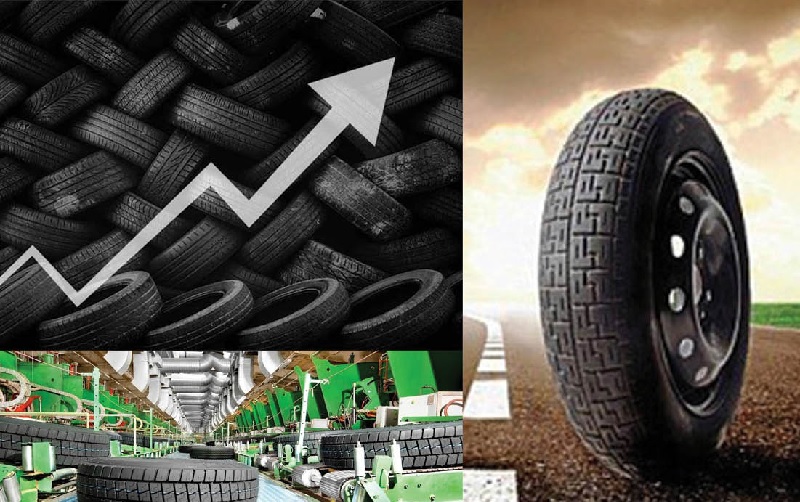
Now that the automobile industry in India and in other countries is out of the shadows of the pandemic, the increasing demand for vehicles in all segments is simultaneously creating a demand
for tyres.
Now that the automobile industry in India and in other countries is out of the shadows of the pandemic, the increasing demand for vehicles in all segments is simultaneously creating a demand for tyres. Also, accounting for the fact that Indian-make tyres are considered top quality around the world, the tyre industry is confident of surging ahead with expansion and growth
Since the success of the automobile industry is crucial to both economic growth and technological advancement, it has historically been a reliable barometer of how the Indian economy is performing. The industry accounts for about 6 per cent of Indian GDP and 35 per cent of manufacturing GDP. India is the world’s leading manufacturer of tractors, the second-biggest manufacturer of buses and the third-largest producer of heavy trucks, giving it a significant position in the global heavy vehicle market. By 2030, sales of electric vehicles (EVs) are anticipated to reach 10 million units annually, growing the EV market at a CAGR of 49 per cent between 2022 and 2030. [EasyDNNnews:PaidContentStart]
The growth of the automobile industry and the tyre industry work hand in hand as tyres are what make it possible for you and your vehicle to roll down the road. The Indian tyre market size reached 188.9 million units in 2022, highlighting its tremendous potential. The rise in the number of automobiles is driving up demand for tyres and assisting the growth of the tyre industry. Tyre demand is primarily driven by two end-user segments including OEMs and the replacement segment. Indian-made tyres are distributed in over 170 countries, including North American and European markets. The United States, Germany, Brazil the United Kingdom and France are the regions where Indian tyres are exported to the greatest extent.
The tyre market is divided into segments based on vehicle type, which include two-wheelers, three-wheelers, passenger cars, light commercial vehicles and heavy commercial vehicles. Additionally, the market can broadly be divided into categories such as tube and tubeless (based on type) and radial and bias (based on design). There are countless tyre companies, each serving a variety of customer demands with a wide range of products. Interestingly, the demand for tyres is on the rise from each of the vehicle segments. Balkrishna Industries, MRF Ltd., Apollo Tyres, CEAT Ltd. and JK Tyre and Industries are the market leaders.

Equity Markets and Tyre Stocks
Despite a recent modest rally in the BSE Sensex and Nifty 50 brought on by sizeable FII and DII inflow amidst the release of robust Quarterly Results, the equity markets disappointed in 2023. Investor optimism has been shattered as key benchmark indices have remained flat year-to-date. The BSE Auto index, on the other hand, has soared 8 per cent and 32 per cent year-todate and last year, respectively, indicating strong growth. The majority of tyre sector stocks performed better due to consistent demand from end-user sectors and favourable support brought on by government initiatives, mirroring the optimism in the automotive sector despite the lacklustre market conditions.
Despite continuous investments in capacity expansion, capitalisation as well as the liquidity position of market participants is likely to remain robust owing to stable earnings and impressive cash reserves held by a majority of the companies. When top tyre companies based on market capitalisation were taken into account, JK Tyre and Industries and CEAT Ltd. outperformed other stocks over a one-month period with gains of 21 per cent and 16 per cent, respectively. Apollo Tyres and TVS Srichakra performed remarkably well, delivering around 90 per cent returns in just one year!
Government Initiatives and Outlook
The Indian tyre industry had a growth of more than 50 per cent – one of the all-time highs for the industry – as the world economy began to pick up steam after two years of slowdown in expansion due to the pandemic outbreak. Government schemes including the one emphasising self-reliance provide the industry a boost with a sizeable economic package to encourage automotive manufacturing in the country. The Union Cabinet authorised a Production Linked Incentive (PLI) scheme in the year 2020 for automobile and automotive components with a five-year budget of ₹57,042 crore that will eventually benefit the tyre industry. The automobile industry, which the government recognises as being vital to the growth of the Indian economy, is allowed 100 per cent foreign direct investments (FDI).
Given the availability of skilled labour, resources and a favourable environment, the majority of global automakers intend to set up manufacturing plants in India. Also, Indian tyres are believed to be of the finest quality. What greater validation could there be than multinational OEMs preferring India-made tyres to roll out their vehicles! With a rising commitment to lowering emissions and improving the efficiency of fuel in automobiles, as well as minimising weight, the Indian tyre industry is adopting new production techniques. This will enable it keep up with changing market dynamics and OEM expectations. The Indian tyre industry is heavily reliant on natural rubber.
Studies have shown that utilising natural rubber results in a significantly lower carbon footprint, protecting the environment. Additionally, the highly fuel-efficient radial tyres currently being manufactured allow for fuel savings. Uncertain raw material prices, difficulty to pass on price increases to OEMs and sluggish export owing to competition from low-cost tyre manufacturing countries are still some of the most significant challenges facing the industry. However, it is expected that margins will improve in the long run as more capacity comes into existence and provides economies of scale. Robust capacity expansion, quality goods and services and extensive distribution networks will undoubtedly be some of the key growth drivers for the industry.
CEAT Ltd. CMP (₹): 1731.65
BSE CODE: 500878
Face Value(₹) : 10 52
Wk High/Low : 1,981.45 / 890.00
Mcap Full ( ₹ Cr.) : 7,004.54
On the road since 1958 in India, CEAT Limited has run up to be one of the best tyre manufacturers in the business. The flagship company of RPG Enterprises, it is headquartered in Mumbai. While being one of India’s leading tyre manufacturers, the company is also well-established in global markets. CEAT offers worldclass products and services in over 110 countries with the mission of assisting the world in moving safely and smartly. The business provides services through a vast network of more than 400 exclusive outlets, 4,500 dealers and 51,000 subdealers. It provides a range of tyres which provide good grip, superior control and excellent driving experience.
In addition to having an extensive range of tyres available for multiple market segments, the company manufactures top-notch radials for heavy-duty trucks and buses, light commercial vehicles, earthmoving equipment, forklifts, tractors, trailers, cars, motorbikes, scooters and auto-rickshaws. Taking into account the company’s quarterly performance, on a consolidated basis it reported a healthy growth of 10.91 per cent from ₹2,591.99 crore registered in Q4FY22, recording total revenue of ₹2,874.82 crore in Q4FY23. When comparing the net profit for the fourth quarter of FY23 to the same quarter last year, it skyrocketed 429.5 per cent from ₹25.25 crore to ₹133.70 crore.
In terms of annual performance, the consolidated net profit of company soared 161.47 per cent to ₹186.17 crore from ₹71.20 crore the previous year. On the other side, net sales climbed by 20.84 per cent to ₹11,314.88 crore as against ₹9,363.41 crore during the previous year ended on March 2022. The company’s board of directors recommended a final dividend of ₹12 (120 per cent) per equity share of face value of ₹10 each, fully paid up, for the financial year ending March 31, 2023. At the time of writing, the company had a market value of ₹6,888 crore with the promoters owning 47.21 per cent stake. Institutional investors have sizeable stake of 36.89 per cent, out of which foreign portfolio investors (FPIs) owned a significant 23.29 per cent.

In addition to having considerably good ROE and ROCE ratios that demonstrate the company’s strong profitability position, it also has a lower PE ratio as compared to its competitors and the industry average. As per the company’s most recent investor presentation, employee costs surged during the quarter due to retirements and incentives, while advertising spend also grew quarter-on-quarter on campaigns and event associations. The company earned the privilege of serving as the Women's Premier League’s strategic timeout partner. The further inventory reduction and greater profitability led to healthy operating cash flows.
Despite capital expenditures, debt reduced by about ₹250 crore over the third quarter. Leverage ratios improved quarter-onquarter and year-on-year while the lowest debt-to-EBITDA ratio was recorded in the past six quarters. Following the announcement of robust quarter results, the shares of the company had a significant rally, gaining more than 18 per cent over the last month. With a 52-week high of ₹1,981.45 on the BSE, the stock has room for further growth. As the company expands, its objective is to reduce the environmental impact of the production of its products by half by the year 2030. The company is adopting a number of techniques to achieve this goal, including green material technology, zero waste and biodegradable packaging, green labelling and green delivery. Given the optimistic outlook for the tyre industry and the company’s market share as well as financial position, we recommend BUY.
JK TYRE & INDUSTRIES LTD. CMP (₹): 195.55
BSE CODE: 530007
Face Value(₹) : 2
52 Wk High/Low : 213.50 / 96.40
Mcap Full ( ₹ Cr.) : 4,815.04
J K Tyre and Industries (JKTI) is the flagship company of the JK Group with over 40 years of experience in tyre manufacturing. It is headed by Chairman and Managing Director R P Singhania. It is a one of the leading tyre manufacturers in India and amongst the top 25 manufacturers in the world with a wide range of products catering to diverse business segments that includes truck and bus, LCV (light commercial vehicles), passenger cars, MUV (multi utility vehicles) and tractors. JKTI is a market leader in the truck and bus radial manufacturing segment with an estimated truck radial market share of around 28 per cent in FY22 and is gaining market share in the truck and bus as well as the passenger cars segment.
The company’s customer base includes large OEMs like Maruti Suzuki, Hyundai, Tata Motors, Mahindra and Mahindra, Honda, John Deere, Swaraj Tractors, Eicher, Volvo, Force, Hero Motor, Bajaj Auto, TVS and many more. Talking about financials, in Q3FY23, on a consolidated basis, the company’s net revenue grew by 17.45 per cent YoY to ₹3,612.92 crore from ₹3,076.03 crore in the corresponding quarter of last year and a decrease of 3.82 per cent sequentially. The PBIDT excluding other income increased by 24.08 per cent YoY to ₹339.34 crore in Q3FY23 from ₹273.48 crore in the same quarter the previous year.
On a sequential basis the company reported a rise of 14.11 per cent from ₹297.39 crore. The net profit of the company increased by 29.37 per cent to ₹69.51 crore YoY as compared to 53.73 crore for the corresponding quarter last year and an increase of 42.32 per cent sequentially. The total income of the company increased by 17.47 per cent to ₹3,622.62 crore from ₹3,083.95 crore as compared to the same quarter the previous year. While on a sequential basis the total income of the company decreased by 3.76 per cent.

The PBIDT margin increased by 147 bps to 9.66 per cent in Q3FY23 from 8.12 per cent as compared to the previous quarter the same year and on a YoY basis it increased by 51 bps from 9.15 per cent. On a consolidated basis it has a revenue mix by market with replacement stands for 60 per cent while OEMs stand for 24 per cent and exports stand for 16 per cent, respectively, in Q3FY23. During the same period the product line of trucks and buses stands for 55 per cent, passenger line for about 28 per cent and two and three-wheelers for about 4 per cent.
To revolutionise the Indian tyre business, the company has recently bought a start-up that develops smart tyres. JK Tyres and Industries was the first in India to introduce a tyre pressure monitoring system (TPMS) based on sensor technology. It has innovated self-healing puncture protection tyre and green tyre for better fuel efficiency. In India, it has introduced a whole line of EV-specific smart radial tyres for all classes of trucks, buses, LCVs and passenger automobiles. It has 12 manufacturing facilities with 33 million tyre production capacity. It has operations in 100+ countries with 6,000+ dealers and 500 distributors.
The company owns a centralised technology centre in Mysore, Karnataka with more than 200 research and development and technology scientists and engineers. It is expanding with ₹530 crore at Banmore in Madhya Pradesh for tyres of passenger cars. The company is currently trading at a PE of 21.9 times as against the industry PE of 31.9 times. It has PBV of 1.66 times as compared to the industry PBV of 2.18 times. In the last three years the company has delivered average ROE of 10.3 per cent and ROCE of 9.93 per cent. It has posted volume growth of 16 per cent on a consolidated basis and export growth of 60 per cent on YoY basis. Taking into account these factors, we recommend BUY.
(Closing price as of May 10, 2023)
[EasyDNNnews:PaidContentEnd] [EasyDNNnews:UnPaidContentStart]
To read the entire article, you must be a DSIJ magazine subscriber.
Current print subscribers click here to login
Subscribe now to get DSIJ All Access
[EasyDNNnews:UnPaidContentEnd]