HFCL’s Next Phase of Global Growth
Arvind DSIJ / 06 Aug 2026 / Categories: DSIJ_Magazine_Web, DSIJMagazine_App, Interview, Interviews, Regular Columns
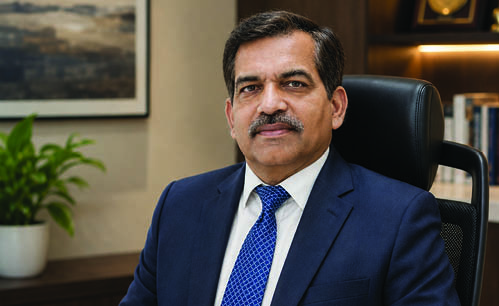
HFCL has evolved from being largely an execution-driven telecom infrastructure company into a technology-led global manufacturer with two clear growth pillars, Optical Connectivity and Defence. Our strategy has focused on increasing the share of technology products, expanding exports, and strengthening manufacturing capabilities.
V R Jain
Chief Financial Officer - HFCL Limited [EasyDNNnews:PaidContentStart]
HFCL has undergone a remarkable transformation over the last five years. How would you describe this journey?
HFCL has evolved from being largely an execution-driven telecom infrastructure company into a technology-led global manufacturer with two clear growth pillars, Optical Connectivity and Defence. Our strategy has focused on increasing the share of technology products, expanding exports, and strengthening manufacturing capabilities.
This transformation has been deliberate and disciplined. We have progressively shifted our business mix towards products and solutions with higher technology content and better profitability, while simultaneously building a diversified customer base across the globe. Today, our revenue profile is significantly more balanced, with exports contributing meaningfully and reducing our dependence on any single geography or customer segment.
The results are visible. Exports have grown from around 5 per cent of revenue in FY21 to nearly 56 per cent today, reflecting our growing acceptance in global markets. We have continuously expanded our product portfolio across optical fibre, optical fibre cables, data centre interconnect solutions, and advanced connectivity products for 4G and 5G applications, while building strong R&D capabilities.
At the same time, we have established a differentiated defence business with indigenous products supporting India's self-Reliance initiatives. Today, HFCL is well positioned to serve telecom operators, hyperscale data centres, and defence customers globally. This transformation provides a strong foundation for sustainable, profitable growth over the coming decade.
What will be the key growth drivers for HFCL over the next few years?
Our long-term growth strategy rests on two structural pillars, Optical Connectivity and Defence.
In Optical Connectivity, the rapid expansion of AI infrastructure, hyperscale data centres, fibre broadband, and 5G/6G deployments is creating significant global demand. By December 2026, HFCL's optical fibre capacity will reach 34 million fibre kilometres, while optical fibre cable capacity will expand to 43 million fibre kilometres, representing nearly 5 per cent of global OFC manufacturing capacity.
Importantly, HFCL is among the select few companies globally capable of supplying advanced connectivity products for hyperscalers and data centre interconnect applications. We have already developed 6,912-fibre ultra-high fibre count cables and are progressing towards the development of 13,824-fibre cables.
The global communications landscape is undergoing one of its biggest investment cycles, driven by AI, cloud computing, data centre expansion, fibre broadband, and next-generation wireless technologies. These trends are significantly increasing the requirement for high-performance optical connectivity products.
HFCL has proactively invested ahead of this demand curve. Our capacity expansion, combined with continuous product innovation and increasing global customer engagement, positions us well to capture this opportunity while strengthening our competitive position in international markets.
Our second growth engine is Defence, where we have developed a diversified portfolio of indigenous products and expect the business to scale significantly over the coming years.
HFCL is increasingly being recognised as a technology-led company rather than just a manufacturing company. What differentiates HFCL globally?
Innovation has become one of the strongest differentiators for HFCL. Over the years, we have consistently invested in R&D to develop next-generation optical connectivity solutions that address the evolving requirements of telecom operators, hyperscalers, enterprises, and defence customers worldwide.
Today, HFCL is among the handful of global players capable of offering advanced optical connectivity solutions for hyperscale data centres and AI-driven network infrastructure. We have successfully developed ultra-high fibre count cables comprising 6,912 fibres and are now working on 13,824-fibre cables, which will address the next generation of ultra-high-capacity networks. Alongside optical fibre and optical fibre cables, our portfolio has expanded to include data centre interconnect products and other specialised connectivity solutions that are witnessing growing global demand.
Our focus has always been on creating differentiated products rather than competing purely on manufacturing scale. Strong R&D capabilities, engineering expertise, intellectual property creation, and close engagement with global customers enable us to develop solutions that meet future network requirements. This technology-led approach is helping HFCL strengthen its position as a preferred global partner in optical connectivity.
What does the recently announced ₹10,159 crore export order signify for HFCL?
This is more than our largest export order. It validates HFCL's growing position as a trusted global technology partner.
The order provides revenue visibility of approximately ₹2,000 crore annually over five years, while strengthening our presence in international markets. More importantly, it demonstrates our ability to compete globally based on technology, manufacturing scale, quality, and execution.
Export-led business also enhances customer diversification and generally offers superior value addition. As global investments accelerate in AI infrastructure, hyperscale data centres, and broadband connectivity, we believe this order reinforces HFCL's position to participate meaningfully in the next phase of global optical network expansion.
Beyond the financial value, the order reflects the confidence that global customers have in HFCL's engineering capabilities, manufacturing quality, and execution track record. We believe this order can also act as a strong reference for winning similar opportunities across other international markets.
How are your manufacturing expansion and backward integration initiatives strengthening competitiveness?
Our manufacturing expansion is not merely about adding capacity; it is about building a globally competitive, integrated optical connectivity business. As demand accelerates across AI infrastructure, hyperscale data centres, fibre broadband, and next-generation telecom networks, customers are increasingly looking for partners who can deliver scale, quality, technology, and supply assurance simultaneously.
By December 2026, our Optical Fibre and Optical Fibre Cable capacities will increase to 34 million fibre kilometres and 43 million fibre kilometres, respectively, positioning HFCL among the leading global manufacturers with nearly 5 per cent of the world's OFC manufacturing capacity. This enables us to participate in large global opportunities with greater confidence and faster execution.
Equally important is our backward integration into optical fibre preforms through our proposed ₹580 crore project. Besides reducing import dependence, it strengthens supply chain resilience, improves cost competitiveness, and enhances quality control. Over time, this integrated manufacturing model is expected to improve EBITDA margins by around 1–2 per cent, while creating a scalable platform for sustainable long-term growth.
What gives you confidence of achieving 20–21 per cent EBITDA margins by FY29?
Our margin expansion roadmap is supported by several structural initiatives. First, the contribution from technology led products continues to increase, improving the overall business mix. Second, higher capacity utilisation across optical fibre and cable manufacturing will drive operating leverage. Third, increasing exports and backward integration into optical fibre preforms will further strengthen profitability.
Combined with disciplined cost management and operational efficiencies, these initiatives provide confidence in our ability to progressively improve margins while sustaining long-term growth.
As the contribution from products and exports continues to increase, we expect the quality of earnings to improve alongside profitability. Our objective is not merely to expand margins but to build a structurally stronger business with sustainable returns across market cycles.
How does Defence fit into HFCL's long-term growth strategy?
Defence is emerging as one of HFCL's strongest long-term growth engines. We have developed a comprehensive portfolio of indigenous products, including Thermal Weapon Sights, Electronic Fuzes, Ground Surveillance Radars, Coastal Surveillance Radars, Drone Detection Radars, Foliage Penetration Radars, and Multi-Mode Hand Grenades.
The defence opportunity is also supported by India's increasing focus on indigenisation and defence exports. Our investments in technology, product development, and manufacturing capabilities have positioned us to participate across multiple high-growth segments, creating a diversified and scalable defence platform for the future.
In addition, our proposed Aerospace business acquisition will provide entry into a high-value, export-oriented segment with a confirmed export Order Book of approximately ₹2,000 crore. We remain confident of scaling our Defence business to ₹4,000 5,000 crore of annual revenue by 2030, creating a balanced portfolio alongside our optical connectivity business.
How will HFCL fund its growth while maintaining financial discipline?
Our capital allocation philosophy remains focused on balancing growth with a strong balance sheet. Expansion will primarily be funded through improving operating cash flows and internal accruals, supplemented by minimal debt wherever appropriate.
Even with selective borrowings to support ongoing capital expenditure, we expect our debt-equity profile to remain broadly stable as existing borrowings mature and are repaid. Alongside this, disciplined working capital management and improved cash conversion will continue to support sustainable growth while preserving financial flexibility.
Our focus will remain on maintaining healthy leverage while ensuring adequate financial flexibility to invest in future growth opportunities. This disciplined approach to capital allocation has been an important element of HFCL's transformation and will continue to guide our decision-making.
[EasyDNNnews:PaidContentEnd] [EasyDNNnews:UnPaidContentStart]
To read the entire article, you must be a DSIJ magazine subscriber.
[EasyDNNnews:UnPaidContentEnd]