Hindustan Copper Limited
Sayali Shirke / 08 Jan 2026 / Categories: Analysis, Analysis, DSIJ_Magazine_Web, DSIJMagazine_App, Regular Columns
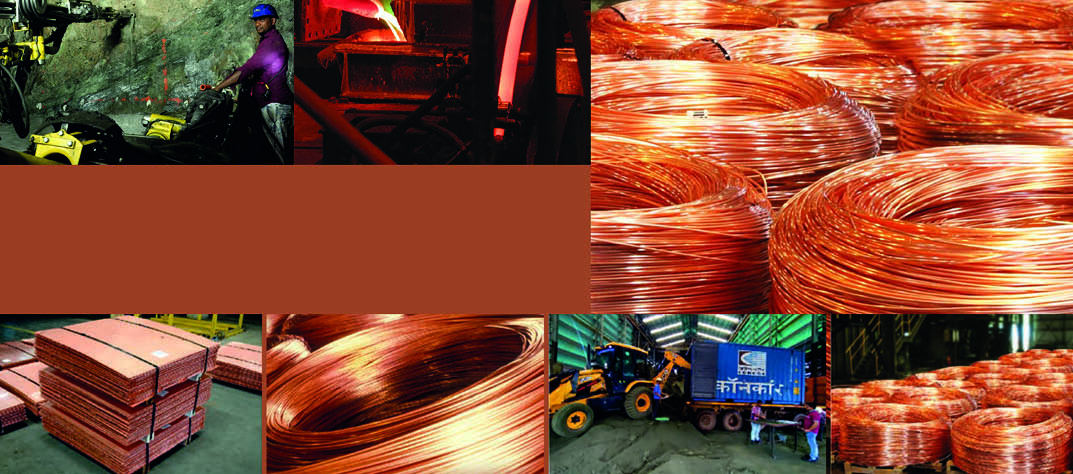
HCL's product portfolio is fundamental to India's industrial backbone and economic expansion.
Copper’s December surge reignited interest in Hindustan Copper. As India’s only vertically integrated, government-owned copper producer, it delivered FY25 revenue of ₹2,071 crore and PAT of ₹469 crore, backed by record ore output at Malanjkhand. Valuation is demanding, as the stock trades near 92x earnings versus a 5-year median of 55x. So, delivery on volumes and costs matters now as much as copper prices [EasyDNNnews:PaidContentStart]
December 2025 did not just lift copper prices, it rewired the mood in metal-linked stocks. On the London Metal Exchange (LME), copper’s cash settlement climbed from $11,299 a tonne on December 1 to $12,504 by December 31, a near 11 per cent jump in four weeks as the market tightened into year-end. Prices of copper in India went up by almost 25 per cent from ₹1,038 per kg to ₹1,285 per kg. With copper trading above $12,000 a tonne internationally and shortage fears back in the conversation, the heat travelled quickly to listed miners. Hindustan Copper, one of the prominent copper players in India, saw its stock move even faster: from ₹335.30 on December 1 to ₹522.30 on December 31, a 58.5 per cent surge. It briefly printed an intra-month high of ₹545.95. In a market where most PSU names usually grind, this was a sprint. It is a reminder that commodities can reprice faster than narratives. Yet the key question is what the chart cannot answer: is December’s move just a macro trade, or does the company have operational torque to justify the new expectations? The real story begins on the ground, at Hindustan Copper’s mines in Malanjkhand, Khetri and Ghatsila, and through its chain of beneficiation, SMElting and refining to downstream products.
Hindustan Copper Limited (HCL) holds a unique and strategic position as India's only vertically integrated, governmentowned copper producer. Under the administrative control of the Ministry of Mines, HCL's business model spans the entire value chain, from mining and beneficiation to smelting, refining, and the manufacturing of continuous cast rods. The company delivered a record-breaking performance in Fiscal Year (FY) 2024-25, achieving its highest-ever Revenue from Operations at `2,071 crore and Profit After Tax of `469 crore, alongside record ore production from its flagship Malanjkhand mine.
HCL's primary advantages are its formidable regulatory moat as the nation's sole copper mine operator and its ambitious government-backed expansion plan to increase mining capacity to 12.2 million tonnes by FY31. This positions the company to capitalise on a structural up-cycle in copper demand, driven by India's growth in renewable energy, electric vehicles, and infrastructure. However, the business faces inherent risks tied to the volatility of global commodity prices and the potential for delays in executing its large-scale expansion projects. For the long-term investor, HCL represents a direct play on India's industrial growth, underpinned by a durable competitive position and significant governmentbacked production expansion.
What They Sell and Who Buys
HCL's product portfolio is fundamental to India's industrial backbone and economic expansion. As a primary producer of a critical base metal, the company's output directly fuels sectors essential for national development, from energy infrastructure and transportation to advanced manufacturing and telecommunications. The company's operations yield a range of core products and valuable by-products, managed through a network of specialised facilities across India.HCL's customer base consists of a diverse B2B industrial market across India. The demand for its products is driven by sectors critical to the nation's growth agenda, including renewable energy (Solar, wind), transportation (electric vehicles, Railways), urbanisation (Construction, infrastructure), Defence and telecom, and consumer durables. Specifically, HCL's high-quality Continuous Cast Copper Rods are a direct input for the wiring and electrical components essential to EV charging infrastructure and wind turbine manufacturing, placing the company at the core of India's green energy transition. The sale of these physical goods to a broad industrial clientele is the primary mechanism through which HCL generates its income.
Their Business
The company's financial performance is a direct reflection of prevailing copper prices on the LME and its ability to manage production volumes. The company employs a transactionbased revenue model, predicated on the direct sale of its physical copper products and associated by-products. Revenue is recognised based on contract terms with its industrial customers. A key feature of these contracts is the inclusion of subsequent price adjustments, which are made to the initial transaction price to account for variations in LME rates during the specified Quotational Period and the results of final assay analysis to determine mineral content.
HCL operates as a focused player on the mining and processing of copper ore Metal-In-Concentrate (MIC). This singular focus underscores its role as a pure-play copper producer. This straightforward revenue model provides a clear link between operational output and financial results. However, it also exposes the company's income streams to the inherent risks of commodity price fluctuations. For a commodities company like HCL, revenue quality is a key indicator of financial stability, representing a balance between the unavoidable volatility of market-driven prices and the consistency of its underlying operations.
Revenue predictability is structurally constrained by HCL's direct exposure to LME copper prices. The contract structure, which includes post-transaction adjustments based on LME rate changes and final assay results, introduces a significant element of volatility. However, this risk is currently mitigated by a positive market outlook. Copper prices are forecast to increase in 2026, driven by global supply constraints and robust demand from industrial and green energy sectors. This favourable pricing environment provides a strong tailwind for near-term revenue growth.
The company's revenue concentration is extremely high. The business is almost entirely dependent on the copper market, making its financial performance highly vulnerable to fluctuations in this single commodity. While the sale of by-products such as gold and silver provides a marginal stream of income, it offers minimal diversification and does not materially insulate the company from the dynamics of the copper market. While this concentration creates vulnerability, it also offers investors undiluted exposure to the powerful, long-term secular growth trends in copper, making HCL a pure-play on the structural demand story.
Financial Analysis
The company's profitability trend is strong. In FY21, Profit After Tax (₹110.24 crore) was higher than Profit Before Tax (₹87.25 crore). This was the result of a ₹22.99 crore tax benefit, which artificially inflated the net profit figure. The more reliable indicator of underlying operational performance is PBT, which has grown consistently every year of the analysis period, from ₹87.25 crore in FY2021 to a five-year high of ₹633.52 crore in FY2025; a more than sevenfold increase.
The most telling indicator of improving efficiency is the Net Profit Margin, which expanded from an anomaly-adjusted baseline to a robust 21.80 per cent in FY2025. This margin expansion confirms the operating leverage identified in the expense analysis. The company is not only growing its revenue but is doing so with increasing efficiency. For every rupee of revenue in FY2025, the company generated 21.8 paise of net profit, demonstrating a substantial increase in its earnings power.
The most critical findings from this analysis are:
- Accelerated Growth from Core Operations: The company reversed a two-year revenue stall with 21.3 per cent year-on-year growth in FY2025, driven by its primary business activities. This, coupled with effective cost control, propelled Profit Before Tax to a five-year high.
- Demonstrated Operating Leverage: The company's business model proved scalable in FY2025, as a 21.3 per cent increase in revenue required only an 11.3 per cent increase in total expenses. This efficiency gain was the primary driver behind the significant expansion of the Net Profit Margin to 21.8 per cent.
- Improved Capital Structure: A dramatic 89 per cent reduction in Finance Costs over the five-year period has been a major contributor to improved profitability. This suggests successful debt reduction or refinancing, which has materially strengthened the company's bottom line.
That makes the company’s finance sustainable in the sense of strong structural demand for copper, but volatile across the cycle. The long-term sustainability case improves if the company executes its mine expansion safely and consistently, while strengthening environmental resilience and broadening disclosures around ESG and operational impacts.
From a fundamental lens, the company’s FY2025 numbers show a healthier operating footing, with operating income of ₹2,071 crore and PAT of ₹468.5 crore, alongside low leverage, as reflected in a total debt to OPBDIT of around 0.2x. However, investors should remain clear-eyed about what is driving earnings today. HCL is largely focused on metal-in-concentrate sales, while parts of its smelting and refining chain remain suspended, which keeps profitability highly sensitive to copper prices and realisations. The longer-term opportunity rests on execution, with a stated Capex programme of roughly ₹2,000 crore over 3–4 years aimed at lifting mine capacity to 12 million tonnes from 4 million tonnes. However, that ambition will only matter if volumes genuinely ramp up on schedule.
As of January 2026, the biggest issue is not the copper story, which remains constructive over the long run given electrification, renewables, and grid investments, but the valuation investors are being asked to pay today. With the stock around the ₹542 mark and trading at a P/E of 92, which is higher than the five-year median P/E of 55x, the margin for error is slim if copper prices cool or project timelines slip. In that context, a balanced stance is to rate the stock as a Hold, with scope to accumulate only on meaningful corrections.
[EasyDNNnews:PaidContentEnd] [EasyDNNnews:UnPaidContentStart]
To read the entire article, you must be a DSIJ magazine subscriber.
[EasyDNNnews:UnPaidContentEnd]