How Credit Ratings Shape Corporate Borrowing Costs!
DSIJ Intelligence-6 / 31 Oct 2025 / Categories: General, Knowledge, Trending
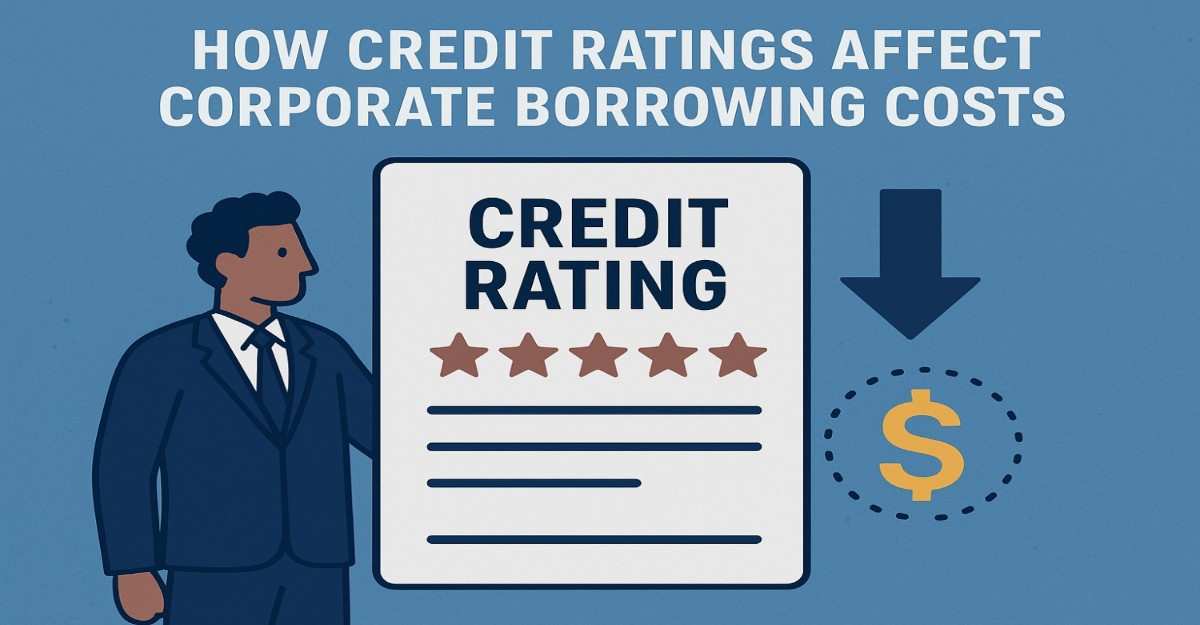
Credit ratings translate qualitative assessment into quantitative funding outcomes through pricing, regulatory and behavioural channels.
Why ratings matter — a quick primer
Credit ratings are forward-looking opinions on an issuer’s ability to meet debt obligations. They act as a common language for lenders and investors, influencing risk perception, required yields, permitted investor pools and regulatory capital treatment. A notch upgrade or downgrade doesn’t just change a letter; it changes the economics of borrowing — often immediately.
The direct channel: spreads, yields and access to markets
Ratings feed directly into bond and loan pricing. Lower-rated issuers trade at wider credit spreads to compensate investors for higher default risk; upgrades compress spreads and downgrade events widen them. Empirical work shows borrowing costs rise materially after downgrades and fall with upgrades, and that lower-rated issuers face higher baseline borrowing costs and reduced liquidity. This effect is visible in both corporate bond markets and Bank lending terms.
The regulatory and structural channel
Ratings also govern market access through rules and mandates. Many institutional investors (pension funds, insurance companies) and money-market funds are restricted to “investment grade” paper; a downgrade into non-investment grade can force forced selling, pressuring prices and raising effective funding costs. Banks and other regulated entities apply risk-weights and capital charges that often depend on external ratings, altering lender appetite and pricing for borrowers. The pro-cyclicality of these channels is a recurring policy concern.
The signalling and behavioural channel
A rating change conveys new information — or a changed interpretation of existing information — about an issuer’s prospects. Market participants react not only to the rating itself but to the agency’s rationale and forward guidance. Downgrades can trigger covenant renegotiations, higher margins on undrawn facilities, and tighter investor scrutiny; upgrades can broaden the investor base and lower funding spreads. Event-study research documents immediate abnormal returns around rating announcements, reflecting rapid repricing of credit risk.
Quantifying the impact — what the evidence shows
Academic and industry studies differ on magnitudes (because effects vary by market, instrument, and macro context), but consistent patterns emerge: (a) a downgrade typically increases bond yields and loan spreads; (b) high-yield versus investment-grade gaps persist and widen during stress periods; and (c) market liquidity deteriorates for downgraded issuers, increasing secondary market transaction costs. Central bank and cross-country analyses also find corporate spreads move with sovereign credit events owing to balance-sheet and macro linkages.
Practical implications for investors
- Monitor rating drivers: liquidity ratios, leverage, covenants and earnings quality are headline drivers agencies watch.
- Stress test notches: model the impact of a one- or two-notch move on interest expense, refinancing cost and covenant headroom.
- Diversify funding sources: having mixed maturities and non-rated bilateral credit lines to reduce forced-sell risk.
Conclusion
Credit ratings translate qualitative assesSMEnt into quantitative funding outcomes through pricing, regulatory and behavioural channels. For issuers, the lesson is simple but stark: ratings are a live part of the financing toolkit — they affect not only the coupon you pay today but the resilience and optionality of your funding tomorrow. Actively monitoring rating drivers and stress-testing notch scenarios is therefore crucial.