Hyundai Motor India opens Pune plant, targets 11.4 lakh annual capacity by 2030
DSIJ Intelligence / 14 Oct 2026 / Categories: Mindshare, Trending
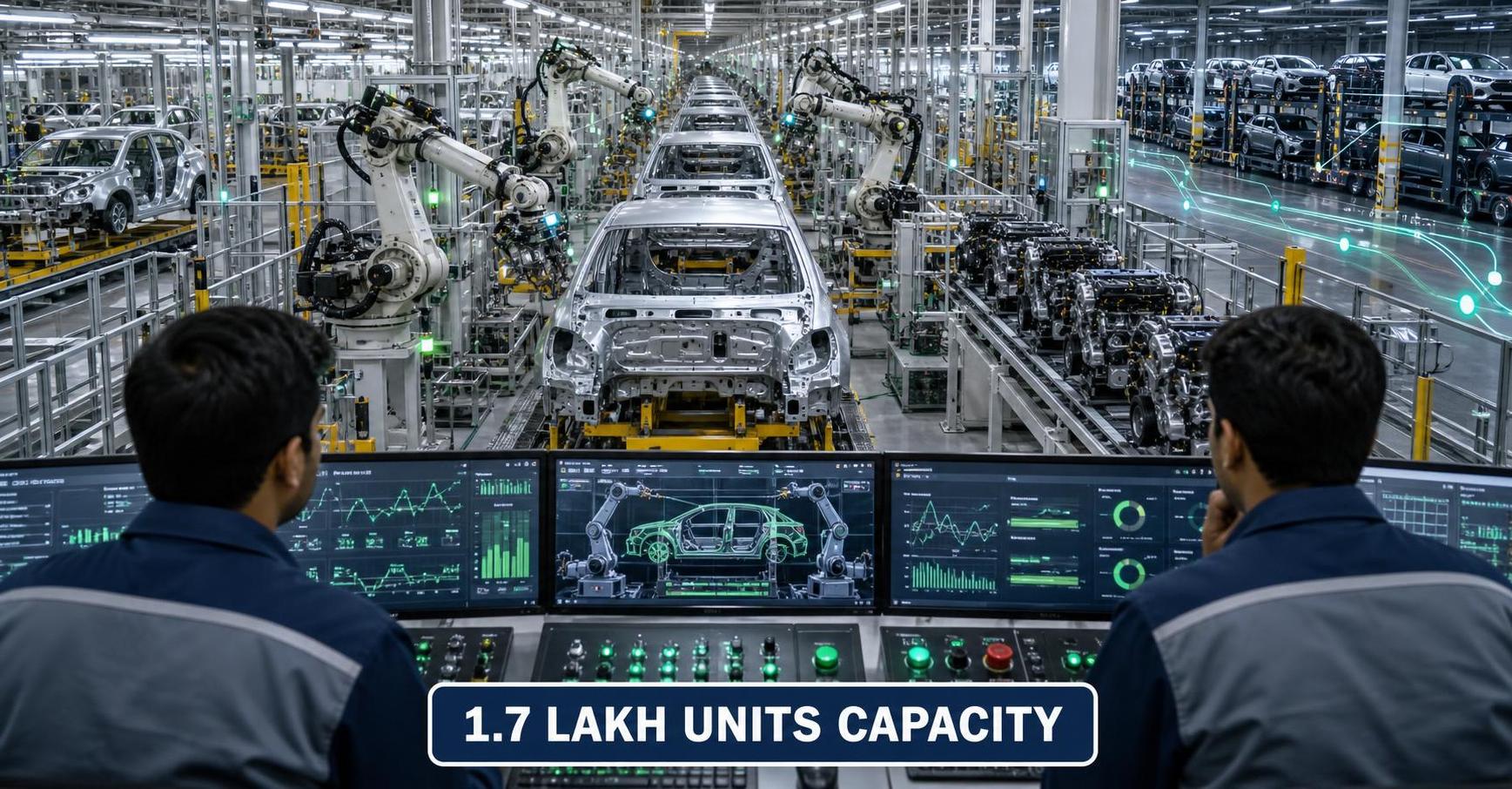
Hyundai Motor India has inaugurated its Talegaon plant in Maharashtra, starting with capacity of 1.7 lakh units annually and targeting 3.2 lakh units by 2030 as it expands exports and domestic production.
Hyundai Motor India Ltd has formally inaugurated its manufacturing plant at Talegaon near Pune, adding an initial annual vehicle-production capacity of 1.7 lakh units and outlining a phased expansion that could raise the facility’s capacity to 3.2 lakh units by 2030.
The Pune investment is central to Hyundai’s effort to widen its manufacturing base beyond Chennai and support both domestic demand and exports. Combined capacity across the Pune and Chennai operations is expected to reach nearly 11.4 lakh units a year by 2030, according to the company.
Hyundai plans to invest up to Rs 11,000 crore at the Pune facility in phases. The planned expansion from 1.7 lakh units to 3.2 lakh units represents an additional 1.5 lakh units of annual capacity, or an increase of around 88 per cent over the plant’s initial scale.
The All New Hyundai VENUE will be produced exclusively at the Pune plant and exported to global markets. Hyundai said it plans to expand Venue exports to more than 35 countries. The plant has flexible manufacturing systems that can support multiple models and could also accommodate internal-combustion-engine and hybrid vehicles in future.
The site also includes an engine shop with capacity to manufacture 1.5 lakh engines annually. Hyundai said the factory uses its E-FOREST digital manufacturing platform, with artificial intelligence-enabled quality inspection, predictive maintenance, digital simulations and augmented-reality training for workers.
The inauguration coincided with Hyundai Motor India crossing 4 million cumulative passenger-vehicle exports from India since beginning exports in 1999. The company said it is the first automobile manufacturer to reach that level of exports from India. It has also sold nearly 10 million passenger vehicles in the domestic market.
The export milestone is important because overseas markets remain a meaningful part of Hyundai India’s operating model. The company exported 1,90,125 vehicles in FY26, out of total sales of 7,75,031 units. Pune’s proximity to Mumbai Port is expected to support export Logistics as the company broadens its international model pipeline.
Looking for Quality Mid-Cap Growth Opportunities?
Explore DSIJ’s Mid Bridge - a research-driven service focused on fundamentally strong mid-cap companies with robust business models and long-term growth potential.
Download Service BrochureHyundai Motor Group Executive Chair Euisun Chung said India remained one of the group’s most strategic markets globally. ‘HMIL’s milestone of 4 million cumulative vehicle exports demonstrates the global competitiveness of Indian manufacturing and highlights India’s growing role within Hyundai Motor Group’s worldwide operations,’ he said.
The company is also seeking to build a regional supplier base around Talegaon. It said 55 supplier partners have already invested nearly Rs 4,600 crore in Maharashtra, while nearly half of the supplier-sourcing network is within a 50-kilometre radius of the plant. The Tier I and Tier II supplier ecosystem has generated more than 18,000 employment opportunities in the state, Hyundai said.
The capacity expansion comes after a softer June quarter for the automaker. HMIL reported net sales of Rs 16,334.63 crore in the quarter ended June 2026, broadly flat year-on-year, while profit after Tax declined 35.1 per cent to Rs 888.62 crore. Operating margin, excluding other income, fell to 9.25 per cent from 13.31 per cent a year earlier amid supplier disruption, lower exports and commodity-cost pressure.
Management has previously indicated that higher Pune utilisation, new launches and export recovery could support second-half performance. The Pune plant’s ability to build multiple powertrains may therefore offer Hyundai more flexibility as it navigates changing demand and emission requirements.
As of 3:52 PM on October 14, 2026, Hyundai Motor India shares were trading at Rs 1,967.00. The stock was down 23.79 per cent over the preceding year, compared with a 5.70 per cent decline in the BSE 500, and stood about 19.3 per cent below its 52-week high of Rs 2,438.70.
Disclaimer: The article is for informational purposes only and not investment advice.