In conversation with Mahesh Patil, CIO, Aditya Birla Sun Life AMC
Mandar Wagh / 16 Oct 2025 / Categories: DSIJ_Magazine_Web, DSIJMagazine_App, Interview, MF - Interviews, MF Interviews, Mutual Fund, Mutual Fund, Trending
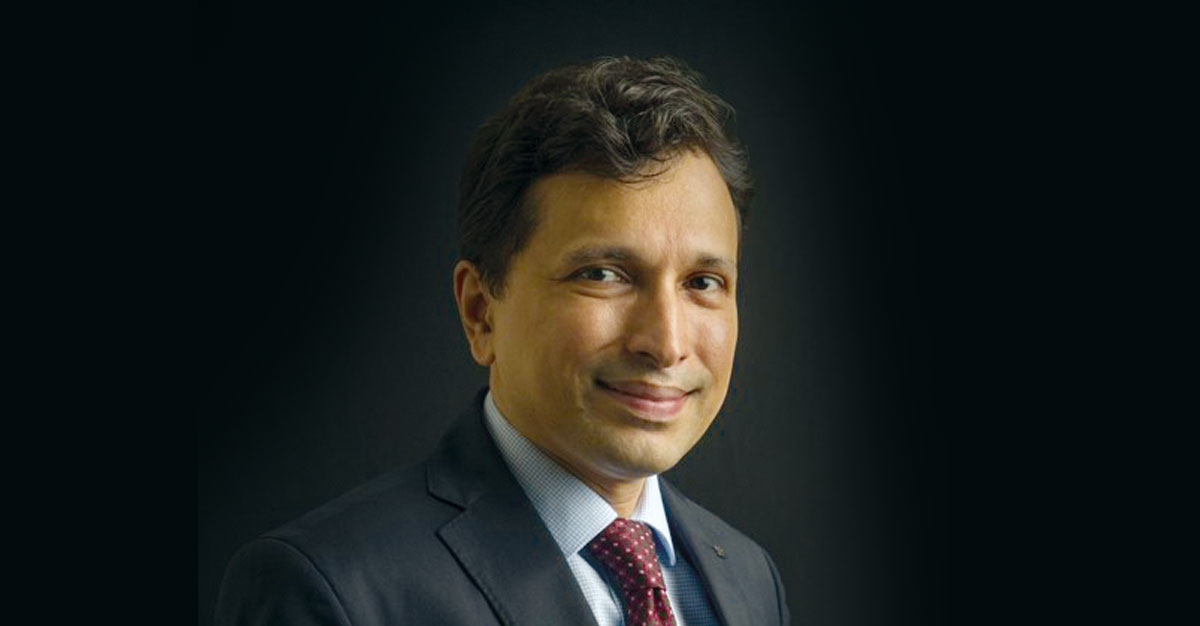
“Potential sector rotation could occur as money moves from cyclical sectors, like industrials, which have had a good run over the last three years, into consumption-oriented sectors,” shares Mahesh Patil, CIO, Aditya Birla Sun Life AMC.
Considering the fall in inflation and strengthening macro fundamentals, do you anticipate a better performance from India Inc. in the second half of FY26?
In the last fiscal year, growth slowdown started from the second quarter of FY25, driven initially by slower common spending and tighter monetary policy, which impacted growth. The RBI has cut rates, and transmission is expected to happen. With inflation well below the RBI target of 4 per cent, more rate cuts are expected, which should support growth in the coming quarters. While the US trade deal has not been signed and negotiations are ongoing, the GST rate rationalisation announced will spur consumption. The rate cuts have been significant and should give buoyancy to sectors like auto, consumer staples, and retail.
Overall, a combination of rate cuts and GST stimulus should lead to better growth in the second half. The supportive base should also drive earnings growth, possibly reaching double digits compared to mid-single digit growth earlier. Hence, one can expect better performance of India Inc. in the second half. Sustaining this will also depend on private sector capex follow-through, which could extend growth momentum into FY27.
With the Indian Mutual Fund industry recording all-time high SIP inflows in July, what, in your view, are the key structural factors driving this surge, and do you believe this momentum is sustainable?
SIP flows have been steadily improving despite markets not delivering great returns in the last one year. This shows Indian investors are maturing and focusing on long-term equity returns rather than short-term factors, and this trend is likely to continue. Mutual fund penetration is improving, though equity ownership as a share of overall savings is still low compared to global standards. Increased penetration, especially in tier 2 and tier 3 cities, will continue to drive growth.
Macro factors, particularly earnings growth, are also expected to improve. Despite geopolitical and trade tariff headwinds in the last 12 months, markets have remained resilient. Going forward, market returns should improve compared to last year, supporting continued mutual fund inflows. While the growth in SIP flows has moderated over the past six months compared to the last three years, the overall quantum should sustain at these levels.
With the government rolling out major Tax reforms, which sectors do you expect to gain the most? Do you see any potential sector rotation opportunities for investors in this context?
The GST rationalisation has been a significant tax reform, cutting rates across sectors. This will benefit auto, where rates have dropped from 28 per cent to 18 per cent on most categories, and FMCG, where rates on some categories have been reduced from 12 per cent to 5 per cent. Sectors like footwear and consumer durables will also likely benefit. Lower GST rates will not only increase volumes due to price reductions but also improve margins as operating leverage kicks in. During the festive season, these sectors should see buoyancy in demand and earnings growth. Potential sector rotation could occur as money moves from cyclical sectors like industrials, which have had a good run over the last three years, into consumption-oriented sectors.
With gold prices on the rise, how should investors position their portfolios to balance risk and returns?
Gold has delivered about 40 per cent returns this year, supported by multiple demand factors. While it is difficult to expect similar returns again, the demand drivers remain intact. However, gold prices are not secular; they can also experience drawdowns, and investors should be mindful of that. The strong performance of gold and silver, compared to modest equity returns last year, highlights the importance of asset allocation. Having exposure to other asset classes like precious metals and fixed income helps manage volatility and deliver balanced returns. In the current context, with potential rate cuts offering opportunities on the fixed income side, a balanced asset allocation strategy across equities, debt, and gold is essential to achieve the right mix of risk and return.
Having experienced multiple market cycles, what guidance would you offer to young investors embarking on their investment journey today?
Across multiple cycles, various asset classes go through phases of outperformance and underperformance, with mean reversion eventually taking place. Investors should not rely on past returns of a particular asset class and expect the same trend to continue. The right approach is to follow a disciplined asset allocation strategy and maintain the allocation discipline even during downturns, as this helps average out returns over time. It is equally important to have realistic return expectations from each asset class and avoid recency bias, allocating money based solely on near-term performance. Discipline, patience, and diversification are key for long-term wealth creation.
How is Aditya Birla Sun Life AMC positioning itself to stand out in an increasingly competitive mutual fund industry, especially with the entry of new large players?
Our focus is on delivering a consistent investment experience for investors rather than chasing short-term returns with excessive risk. The objective is to keep most funds in quartile 1 or 2 on a consistent basis as compared to peers, while ensuring no funds slip into quartile 4. Robust risk management, controls, and processes have been strengthened after past challenges, ensuring investor confidence is maintained. The goal is also to consistently beat benchmarks over 3-to-5-year periods, along with maintaining competitive performance against peers. By balancing consistency, risk management, and benchmark outperformance, we aim to differentiate ourselves and build long-term investor trust.
The Large-Cap fund under your management has delivered consistent performance. What strategies have you adopted to achieve and sustain this track record?
Our consistent outperformance at Aditya Birla Sun Life AMC is underpinned by a disciplined investment strategy that combines both a top-down and bottom-up approach. At the core of our investment philosophy is the principle of Sustainable Growth at a Reasonable Price (GARP). Our top-down strategy allows us to identify and diversify across sectors, minimising concentration risk. We allow for some variance, with sector weightages allowed to deviate by up to 30 per cent relative to the benchmark or 5 per cent absolute, whichever is higher. This is complemented by our bottom-up approach, which focuses on identifying and investing in established large-cap companies that have strong fundamentals, generate robust free cash flows, and maintain a Return on Capital Employed (RoCE) of at least 15 per cent over a business cycle.
We also have the flexibility to take opportunistic exposures by allocating up to 15 per cent of the portfolio to Mid-Cap and Small-Cap stocks. Looking ahead, the fund believes certain sectors are well-positioned for sustained outperformance over the next 3-5 years, including Financial Services, Infrastructure and Industrials, Consumption, Healthcare, and Tech. This combination of a flexible top-down sector strategy with a rigorous bottom-up stock selection process, all within a strong risk management framework, is key to how we have managed to consistently deliver for our investors.