In conversation with Mohit Bhatia, CEO, Bank of India Mutual Fund
Mandar Wagh / 21 Aug 2025 / Categories: DSIJ_Magazine_Web, DSIJMagazine_App, Interview, MF - Interviews, MF Interviews, Mutual Fund, Mutual Fund, Trending
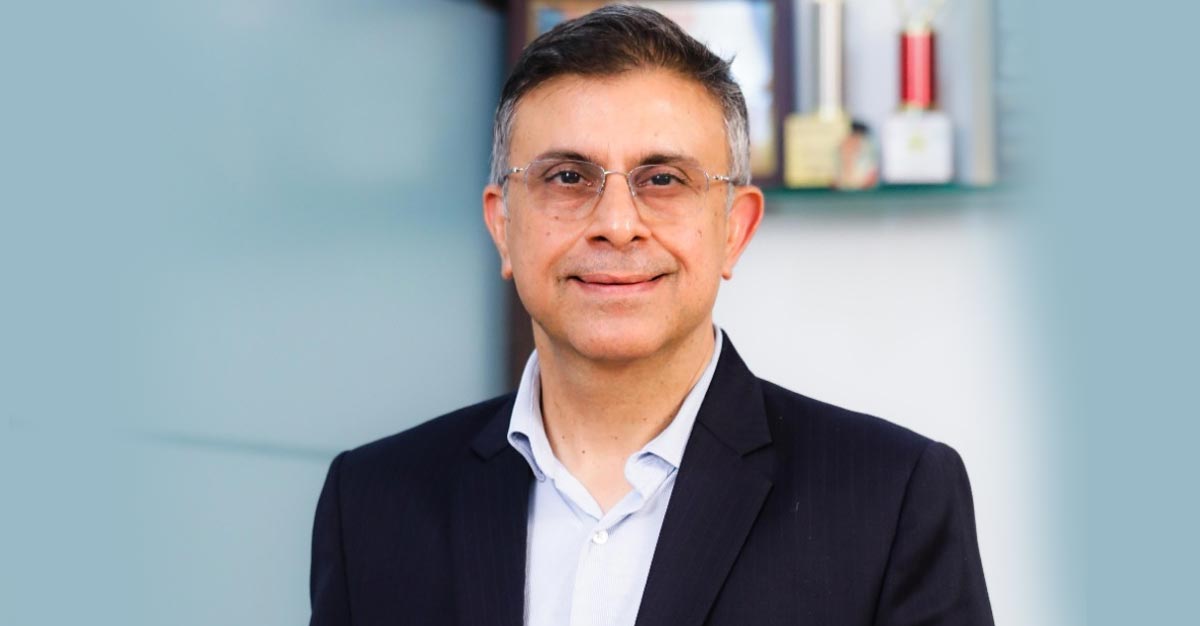
He emphasised that “the strong macro stability, along with likely improvement in terms of trade, falling inflation volatility, and support from the RBI, should help sustain corporate earnings."
Are there specific sectors you believe could be vulnerable or benefit from the evolving trade dynamics between India and the U.S.? Are trade tensions already priced in, or do you expect more volatility ahead?
The evolving trade dynamics across the globe are yet to settle, and the ongoing tariff-related issues between India and the U.S. have obviously created volatility in the Indian markets. The Quarterly Results for Q1FY26, amid the tariff tension, are on the expected lines with moderate outcomes on an aggregate basis. More than 50 per cent of the 500 companies in the BSE500 Index have shown growth in their profitability. So far, Industrials, Consumer Discretionary, and Metals have delivered better-than-expected results. Though the result season is yet to conclude, corporate India appears to be hopeful about the H2FY26; especially on the back of healthy policy actions like tax cuts and interest rate cuts along with the decent monsoons, all these cumulatively expected to support domestic growth in the upcoming festive season.
Considering the weak start to Q1FY26 earnings, how do you view the outlook for India Inc’s growth recovery?
Overall, we believe that the Q1FY26 results will be better sequentially as well as on a YoY basis, as we continue to expect improvement in growth data despite recent tariff issues. The strong macro stability with likely improvement in terms of trade, falling inflation volatility, along with support from the RBI, should help in sustaining the corporate earnings. We believe that markets should witness earnings improvements with possible upgrades, incrementally over the next 3 quarters in this FY. Our internal estimates point to mid-to-high-teens earnings growth annually over the next 3-5 years, led by an emerging private capex cycle, re-leveraging of corporate balance sheets, and a structural rise in discretionary consumption. However, in the near term, the equity market is increasingly becoming a bottom-up strategy-focused market, with investor concerns mainly around the top-line growth exhibited by many businesses.
With FIIs resuming outflows after a brief pause, do you believe strong DII support can offset the impact on Indian equities?
The growing investor confidence in the Indian markets over the last several years is validated well by the rise in DII share and the retail participation, especially through modes like the SIP route of investing. Stable macro-economic factors are also helping DIIs build further conviction in the outlook on aggregate demand improvement and its impact on corporate results in the medium to long term. The FII-DII trend has seen a significant change after COVID, wherein DIIs have been supportive when FIIs sold, helping stabilise the market and thereby averting deeper corrections. The global dynamics also play a key role, with changes in interest rates across global central banks, and outlook on dollar directional trend influencing FII flows. From the volatility standpoint, markets may see reduced volatility due to DII’s long-term focus, but sharper corrections could occur if FII selling persists. However, with India’s increasing share in the world GDP, especially our increasing share in the incremental global GDP, over the next several years along with relatively high RoE delivery of Indian corporates would be long-term positives for Indian equity markets, that most FIIs would find hard to ignore when allocating for medium to long term.
With the one-year success rate of actively managed equity funds down to 29 per cent, what strategies are you adopting to beat benchmarks and deliver better risk-adjusted returns?
Short-term performance of market index and actively managed funds could have divergence across time horizons; actively managed funds like ours endeavour to build portfolios with estimated RoEs better than that of the index while paying a reasonable price for the same. The fund under such construction is usually well-positioned to outperform the index over the long term. At times where the buy businesses that we like appear expensive, we also focus on the rate of change of business growth and if & when this above-average growth will positively raise earnings and ROE profile of the business concerned. This should help us in generating relatively better risk-adjusted returns over the long term. A constant endeavour for us is to ensure that our scheme portfolios are true to label and well-diversified with a critical watch on managing the concentration risk and liquidity risk across each product so that portfolios are well-prepared for volatility.
With big players entering the industry, how do you see it impacting your business, and what competitive edge does BOI Mutual Fund hold?
In our opinion, there is still plenty of room for everyone, and the number of unique investors in MFs in India is only about 5.6 crore. This is far too low when compared to PAN holders, tax filers as also in view of a large number of new younger entrants to the Indian work & savings pool in the years ahead. We have both a well-known brand and a large bank network of our shareholder bank that helps in distribution with over 5,300 branches. With a good track record built over the last 15 years across the majority of our products, we are also seeing a very good response from Independent MFD (MF distributors) & National level distribution partners as well as investors looking up to us on the various MF online platforms. We believe that the entry of more companies will assist to expand the market, allowing most players to have a sustainable share. The analysis & comparison of emerging and developed markets suggests that India’s mutual fund AUM to GDP ratio has the potential to grow significantly, from the current 18.7 per cent (approx.) to a much higher number as India moves ahead in its journey towards Viksit Bharat 2047.
What’s your vision for BOI Mutual Fund over the next five years in terms of AUM growth, investor base, and brand positioning?
In the years ahead, we would like to move with our corporate vision of being a Mutual Fund House that is ‘the preferred Financial Partner for Indian Households helping transform their Dreams into Reality through Disciplined Investing’. As necessary ingredients to achieving the above vision, we would ensure that we remain relevant, resilient and responsive in the very dynamic Indian investment landscape. Besides launching new products & investment solutions – it is also about consistently delivering value for all our stakeholders through performance, experience and trust. Given our small base of around Rs 13,000 crore AUM currently, our endeavour would be to grow our AUM by at least double the MF industry growth rate over the next 3-5 years.