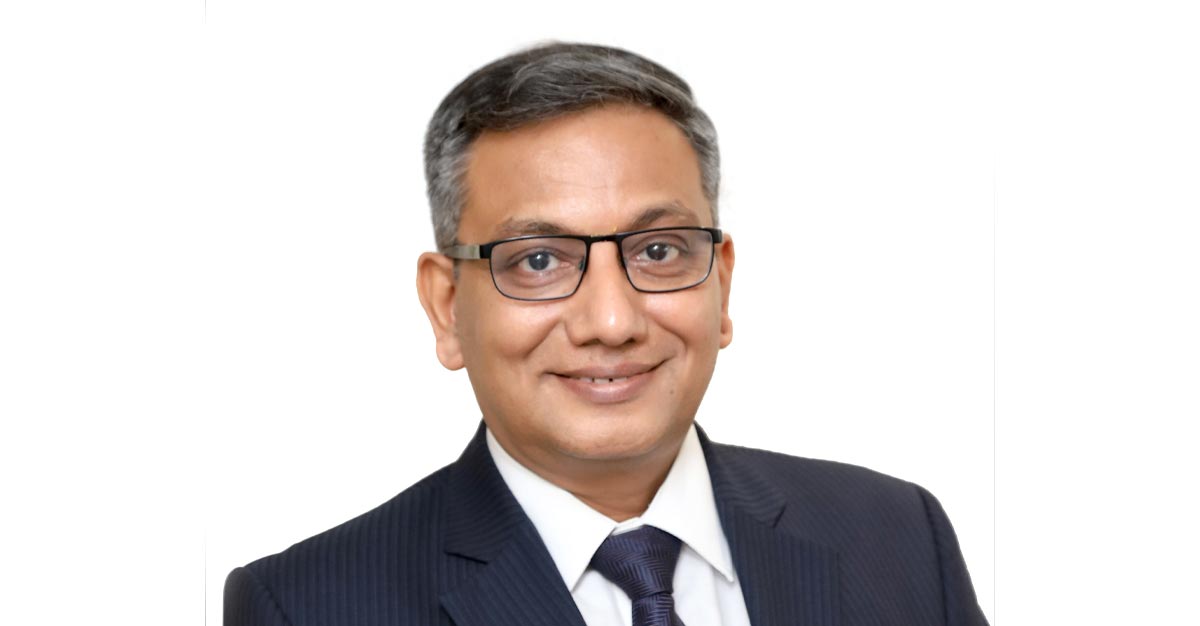
In conversation with Sundararaman Ramamurthy, Managing Director and Chief Executive Officer - BSE Limited
Ratin / 09 Jul 2026 / Categories: DSIJ_Magazine_Web, DSIJMagazine_App, Interview, Interviews, Interviews, Regular Columns, Trending
"Maintaining quality and investor protection is fundamental to the credibility and long-term growth of India’s capital markets; there is no trade-off between the two."
BSE has played a significant role in expanding investor participation in India. Beyond onboarding, what indicators do you track to assess the quality of investor engagement, awareness, and long-term participation in the markets?
The Government’s sustained push towards building a robust digital economy, through stronger digital infrastructure and ongoing regulatory efforts on seamless onboarding and greater financial inclusion, have transformed access to capital markets. Complementing this, SEBI has fostered a collaborative and cocreated ecosystem, bringing together regulators, intermediaries and investors to make markets more accessible, transparent and trustworthy. Exchanges like BSE have played a vital role by providing a steady, resilient and technology-driven platform at scale.
However, success lies not just in account openings but in sustained investor participation, because account opening is an event while participation is a journey. Encouragingly, the steady rise in Unique Client Codes (UCCs) and Mutual Fund folios reflects deeper investor engagement. Consistent inflows through Systematic Investment Plans (SIPs), even during volatility, underline growing maturity and a disciplined approach to longterm wealth creation.
Broader participation from Tier II and III cities highlights expanding market penetration. This has been supported by SEBI and market institutions through financial literacy and investor protection initiatives. BSE alone conducts 12,000 to 15,000 programmes annually, reaching up to 10 lakh investors, alongside a digital audience of 45 lakh.
As investors adopt diverse products, equities, mutual funds and ETFs, it signals rising financial sophistication. Ultimately, true success lies in more households embracing markets for longterm wealth creation.
BSE has witnessed strong growth in its derivatives segment. How do you view the evolution of the derivatives market, and what measures are important to ensure its growth remains healthy and sustainable?
Derivatives are an integral part of any mature capital market, enabling effective risk management, price discovery and liquidity creation. Since the introduction of derivatives in the year 2000, SEBI has been progressively reviewing the regulatory framework associated with derivatives and has been successfully co-creating the same, thus contributing to the growth of derivatives in India.
The success of Sensex derivatives demonstrates that innovation delivers results when it addresses a genuine market gap, created through a deep understanding of investor needs and evolving market dynamics. At BSE, our product development philosophy is anchored in the Voice of Customer, ensuring that new offerings are demand-led rather than mere replications.
As markets evolve, the focus must gradually increase on longerdated products that support institutional investors, long-term participants and genuine hedgers. In this direction, we continue to expand our suite with offerings such as the BSE Focused IT Index, alongside approved products like the Mid-Cap Index and Sensex Next 30.
Equally important are investor awareness and risk management. The end objective is not just higher volumes but a balanced ecosystem where innovation, liquidity, investor protection and market depth grow together sustainably. The mantra is investors should ‘understand what they trade and trade what they understand’
As both a market institution and a listed company, how does BSE balance its responsibility towards market development with the expectations of its shareholders?
I strongly believe that, in respect of a market infrastructure institution (MII), market development and shareholder value go hand in hand. Revenues are ultimately an outcome of the relevance and quality of products and services offered in line with market needs. Under the new regime, BSE has consciously focused on identifying gaps in the ecosystem and innovating to address them rather than chasing market share. Corporate governance and compliance are the backbone of market development.
When we relaunched derivatives three years ago, the starting point was simple, understand customer requirements and deliver meaningful solutions. This Voice of Customer-led approach, our steadfast adherence to corporate governance and our compliance culture have helped build trust, our most valuable asset. As participants find value, trust strengthens, participation deepens and growth follows organically.
As we continue to build a sustainable, well-rounded market ecosystem, shareholder value is well taken care of. The co-existence of market development and meeting shareholder expectations is the very foundation of long-term value creation.
Artificial Intelligence is increasingly finding applications across market infrastructure. How do you see AI enhancing areas such as surveillance, compliance and investor protection, while ensuring appropriate human oversight?
At BSE, AI adoption is progressing steadily, delivering tangible gains in efficiency and scalability. As one example, we have integrated AI-led tools in the SME IPO DRHP process to identify compliance gaps early, enhance disclosure quality and significantly reduce timelines, from nearly six months to about 40 days, enabling over 100 listings in just 180 days.
Across functions, automation and analytics are strengthening monitoring and operational resilience. However, capital markets are anchored in trust and accountability. Critical decisions must continue to be guided by human judgement.
We view AI as an enabler, augmenting institutional capabilities, not replacing responsibility, while preserving the integrity and confidence that underpin market ecosystems.
India’s SME ecosystem continues to attract entrepreneurial talent and investor interest. How is BSE strengthening governance, transparency and investor confidence while supporting the growth aspirations of SMEs?
Maintaining quality and investor protection is fundamental to the credibility and long-term growth of India’s capital markets; there is no trade-off between the two. Under SEBI’s leadership, a robust regulatory framework has enabled efficient capital formation while upholding high standards of governance and transparency. BSE remains closely aligned with these objectives, supporting a resilient and trusted market ecosystem.
MSMEs are central to India’s economic transformation, contributing significantly to manufacturing, exports, GDP and employment. The next phase of growth lies in enabling these enterprises to scale into sustainable, well-governed institutions. Access to equity capital is critical in this journey. Through its SME platform, BSE has facilitated over 730 listings, raising more than ₹16,000 crore, with several companies transitioning to the main board. Technology-led interventions have further enhanced accessibility and efficiency.
Ultimately, strong capital markets will play a catalytic role in empowering MSMEs and advancing the vision of Viksit Bharat.
BSE’s 150-year legacy is a testament to its resilience and adaptability. As markets continue to evolve, what key transformations do you believe will shape BSE’s next phase of growth and relevance?
The biggest opportunity ahead lies in the continued financialisation of savings in India. As millions enter the formal financial system, participation in capital markets is rising, but we are still at an early stage. As per a SEBI survey, while over 60 per cent of households are aware of capital markets, only about 9.5 per cent actively invest, highlighting a significant gap and a vast runway for growth.
BSE’s 150-year legacy provides a strong foundation of trust. In today’s rapidly evolving capital market ecosystem, relevance must be continuously earned through innovation, technology and customer-centricity. Our focus is on combining institutional penetration with modern market infrastructure, product innovation and future-ready capabilities. Technology investments continue to enhance speed, resilience and scalability, while we explore AI-led efficiencies and emerging areas such as tokenisation under SEBI’s guidance.
We are expanding products in line with evolving needs, from StAR NPS and mutual fund penetration in Tier II and III cities to growing SME listings and strengthening our index franchise. As India progresses towards Viksit Bharat, our focus remains on building an inclusive, innovation-led ecosystem that supports long-term wealth creation.