In conversation with Vishal Mehta, Chairman and Managing Director, Infibeam Avenues Ltd
Mandar Wagh / 27 Nov 2025 / Categories: Interviews, Trending
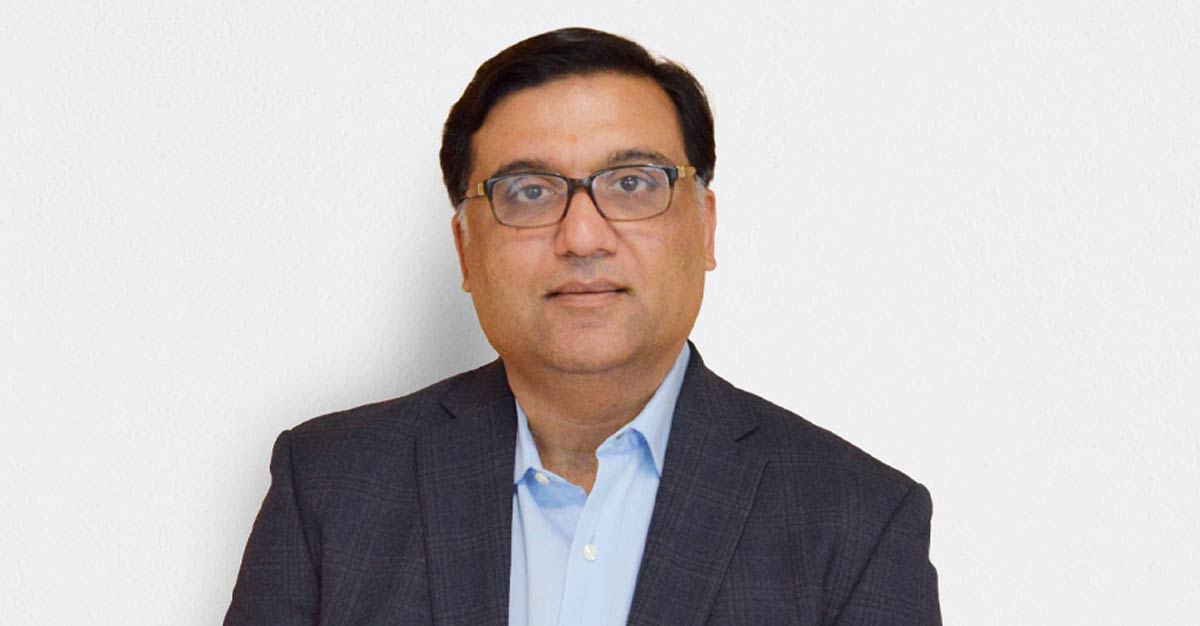
Catch valuable insights on the company’s key growth drivers, its use of AI to power the next phase of expansion, and its strategic initiatives and future targets. Take a look!
The company delivered an outstanding Q2FY26 performance, with revenue soaring 93 per cent year-on-year. What were the key catalysts that drove this strong growth momentum?
Infibeam’s Q2FY26 surge was propelled by a combination of operational scale, smarter product mix, and strategic realignment. The quarter saw explosive TPV growth (plus 33 per cent year-on-year / plus 38 per cent quarter-on-quarter), supported by a richer card/credit mix and higher-value enterprise merchant transactions. This directly amplified revenue momentum while improving profitability.
A major catalyst was the company’s re-architected business model. By shifting from a diversified, multi-platform structure to a streamlined focus on digital payments and AI-driven solutions, the company sharpened execution, improved unit economics, and unlocked operating leverage. Infibeam has been integrating AI deeply across its stack, including PayCentral.AI, CommerceAI, and new agentic/autonomous payment capabilities, enabling superior fraud control, faster onboarding, and high-value enterprise workflows. These differentiated offerings expand enterprise wallet share and open premium monetisation avenues.
The alignment of CCAvenue’s large merchant base with Rediff’s consumer ecosystem further strengthens the company’s strategic moat. Together, they allow Infibeam to capture value from both sides of the transaction, merchant fees on one end and consumer monetisation on the other, creating recurring revenue, higher throughput, and better lifetime value as volumes scale.
Regulatory tailwinds added additional momentum. The company secured in-principal RBI approval to issue PPIs (Prepaid Payment Instrument) and IFSCA authorisation to operate as a PSP (Payment Service Provider) at GIFT-IFSC, while also expanding Bank partnerships. These approvals open up new potential revenue streams from wallets and PPI-led flows to cross-border and international payments, enhancing scalability and improving long-term unit economics.
Together, these catalysts created a powerful and sustainable growth flywheel that delivered one of Infibeam’s strongest quarters to date.
How is the company leveraging AI to accelerate its next phase of growth? Could you elaborate on your plans to integrate AI-driven services with Infibeam’s global payment network and align Phronetic AI’s capabilities with cross-border fintech and intelligent commerce opportunities?
AI has become the foundational layer of Infibeam Avenues’ next phase of growth, as the company evolves from a traditional payment gateway into a fully AI-powered fintech infrastructure provider. Through Phronetic AI, Infibeam has built a sovereign, compliant, and enterprise-grade AI stack that brings together reasoning models, perception systems, video large language models (Video LLMs), and autonomous decision engines purpose-built for financial workflows.
This strategy advanced significantly in Q2 with the launch of PayCentral.AI, India’s first agentic payment technology based on Google’s Agent Payment Protocol (AP2). PayCentral allows AI agents to independently navigate websites, authenticate workflows, and execute end-to-end payments. This is a breakthrough that enables autonomous commerce at scale. Complementing this, the company has developed an Agent Operating System that fuses vision, language, and enterprise integrations to automate high-friction processes such as invoicing, reconciliation, KYC, AML, underwriting, and settlement management.
The next step is integrating these AI-driven capabilities across Infibeam’s expanding global payments network. As the company scales its footprint in the UAE, Saudi Arabia, Oman, and GIFT City, AI models will support cross-border trade automation, real-time risk scoring, intelligent routing, and tokenised settlement layers. Phronetic AI’s intelligence will also strengthen global merchant services by powering predictive analytics, fraud intelligence, FX optimisation, and multi-geography onboarding.
Together, these advancements position Infibeam to lead the next wave of AI-native fintech, building a global payments and commerce ecosystem where autonomous agents, intelligent risk systems, and cross-border financial infrastructure operate seamlessly to deliver faster, safer, and more profitable transactions worldwide.
What challenges, if any, are emerging as the company undertakes this technological transformation, and what are your top strategic priorities at this point?
Infibeam’s AI-led transformation naturally brings a few challenges, primarily around integrating advanced agentic and autonomous systems with legacy financial workflows while ensuring the highest levels of reliability, compliance, and data governance across multiple jurisdictions. As we embed AI deeper into payments, KYC, AML, underwriting, and cross-border flows, we must also stay ahead of evolving regulatory expectations and continue scaling specialised talent in AI engineering, perception systems, and financial-grade machine learning.
Despite these complexities, our strategic priorities are clear. Operationalising AI across the full payments stack, expanding our AI-powered infrastructure across the UAE, Saudi Arabia, Oman, and GIFT City, strengthening our sovereign and compliant Phronetic AI stack, accelerating merchant and bank adoption of PayCentral.AI and the Agent Operating System, maintaining proactive regulatory alignment, and building high-margin, recurring revenue streams in cross-border fintech and intelligent commerce. Together, these focus areas position us to scale responsibly, execute with discipline, and lead the global shift towards AI-native financial infrastructure.
How will the approval from IFSCA to operate as a Payment Service Provider at GIFT City (IFSC) support the company’s long-term growth strategy?
The in-principal approval from IFSCA to operate as a Payment Service Provider within GIFT City is a pivotal milestone in the company’s long-term strategy of building a globally scalable fintech infrastructure. This approval, which enables Infibeam to process cross-border merchant acquiring, international remittances, escrow services, and high-value trade transactions from India’s premier international financial hub, will create a new and high-potential revenue stream with contributions to our overall growth.
Unlike domestic payment flows, GIFT IFSC transactions can be dollar-settled, making it a gateway into multi-billion-dollar global payment corridors, particularly for trade, remittances, e-commerce exports, and offshore digital services. This not only diversifies revenue streams but also strengthens India’s position as a trusted fintech exporter, with Infibeam at the centre of that transition.
Digital payments have grown exponentially in India. Do you see this pace sustaining, and what new growth drivers could shape the next wave of fintech expansion?
India’s digital payments story is only entering its most valuable phase, with growth shifting from pure volume expansion to deep monetisation driven by AI-native financial infrastructure, embedded credit, and high-value enterprise flows. The next wave will be powered by autonomous payments, AI-driven KYC/AML, automated reconciliation, and intelligent routing, turning payment processors into full-stack financial platforms with stronger margins and recurring revenue.
At the same time, massive untapped segments such as B2B payments, deeper financial inclusion, cross-border corridors, and GIFT City’s global financial ecosystem provide multi-billion-dollar opportunities ripe for digitisation. With regulatory innovation accelerating, UPI credit lines, tokenised settlements, ONDC, and global UPI linkages, India is building the world’s most advanced, scalable, and profitable fintech rails. The next decade will not be about processing more payments, but about owning the intelligence, credit, and cross-border layers that sit above them. That is where the strongest value creation will occur.