Indian Markets Open Lower Ahead of RBI Policy Decision on 06 February 2026
Prajwal / 06 Feb 2026 / Categories: Mkt Commentary, Trending
The BSE Sensex opened 64.61 points, or 0.08 per cent, lower at 83,249.32, while the NSE Nifty50 started the session at 25,605.80, down 37 points, or 0.14 per cent.
Market Update at 09:38 AM: Benchmark Indian equity indices began Friday’s trading session on a subdued note as investors on Dalal Street remained cautious ahead of the Reserve Bank of India’s (RBI) monetary policy announcement scheduled later in the day.
The BSE Sensex opened 64.61 points, or 0.08 per cent, lower at 83,249.32, while the NSE Nifty50 started the session at 25,605.80, down 37 points, or 0.14 per cent. Market sentiment stayed tentative as participants positioned themselves ahead of the key policy outcome.
Within the Sensex pack, buying interest was seen in select financial and utility stocks. Bajaj Finance, Kotak Mahindra Bank, Trent, Bajaj Finserv, and Power Grid emerged as Top Gainers, rising by up to 1.29 per cent. On the other hand, NTPC, Tata Steel, HDFC Bank, TCS, and Maruti Suzuki India weighed on the index, declining by as much as 1.28 per cent.
Broader markets also traded in the red. The Nifty Midcap 100 index slipped 0.20 per cent, while the Nifty Smallcap 100 index fell 0.41 per cent, indicating continued caution beyond frontline stocks.
Sectoral performance on the NSE was mixed. The Nifty IT index was the worst performer, sliding over 1 per cent. Pharma, auto, metal, and media indices also traded lower, with losses extending up to 0.80 per cent. In contrast, Nifty Oil and Gas, private bank, realty, FMCG, and select financial stocks managed modest gains of up to 0.33 per cent.
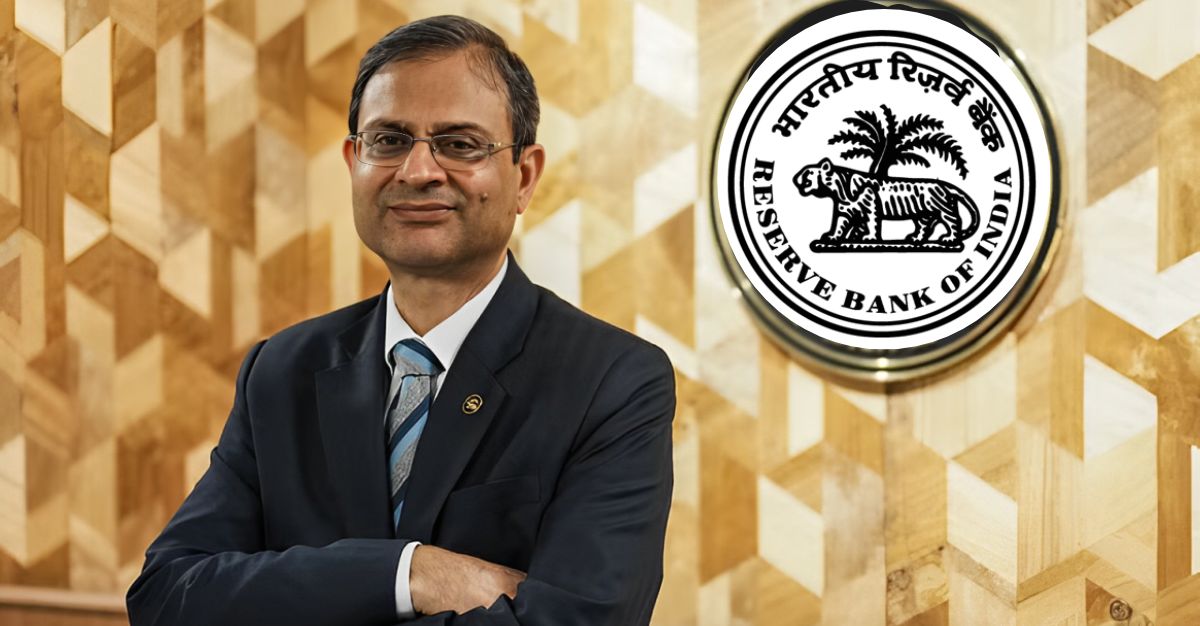
All eyes are now on the RBI, with Governor Sanjay Malhotra set to announce the interest rate decision at 10 AM today. According to a Business Standard poll, the Monetary Policy Committee is widely expected to keep the repo rate unchanged and maintain its current stance. Economists indicated that a rate cut would be considered only if there were significant downside risks to economic growth.
Pre-Market Update at 7:51 AM: Indian stock market benchmark indices Sensex and Nifty 50 are expected to open lower on Friday, 6 February 2026, tracking weak global cues and ahead of the Reserve Bank of India’s (RBI) monetary policy announcement later today.
Gift Nifty was trading around the 25,585 level, reflecting a discount of nearly 140 points from the previous close of Nifty futures, indicating a negative start for domestic equities.
Asian markets were under pressure following a sharp overnight sell-off on Wall Street, driven largely by heavy selling in technology stocks. Japan’s Nikkei 225 declined 1.22 per cent, while the Topix fell 0.74 per cent. South Korea’s Kospi dropped 3.86 per cent and the Kosdaq plunged 5.26 per cent. Hong Kong’s Hang Seng Index futures also pointed to a lower opening.
On Thursday, Indian markets closed lower amid broad-based profit booking. The Sensex declined 503.76 points, or 0.60 per cent, to settle at 83,313.93, while the Nifty 50 fell 133.20 points, or 0.52 per cent, to close at 25,642.80.
Market participants are closely watching the RBI’s February monetary policy decision. The Sanjay Malhotra-led Monetary Policy Committee is widely expected to keep the repo rate unchanged at 5.25 per cent.
Wall Street witnessed a sharp sell-off on Thursday, with the Nasdaq sliding to its lowest level since November. The Dow Jones Industrial Average fell 1.20 per cent to 48,908.72, while the S&P 500 declined 1.23 per cent to 6,798.40. The Nasdaq Composite closed 1.59 per cent lower at 22,540.59.
Technology stocks led the losses. Nvidia declined 1.37 per cent, Microsoft tanked 4.95 per cent, AMD dropped 3.84 per cent, Alphabet fell 0.60 per cent, Palantir slid 6.80 per cent, Oracle plunged 7 per cent and Qualcomm sank 8.50 per cent. Tesla declined 2.17 per cent. Amazon fell 4.40 per cent during regular trading and tumbled another 10 per cent after market hours.
U.S. economic data also weighed on sentiment. Job openings in the U.S. fell by 386,000 to 6.542 million in December, the lowest level since September 2020, according to the JOLTS report. This was significantly below market expectations of 7.20 million openings. Hiring rose modestly by 172,000 to 5.293 million.
In Europe, the European Central Bank kept interest rates unchanged for the fifth consecutive meeting, maintaining its key rate at 2 per cent. The ECB highlighted uncertainties related to global trade policy and geopolitical tensions, while reiterating that inflation is expected to stabilise near its 2 per cent target.
The Bank of England also held rates steady at 3.75 per cent in a narrow 5–4 vote. The central bank signalled that borrowing costs could decline if the expected fall in inflation materialises, despite cutting its growth forecast and projecting higher unemployment.
In currency markets, the U.S. dollar hovered near a two-week high and was on track for its strongest weekly performance since November. The dollar index stood at 97.961, up nearly 1 per cent for the week. The euro traded at USD 1.1784, sterling was at USD 1.3520 after sharp losses, while the yen strengthened to 156.74.
Commodity markets remained volatile. Gold and silver extended losses due to the stronger U.S. dollar. Spot gold fell 0.70 per cent to USD 4,735.99 per ounce, after a near 4 per cent decline in the previous session. U.S. gold futures dropped 2.80 per cent to USD 4,752.40 per ounce. Spot silver declined 3.20 per cent to USD 68.97 per ounce, following a massive 19.10 per cent fall a day earlier.
Bitcoin prices also came under pressure, slipping below the USD 61,000 mark amid broader market turbulence. The cryptocurrency dropped as much as 4.80 per cent to USD 60,033, its lowest level since October 2024.
Crude oil prices continued to decline and were on track for their first weekly drop in several weeks. Brent crude fell 0.74 per cent to USD 67.05 per barrel, while U.S. West Texas Intermediate slipped 0.82 per cent to USD 62.77 per barrel, as supply concerns eased and focus remained on U.S.–Iran nuclear talks.
For today, Sammaan Capital will remain on the F&O ban list.
Disclaimer: The article is for informational purposes only and not investment advice.