India’s Affluent Investors Are Rich, But Increasingly Financially Fragile
Ratin DSIJ / 11 Jun 2026 / Categories: DSIJ_Magazine_Web, DSIJMagazine_App, Goal Planning, MF - Goal Planning, Mutual Fund
India is in the middle of one of the largest wealth creation cycles in its history.
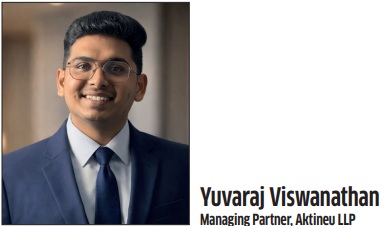
"Rising wealth and market participation are quietly creating a new structural risk" - By Yuvaraj Viswanathan[EasyDNNnews:PaidContentStart]
India is in the middle of one of the largest wealth creation cycles in its history. Equity participation has surged, SIP inflows continue to scale record highs, demat accounts have multiplied sharply, and affluent investors today have access to everything from PMS and AIFs to global equities, startup investing, and private markets. On the surface, this appears extraordinarily positive. Yet beneath this wealth expansion, a less visible trend is emerging: affluent investors are becoming wealthier, but structurally weaker.
The issue is no longer wealth creation. The issue is wealth coordination. Over the last 14 years, India’s investing landscape has undergone a structural shift. According to Prime Infobase data, Mutual Fund ownership in NSE-listed companies has risen from 3.21 per cent in March 2012 to 11.46 per cent in March 2026. During the same period, direct individual ownership has remained broadly flat, moving from 8.51 per cent to 9.11 per cent. The message is clear: Indian investors are increasingly moving away from direct stock selection towards professionally managed capital allocation.
Participation is rising. Complexity is rising faster. Most affluent investors today do not operate with a unified financial architecture. Portfolios evolve gradually through market cycles, Tax-saving decisions, private Bankers, relationship managers, peer influence, and business cash surpluses. Over time, the portfolio becomes a collection of disconnected financial decisions rather than a coordinated strategy. Different products. Different objectives. Different liquidity profiles. Different risk exposures. Very little integration. What appears diversified on paper is often concentrated underneath.
A large number of affluent investors today believe they are diver- DS sified because they own multiple investment products. In reality, five Mid-Cap mutual funds, multiple PMS strategies with overlapping portfolios, ESOPs alongside company stock exposure, or several properties within the same geography often represent the same underlying economic risk. This is not diversification. It is concentration wearing different labels.
The other major vulnerability is liquidity illusion. Many affluent investors today have substantial net worth tied to Real Estate, business ownership, private assets, and concentrated equity exposure. Their balance sheet appears strong, but their liquidity structure often does not. During rising markets, this remains invisible. During periods of stress, it becomes painfully visible. A `10 crore net worth without predictable liquidity can still create financial pressure. A large portfolio without cash-flow planning can still create dependence on active income. A family with significant assets but no succession clarity can still face disruption. The problem is not insufficient wealth. The problem is structural inefficiency hidden inside wealth.
This challenge is likely to intensify over the next decade. India’s affluent class is entering a far more complex financial era driven by longer life expectancy, intergenerational wealth transfer, alternative assets, global investing access, and rising financial product complexity. The next phase of wealth management will not belong only to investors generating the highest returns. It will belong to investors who build liquidity resilience, coordinated asset allocation, tax-efficient structures, and long-term continuity.
A silent transition is already underway among sophisticated investors. Many are slowly moving away from fragmented investing and aggressive product accumulation towards simplification, consolidation, and cash-flow-oriented portfolio design. Because eventually, every affluent investor reaches the same realisation: Creating wealth and sustaining wealth require completely different skill sets.
Before seeking the next investment opportunity, affluent investors may need to answer three uncomfortable questions:
• If active income stopped tomorrow, how long could the current portfolio sustain the existing lifestyle without forced selling?
• Is the portfolio genuinely diversified across liquidity, asset classes, and economic exposure, or only across product names?
• If something unexpected happened tomorrow, would the family clearly know how the entire financial structure operates?
Increasingly, these questions may matter more than the next market rally itself.
[EasyDNNnews:PaidContentEnd] [EasyDNNnews:UnPaidContentStart]
To read the entire article, you must be a DSIJ magazine subscriber.
[EasyDNNnews:UnPaidContentEnd]