Is E-Rupi Ready to Change The Payment Dynamics?
Ninad Ramdasi / 29 Dec 2022/ Categories: DSIJ_Magazine_Web, DSIJMagazine_App, General, Knowledge, MF - Special Report, Mutual Fund, Special Report
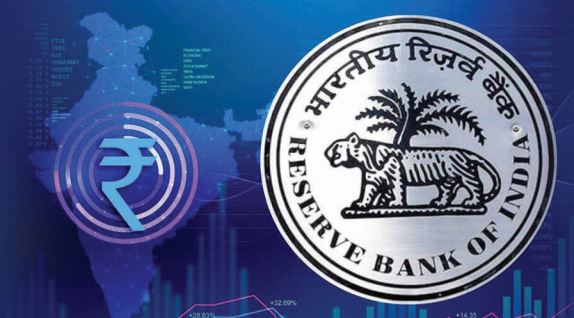
With UPI being one of the most successful projects in India, e-RUPI is grabbing headlines. This is the system through which you would transact with digital cash. This article digs deeper into the benefits and functioning of this innovative payment mechanism
Last year, the Reserve Bank of India (RBI) stated that it was working on a gradual deployment of its own digital currency. The RBI has announced the start of the first phase of the retail e-RUPI pilot. Any currency, money or money-like asset that is largely handled, saved or exchanged on digital computer systems, particularly through the internet, is referred to as digital currency (digital money, electronic money or electronic currency). Crypto currency, virtual money and central bank digital currency are all examples of digital currencies. In this article, we have decoded what e-RUPI is, how it works, the fundamental differences between e-RUPI and UPI, and whether or not this mechanism is ready to transform the payment dynamics.[EasyDNNnews:PaidContentStart]
Defining e-RUPI
On August 2, 2021, India’s Prime Minister Narendra Modi introduced the e-RUPI Digital Platform, a digital payment platform. This platform will be used to make digital payments and is cashless and contactless. The National Payments Corporation of India (NPCI) created this digital payment facility on its Unified Payments Interface (UPI) platform. In a nutshell, this is a form of digital cash. The Department of Financial Services (DFS), National Health Authority (NHA), Ministry of Health and Family Welfare (MoHFW) and partner banks are among the collaborators. This effort will link service sponsors with recipients and service providers. The link will be maintained digitally, with no physical contact.
Working of e-RUPI
The format of e-RUPI is a digital voucher that the beneficiary receives by SMS or QR code on his mobile device. The voucher is a pre-paid coupon that may be used at participating locations. It is a one-time contactless, cashless voucher-based means of payment that recipients can utilise to redeem without the need for a card, digital payments app or internet banking access. In fact, e-RUPI differs from the digital currency being explored by the Reserve Bank of India.

Benefits of e-RUPI
The main advantage of e-RUPI is that the beneficiary does not need to have a bank account. Since it offers a simple, contactless two-step redemption process that does not need the disclosure of personal information, the nicest aspect about e-RUPI is that it can be used with a simple phone without an internet connection.
Benefits for Corporates
■ Corporates may promote employee wellbeing
■ End-to-end digital transaction that eliminates the need for physical issuance, resulting in cost savings
■ Voucher redemption can be tracked by the issuer
■ Voucher distribution that is quick, safe and contactless.
Benefits for Merchants
■ Simple and secure since the voucher is authorised via a verification code
■ Hassle-free and contactless payment collection because no cash or cards are required
■ Quick redemption procedure since the voucher may be redeemed in a few steps and lower decline because of the pre-blocked amount.
Benefits for Consumers
■ Contactless payment since the beneficiary does not need to carry a print out of the voucher
■ Easy redemption with a two-step redemption procedure
■ Safe and secure because the beneficiary does not need to divulge personal data when redeeming and therefore privacy is protected.
Implementation Roadblocks
The usage of cash is an important concern in India. The RBI is in charge of printing, circulating and transacting currency in India. Despite demonetisation in 2016 and the implementation of the Goods and Services Tax (GST) in 2017, the use of cash in circulation climbed 10.2 per cent between 2018 and 2019. This is reflected in India’s GDP, which explains why the government continues to print money. It also indicates that cash is still the preferred mode of payment in India. Switzerland and Japan are two more countries that face comparable issues.

Differences between e-RUPI and UPI
■ The primary distinction between e-RUPI and UPI is that e-RUPI is a digital currency that enables digital transactions whereas UPI is a platform through which digital transactions occur
■ In every UPI transaction, the bank functions as a middleman. As a consequence, the bank account is debited in the UPI app and money is transmitted to the recipient’s bank. You may withdraw the amount in paper money from the bank, keep it in your wallet and use it to make a purchase at a retailer. In the case of e-RUPI, however, you will withdraw virtual money and keep it in your mobile wallet. When you pay for something at a shop or to someone else, money is moved from your wallet to their wallet. The bank does not route or serve as a middleman for payments.
■ Just like physical cash, you can withdraw e-RUPI from your bank account, put it in your phone wallet and spend it anywhere. When you use UPI, you direct your bank to transfer money from your account to the vendor’s bank account.
■ UPI is a payment platform. To make a payment, one can use a debit or credit card, net-banking, mobile wallet, or other means. In the case of e-RUPI, however, it is analogous to spending actual money in digital form via one’s cell phone.
■ When you use a UPI app, your bank account is debited, and money is transferred to the recipient’s bank account. Keeping paper money in your wallet and spending it at a shop is as simple as withdrawing it from the bank and putting it in your wallet.
■ Unlike UPI transactions, this electronic form of sovereign currency is administered by the RBI and does not involve any individual handlers. As a result, e-RUPI payments are direct and immediate.
■ Another inherent attribute of the Central Bank Digital Currency (CBDC), akin to physical cash, is anonymity. However, the data in UPI transactions is held by the intermediates (banks).
Additional duties for the already overloaded RBI with the adoption of e-RUPI include:
⏩ Customer on-boarding
⏩ Due diligence
⏩ Transaction authorisation
⏩ System security
⏩ Ensuring compatibility with other systems
⏩ Executing collaborations with third parties
⏩ Designing and executing a CBDC regulatory framework.
The RBI must also undertake monitoring, oversight and risk management efforts, as well as analyse third-party risks and establish processes to respond to CBDC outages caused by operational failures or cyber-attacks. Costs, risks, responsibility and the level of the bank’s operational control are all aspects to consider when determining the barriers to its effective implementation.
List of Banks that can Issue e-RUPI
For e-RUPI transactions, NPCI has collaborated with the following 11 banks:
■ Axis Bank
■ Bank of Baroda
■ Canara Bank
■ HDFC Bank
■ ICICI Bank
■ Indian Bank
■ IndusInd Bank
■ Kotak Mahindra Bank
■ Punjab National Bank
■ State Bank of India
■ Union Bank of India.
Final Thoughts
With the debut of the e-RUPI and what we have learnt so far, one thing is certain: the e-RUPI is here to stay. According to the government, multinational corporations can utilise this technique not just to provide employee perks but also as part of their corporate social responsibility (CSR) financing. UPI is a banking industry-sponsored technology that allows consumers to link their bank accounts to their phone numbers and perform fast financial transfers across bank accounts using apps offered by payment service providers. According to the NPCI, the UPI has processed over 6,621 crore transactions in 2022 so far (up to November 2022), making India a unique large market where consumers are increasingly adopting account-to-account transfers to send money to other people and pay for goods and services.
Because UPI payments increased at a monthly pace of USD 31 billion in February, the entire annualised value of UPI payments is likely to increase by 50 per cent on average, according to the RBI. UPI is ideal for in-store and online payments since it enables both push and pull transactions and also allows payments to be made instantly and around the clock. It offers a broad range of use cases, such as viewing a user’s bank account balance and it interfaces with numerous payment systems via its open API. The NPCI, which manages the UPI network and houses all sorts of billers and payment aggregators, has created a consolidated payment system.
Payment apps like PhonePe, PayTM, BHIM, Google Pay and others let its users to access and pay their telecom, gas, electricity and insurance bills by partnering with licensed enterprises that have access to the Bharat Bill Payment System platform. Given that e-RUPI voucher transfers are based on the UPI mode of payment, we anticipate a similar success trend for them as has occurred with UPI throughout the country since its debut. The lack of access to the internet or a 3G signal was a significant disadvantage in rural India. Because this new payment method is based on SMS, internet availability should not be a problem.
[EasyDNNnews:PaidContentEnd] [EasyDNNnews:UnPaidContentStart]
To read the entire article, you must be a DSIJ magazine subscriber.
Current print subscribers click here to login
Subscribe now to get DSIJ All Access
[EasyDNNnews:UnPaidContentEnd]