Is The Pharmaceutical Industry Shaping Up To Be The New IT?
Ninad Ramdasi / 07 Sep 2023 / Categories: DSIJ_Magazine_Web, DSIJMagazine_App, Special Report, Special Report, Stories
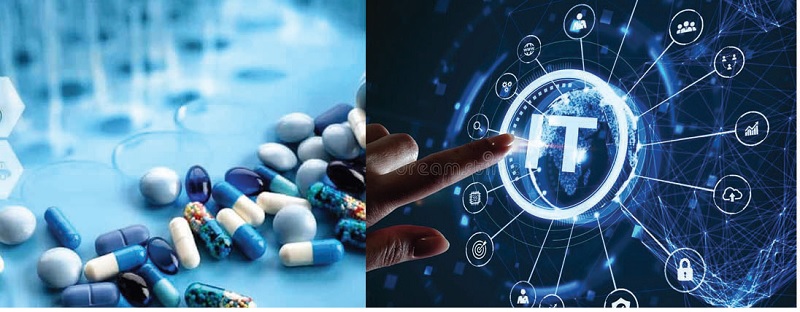
Given the shared traits between the pharmaceutical and IT industries,
Given the shared traits between the pharmaceutical and IT industries, it’s worth pondering whether the pharmaceutical industry is on its way to becoming the new IT. Mandar Wagh delves into the dynamics of the US drug shortage, India’s competitive edge and the technological revolution within the industry, all of which are setting the stage for unparalleled growth
Over the past few months, the Indian benchmark indices have witnessed a significant rally, breaking away from their previously observed range-bound fluctuations. This momentum has propelled the indices to attain unprecedented highs, consequently leading to gains of around 10-11 per cent for both the BSE Sensex and Nifty 50 over the past six months. The robust performance can be attributed to an overarching positive sentiment that goes beyond the broader market and encompasses specific industries as well. Notably, Nifty Pharma, an index tracking the pharmaceutical industry, has demonstrated exceptional resilience. [EasyDNNnews:PaidContentStart]
It has outperformed other sectors with a remarkable surge of nearly 28 per cent over the same six-month period. Sizeable foreign investments in the industry, coupled with impressive performances from pharmaceutical companies, have been instrumental in fuelling the strong upswing. Furthermore, the Indian pharmaceutical industry is experiencing a substantial transformation driven by technological advancements that have previously revolutionised the IT industry. When analysing various factors such as its global market presence, heavy reliance on the US markets for revenue, its innovation-driven and technology-centric nature, stringent regulatory environment, and the expertise it demands, one might contemplate whether the pharmaceutical industry is shaping up to be the new IT.
Even in the most optimistic scenarios, the IT industry is currently grappling with attention-grabbing senior leadership transition, notable layoffs stemming from concerns about profit margins and a reduction in client expenditures. As a result, Nifty IT, the sectoral index symbolising the IT industry, surfaced as one of the leading underperformers, failing to sustain investor interest. Considering the multitude of similarities with the IT sector, it becomes crucial to evaluate the long-term growth prospects and sustainability of the pharmaceutical industry.
US Drug Shortages and India’s Competitive Advantage
Recently, the United States experienced one of the most severe drug shortages in many years. Various factors contributed to this issue, but one significant driver has been the stricter audits that have uncovered lapses in quality standards among companies with extensive supply arrangements in the US. These findings have temporarily disrupted supplies, further exacerbating the problem of drug shortages. Inadequate availability is observed in local anaesthetics, fundamental hospital pharmaceuticals and commonly used oral and ophthalmic products, treatments for ADHD as well as chemotherapy medications.
Historically, drug shortages have often served as a significant indicator for price increases, providing pharmaceutical companies with the opportunity to raise prices for scarce drugs multiple times. Given the substantial reliance of the United States on the supply of medicines and intermediates from India, domestic manufacturers and suppliers in India can potentially leverage this situation to their advantage. Conversely, the Indian pharmaceutical industry, bolstered by its robust capabilities and a multitude of manufacturers in active competition, manages to maintain price competitiveness in the market. Additionally, the skilled and adept workforce in India, coupled with labour cost advantages relative to Western countries, fosters economic efficiency in pharmaceutical manufacturing.
This has garnered India the distinguished recognition as the ‘pharmacy of the world’, producing top-tier generic medications and vaccines at cost-effective rates. In pursuit of enhancing the accessibility of economical medications, the Indian government has implemented initiatives such as ‘Jan Aushadhi’, which involves the establishment of generic medicine stores. India holds the esteemed position of being the largest global supplier of generic pharmaceuticals, responsible for a substantial 20 per cent share of all pharmaceutical exports internationally.
Remarkably, the Indian pharmaceutical industry holds a prominent position on the global stage, ranking third in production volume and 14th in value. The world’s major economies have acknowledged India’s pivotal role in furnishing corona virus vaccines and the country’s significant influence within the global healthcare industry. The pandemic highlighted the critical need for fundamental medical facilities throughout the country, subsequently elevating the significance of the industry. The Department of Pharmaceuticals introduced an initiative known as the Scheme for Development of Pharmaceutical Industry, encompassing multiple sub-schemes that offer support to the bulk drug and medical device sectors.
It also introduced a Production Linked Incentive (PLI) scheme, aimed at enhancing domestic manufacturing through the establishment of new greenfield plants. This initiative is designed to achieve self-sufficiency and decrease reliance on imports. Moreover, the government extended the e-medical visa facility to residents of 156 nations with the intention of promoting medical tourism within the country. Additionally, the National Digital Health Blueprint (NDHB) presents a comprehensive strategy for constructing essential IT foundations within the healthcare ecosystem.

This blueprint is essential for facilitating seamless information exchange among participants while upholding the privacy and security of citizens’ data. Beyond government initiatives, pharmaceutical leaders are actively pursuing various strategies to foster business growth. These efforts encompass building robust international partnerships, resource-sharing through mergers and acquisitions, and substantial capital investments essential for expansion. It is noteworthy that, except for a small number of pharmaceutical companies, the vast majority has demonstrated year-on-year double-digit growth in both net earnings and revenues.
The year-on-year analysis of the financial performance of publicly listed pharmaceutical and healthcare companies has disclosed a robust upswing in their overall financial metrics. These companies displayed remarkable resilience and adaptability in the face of challenging conditions, achieving a notable 14 per cent aggregate revenue growth in Q1FY24 compared to Q1FY23. However, the most striking revelation emerges from the substantial 30 per cent growth in aggregate operating profit, highlighting their exceptional operational efficiency and profit-generation capabilities. Additionally, the aggregate net profit showed a sizeable 28 per cent rise, further underlining the industry’s overall strength and viability.
Technology Transformation
The outbreak of the pandemic spurred an unprecedented acceleration in the adoption of technology and digitisation across various sectors, including the pharmaceutical industry. Faced with the challenges posed by the pandemic, companies swiftly embraced digital solutions to ensure uninterrupted operations. This rapid technological shift has not only proven instrumental in maintaining productivity levels but has also greatly enhanced efficiency, raised quality standards and facilitated effective cost-control measures. By leveraging advanced digital tools and data analytics, pharmaceutical companies have transformed their workflows, enabling seamless communication, streamlined processes and the ability to make data-driven decisions in real-time. Let’s explore these emerging technologies and their applications in the pharmaceutical industry.
1) Artificial Intelligence and Machine Learning - AI is revolutionising the pharmaceutical industry by introducing a new paradigm of innovation and efficiency. With its ability to process vast amounts of data and derive insights, AI has become a game-changer in drug discovery, development and various aspects of healthcare. Machine learning algorithms can analyse biological and chemical data to identify potential drug candidates more rapidly and accurately than traditional methods. AI-driven technologies enable precision medicine by analysing patient data to determine optimal treatments based on genetic and molecular profiles. This not only improves patient outcomes but also reduces adverse effects and treatment costs.
2) Big Data and Advanced Analytics - It has assisted the pharmaceutical industry by simplifying the management and handling of vast and diverse datasets. These technologies have the capability to efficiently process the immense volume and wide variety of data that the industry relies on. By leveraging sophisticated algorithms and tools, pharmaceutical companies can extract valuable insights, patterns and trends from this data, enabling them to make informed decisions and drive innovation. This ease of handling complex data has not only accelerated research and development processes but also paved the way for more precise and personalised healthcare solutions.
3) Digital Therapeutics - It represents a transformative convergence of technology and healthcare within the pharmaceutical industry. These innovative interventions leverage digital platforms, such as mobile apps, wearable devices and software programs to deliver evidence-based treatments for a wide range of medical conditions. By collecting and analysing user-generated data, digital therapeutics enables continuous monitoring and adjustment of interventions, leading to more precise and effective treatments. The pharmaceutical industry is tapping into this trend by partnering with digital health start-ups to develop and commercialise these innovative therapies.
4) Blockchain Technology - It ensures the traceability of pharmaceutical products throughout the supply chain, from raw materials to distribution. Every transaction is recorded in an immutable and transparent ledger, reducing the risk of counterfeit drugs, enhancing quality control and ensuring patient safety. It helps maintain the integrity of clinical trial data by providing an auditable and tamper-proof record of trial procedures, data collection and results. It also facilitates secure sharing of patient data among healthcare providers, researchers and patients themselves.
5) Nanotechnology - It enables the design, development and delivery of drugs and therapies at the nano scale level. It allows for the design of targeted therapies that selectively interact with disease-specific cells or structures, minimising damage to healthy tissues. This is particularly promising in cancer treatment. In addition, it enables the creation of personalised drug formulations based on individual patient characteristics, optimising treatment efficacy and minimising adverse effects.
6) Bioprinting - It is a cutting-edge technology that combines 3D printing with biological materials and has the potential to completely reshape the pharmaceutical industry. This technology holds promise for fabricating functional tissues and organs for transplantation, reducing the need for organ donors and improving patient outcomes. Also, bio-printed tissues can mimic the physiological environment of human organs, providing more accurate models for drug testing. This accelerates drug development, reduces the need for animal testing and increases the success rate of clinical trials.
7) Virtual Reality and Augmented Reality - VR provides immersive environments for training pharmaceutical professionals, from laboratory techniques to surgical procedures, allowing them to practice and learn in a risk-free setting. It can create virtual patient scenarios, enabling clinical trial participants to experience the effects of a drug in a controlled environment, leading to better understanding and improved compliance. AR provides real-time data and visualisations during surgeries, aiding surgeons with information like vital signs, patient history and 3D anatomical overlays.
8) Telecare - It involves the use of telecommunications technology to deliver medical care and monitor patients remotely. It has become a vital component of modern healthcare, offering numerous benefits to patients, healthcare providers and the pharmaceutical industry. It allows patients to consult with healthcare professionals without the need for in-person visits. This is especially beneficial for follow-up appointments, medication management and routine check-ups. It bridges the gap in healthcare access for individuals residing in remote or underserved areas where medical facilities are scarce.
Conclusion
The recent spotlight on US drug shortages has presented India’s pharmaceutical sector with a unique opportunity to leverage its competitive advantages and bolster its sustainable outlook on the global stage. With its prowess in generic drug production, cost-effective manufacturing and a burgeoning role in healthcare services, India’s pharmaceutical industry is poised for a bright future. As technology continues to intersect with healthcare, the pharmaceutical industry is poised for unprecedented growth, underlining its commitment to delivering cutting-edge solutions and improved healthcare outcomes. In essence, the pharmaceutical industry’s journey toward sustainability, innovation and global influence is firmly on track, making it a fascinating sector to watch as it evolves and adapts to the dynamic landscape of healthcare and technology.
[EasyDNNnews:PaidContentEnd] [EasyDNNnews:UnPaidContentStart]
To read the entire article, you must be a DSIJ magazine subscriber.
Current print subscribers click here to login
Subscribe now to get DSIJ All Access
[EasyDNNnews:UnPaidContentEnd]