ITC Ltd.
Ratin DSIJ / 05 Mar 2026 / Categories: Analysis, Analysis, DSIJ_Magazine_Web, DSIJMagazine_App, Regular Columns
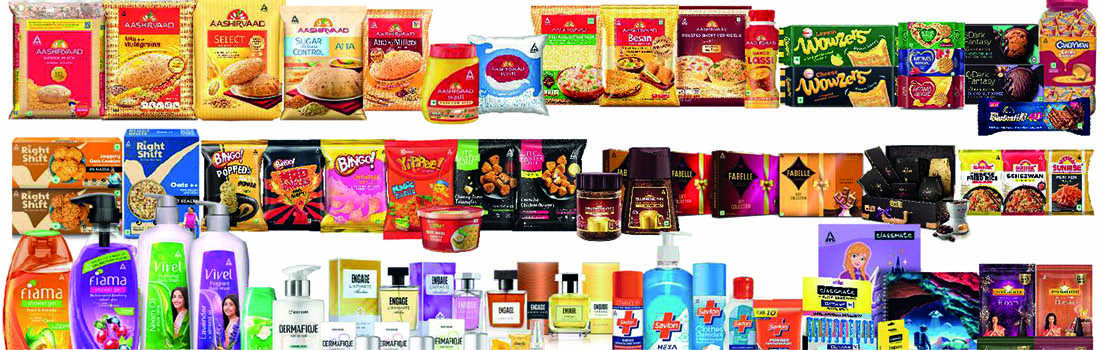
ITC continues to transform from a tobacco led conglomerate into a diversified FMCG powerhouse driven by strong cash flows
ITC continues to transform from a tobacco led conglomerate into a diversified FMCG powerhouse driven by strong cash flows, deep distribution and strategic investments in growth segments. With a focus on premiumisation, backward integration and value unlocking through structural changes, supported by a robust balance sheet and consistent dividend profile, it is positioning itself for long-term sustainable growth despite near term consolidation [EasyDNNnews:PaidContentStart]
Over the past six months, shares of ITC Limited have corrected sharply by nearly 22 per cent, significantly underperforming the broader FMCG space, where the BSE Fast Moving Consumer Goods Index has declined by around 11 per cent during the same period. This divergence highlights a clear shift in investor sentiment, raising an important question: is the current correction a reflection of weakening fundamentals, or does it present a long-term opportunity in a fundamentally strong business undergoing transition?
Historically, ITC has been viewed as a high cash-generating, dividend-rich conglomerate anchored by its dominant cigarette business. However, in recent years, the company has been actively repositioning itself as a diversified FMCG player, reducing dependence on tobacco while scaling new growth engines. This transition phase, combined with sector-wide slowdown and valuation recalibration, has contributed to the recent stock correction. This analysis evaluates whether ITC is entering a new phase of structural growth or facing prolonged consolidation due to evolving competitive and regulatory dynamics.
About the Company
Established in 1910, ITC Limited has evolved from a tobaccofocused enterprise into one of India’s most diversified conglomerates, with a presence across FMCG, hotels, paperboards, packaging, and agri-business. While the company continues to dominate the domestic cigarette market with an estimated 80 per cent share in the organised segment, its long term strategy has been centred around reducing dependence on tobacco and building a multi-engine growth model.
This transformation was not accidental but a deliberate strategic shift that began in the early 2000s. At that time, nearly 75 per cent of ITC’s revenues were driven by cigarettes, exposing the company to significant regulatory and concentration risks. With tightening global and domestic regulations on tobacco, ITC’s management recognised the need to diversify into non-cigarette businesses to ensure long-term sustainability.
The company leveraged its strongest competitive advantage, its deep distribution network and strong retailer relationships built through the cigarette business, to enter FMCG categories such as packaged foods, personal care, and stationery. Over time, ITC adopted a house of brands strategy, creating independent brand identities like Aashirvaad, Sunfeast, Bingo, and Classmate, thereby distancing consumer perception from its tobacco origins. As a result, ITC today is no longer just a cigarette company but a diversified FMCG and agri-led enterprise, with non-cigarette businesses contributing a significant share of revenues even though cigarettes continue to remain the primary profit driver.
Business Segments
ITC operates through multiple business verticals, each playing a distinct role in its overall strategy
1. FMCG (Cigarettes) - The cigarette segment remains the backbone of ITC’s profitability. It contributes around 60.8 per cent of FMCG segment revenues and a disproportionately higher share of profits due to strong margins. The company benefits from market leadership (approximately 80 per cent share), strong brand recall, deep retail penetration, and regulatory barriers limiting competition. Despite volume growth being relatively stable, pricing power and premiumisation continue to support profitability.
2. FMCG (Branded Packaged Food Products) - The branded packaged food products FMCG segment contributes 39.2 per cent of FMCG revenues, forming a critical pillar of ITC’s long-term growth strategy. Overall, FMCG contributes 67.4 per cent of total revenue, making it the largest segment for the company. This segment includes packaged foods like Aashirvaad, Sunfeast, Bingo, and Yippee, dairy and beverages, personal care like Fiama, Vivel, and Savlon, and education & stationery (Classmate). While margins are currently lower compared to cigarettes, the segment has been witnessing strong scale-up, gradual margin improvement, and increasing contribution from premium products.
3. Agri Business - The agri segment contributes around 17.6 per cent of total revenue and plays a strategic role in backward integration and supply chain efficiency to the branded packaged foods & cigarette businesses. There is robust growth in the value-added agri portfolio, driven by aqua and coffee.
4. Paperboards, Paper & Packaging - This segment contributes approximately 9.7 per cent of total revenue and caters to both internal and external demand. The remaining 5.4 per cent of revenue comes from other emerging verticals.
Sector Overview
India’s FMCG sector is one of the most competitive and structurally evolving industries, driven by rising disposable income, urbanisation, premiumisation, and increasing penetration in rural markets. The India FMCG market size was valued at USD 287.91 billion in 2025 and is projected to reach USD 1,150.21 billion by 2034, growing at a compound annual growth rate of 16.64 per cent. However, recent years have seen demand moderation, margin pressure due to input cost volatility, and intensifying competition.
Competitive Landscape
Hindustan Unilever continues to dominate the broader FMCG space with its deep distribution network, strong brand equity, and consistent innovation pipeline. With a market capitalisation exceeding ₹5.4 lakh crore and superior margins, HUL maintains its leadership in categories such as personal care and home care. Nestle India operates at the higher end of the consumption spectrum with a sharp focus on packaged foods and nutrition. Britannia Industries remains a dominant force in the biscuits and bakery segment, competing directly with ITC’s Sunfeast portfolio. Tata Consumer Products has emerged as an aggressive challenger in the packaged foods and beverages segment. Backed by the Tata Group’s brand strength and recent acquisitions, the company is rapidly expanding its product portfolio and distribution reach. Dabur India and Marico continue to hold strong positions in niche categories such as health, wellness, and hair care.
What differentiates ITC from its peers, however, is its unique dual-engine structure. While most FMCG companies rely entirely on consumption growth, ITC continues to generate a significant portion of its profits from its cigarette business, which delivers superior margins and strong cash flows. This provides ITC with the financial flexibility to invest aggressively in scaling its FMCG portfolio, absorb initial margin pressures, and compete effectively with entrenched players. At the same time, this structure also creates a strategic dilemma. While the FMCG business is growing rapidly, it still operates at lower margins compared to the cigarette segment, and achieving profitability parity remains a long-term process.
Financial Performance
ITC delivered a steady performance in Q3FY26, reflecting resilience across core segments despite near-term demand moderation in parts of the FMCG portfolio. Revenue stood at around ₹20,047 crore, registering a growth of approximately 6.7 per cent YoY. Operating profit came in at ₹6,882 crore, up about 8.2 per cent YoY. Net profit for the quarter stood at ₹5,018 crore, remaining almost unchanged from ₹5,013 crore in Q3FY25.
FY25 marked another year of stable growth for ITC, albeit at a relatively moderate pace compared to its historical trajectory. The company reported revenue of ₹75,323 crore, reflecting a growth of around 10.9 per cent YoY. Net profit for FY25 stood at ₹35,052 crore, rising sharply from ₹20,751 crore in FY24. This significant increase was primarily driven by the demerger of the hotels business, which resulted in an exceptional gain of ₹15,179 crore. Consequently, other income surged to ₹17,795 crore during the year. On an operational basis, performance remained largely stable with operating profit at ₹25,839 crore in FY25 compared to ₹25,188 crore in FY24, with growth of 2.6 per cent.
Business Updates – Last Five Years
ITC Limited has undergone a significant phase of strategic transformation over the past five years under its ITC Next framework, focusing on diversifying beyond cigarettes, scaling its FMCG portfolio, unlocking value through structural changes, and strengthening its presence across agri and packaging segments. This period marks a clear shift from a tobacco-dominated business model towards a more balanced, multi-engine growth platform.
One of the most notable developments has been the demerger of the hotels business into ITC Hotels Limited in early 2025. This move is aimed at streamlining the company’s structure, improving capital allocation efficiency, and unlocking shareholder value by separating a relatively capital-intensive business from the core FMCG-driven portfolio. Additionally, British American Tobacco’s plan for a phased exit post demerger signals a gradual shift in ownership dynamics; this could potentially improve market perception and valuation re-rating over the medium term.
A key pillar of ITC’s strategy has been the aggressive expansion of its FMCG segment, particularly through inorganic growth and portfolio augmentation. The company acquired Sresta Natural Bioproducts (24 Mantra Organic) for approximately ₹472.5 crore in 2025, marking its entry into the fast-growing organic foods category. It also increased its stake in Mother Sparsh Baby Care, strengthening its presence in the highmargin personal care and baby products segment. These acquisitions are aligned with ITC’s broader strategy of building a future-ready FMCG portfolio focused on health, wellness, and premiumisation.
Simultaneously, ITC has strengthened its integrated business model through strategic investments in adjacent verticals. The acquisition of Century Pulp & Paper for around ₹3,500 crore is a significant step towards expanding its paperboards and packaging capacity by over 50 per cent, reinforcing backward integration and supporting its FMCG supply chain.
Financially, ITC has delivered steady and resilient growth over this period. Revenue increased from ₹49,388 crore in FY20 to ₹75,323 crore in FY25, while net profit rose sharply from ₹15,593 crore to ₹35,052 crore. Earnings per share also improved significantly from ₹12.45 to ₹27.77 over the same period, reflecting strong profitability and efficient capital allocation. Importantly, the company continues to maintain a net debt-free balance sheet.
Valuation and Outlook
ITC’s current valuation presents a compelling contrast within the FMCG universe, reflecting a unique positioning between high profitability and relatively modest market expectations. The stock is currently trading at a P/E multiple of around 19x, significantly lower than FMCG peers which command valuations in the range of 40–70x. Despite this discount, ITC delivers superior return ratios, with ROE of approximately 27 per cent compared to 15–30 per cent for most peers. Additionally, the company offers an attractive dividend yield of around 4.6 per cent. The PEG ratio of 2.08 indicates moderate growth expectations, suggesting that while the market acknowledges stability, it remains cautious on long-term growth acceleration.
This valuation gap is not a reflection of weak financial performance but rather stems from structural concerns, including regulatory risks in the tobacco business, ESG-related valuation discounts, and a slower than expected profitability ramp-up in the FMCG segment. However, ITC continues to strengthen its long-term growth drivers through sustained investments and strategic initiatives. The company has significantly accelerated its capital expenditure, with capex standing at ₹2,280 crore in FY25, marking a 36 per cent YoY increase. Over the next five to six years, ITC plans to invest nearly ₹20,000 crore, focusing on scaling FMCG manufacturing capacities, enhancing sustainable packaging solutions, and expanding agri value addition infrastructure. The integration of digital and AI-driven efficiencies across supply chains and operations is also expected to improve productivity and support margin expansion.
The agri business has emerged as a strong growth engine, registering a robust 25 per cent YoY growth to ₹19,753 crore in FY25, driven by exports, value-added agri products, and supply chain efficiencies. Alongside this, continued margin expansion in the FMCG segment and stable cash flows from the cigarette business are expected to support earnings visibility. The recent demerger of the hotels business has further unlocked value and sharpened strategic focus, enabling the company to allocate capital more efficiently towards high-return segments.
From an investment perspective, ITC represents a unique blend of a strong cash-generating legacy business and an evolving FMCG growth engine, supported by a robust balance sheet and consistent profitability. While near-term performance may remain range-bound due to transitional factors and structural valuation discounts, the recent correction appears largely sentiment-driven rather than fundamentally driven. Over the medium to long term, the company’s ability to scale its FMCG portfolio, improve margins, and sustain growth in non-cigarette segments will be key to valuation re-rating.
Overall, ITC stands at a critical inflection point. Given its attractive valuation, strong dividend yield, and improving business mix, the stock offers a favourable risk-reward profile for long-term investors. Hence, we recommend a HOLD stance with selective accumulation on corrections.
[EasyDNNnews:PaidContentEnd] [EasyDNNnews:UnPaidContentStart]
To read the entire article, you must be a DSIJ magazine subscriber.
[EasyDNNnews:UnPaidContentEnd]