Key Changes in Stock Market Timings From August 3: What Investors and Traders Need to Know
Prajwal / 01 Aug 2026 / Categories: Mindshare, Trending
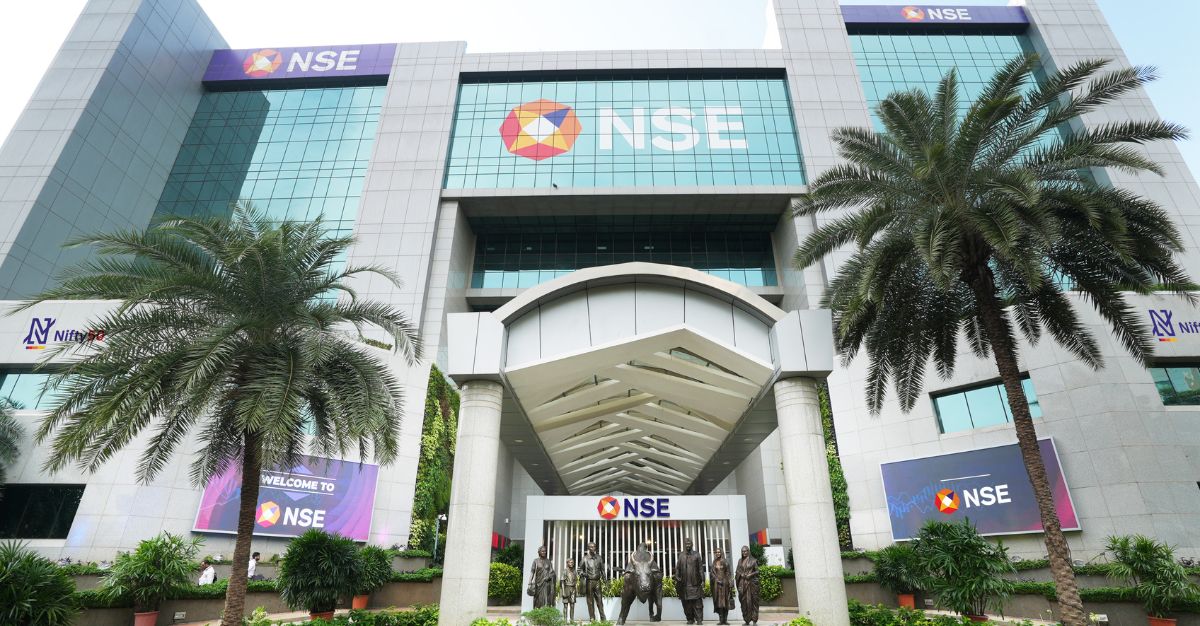
The market will no longer have a single closing time across all segments. Non-F&O stocks will continue trading until 3:30 PM without any changes.
India's equity markets will undergo one of the biggest operational changes in recent years from August 3, 2026, with the introduction of the Closing Auction Session (CAS) for eligible Futures & Options (F&O) stocks. The new framework changes how closing prices are determined for F&O stocks, extends equity derivatives trading by 10 minutes and introduces different closing times across market segments. While long-term investors may notice little impact on their day-to-day investing, the changes are expected to be more significant for traders, institutional investors, asset managers and market intermediaries.
The market will no longer have a single closing time across all segments. Non-F&O stocks will continue trading until 3:30 PM without any changes. However, F&O stocks in the cash market will trade continuously only until 3:15 PM before entering the Closing Auction Session, which will continue until 3:35 PM. Stock and index derivatives will now trade until 3:40 PM, extending trading by 10 minutes, while the post-close session will remain between 3:50 PM and 4:00 PM.
Looking for Future-Ready Growth Opportunities?
Explore DSIJ’s Vriddhi Growth - a research-driven service focused on identifying innovative, fast-growing companies adapting to technological change and long-term market trends.
Download Service BrochureThe additional trading time for equity derivatives has been introduced to align the derivatives market with the new auction-based closing process in the cash segment. The extension gives market participants additional time to hedge open positions, adjust trades after the cash market auction, exit Intraday positions, manage expiry-day volatility and respond to the auction-based closing price.
Another major change is that eligible F&O stocks will no longer trade continuously until 3:30 PM. Instead, regular trading in these stocks will end at 3:15 PM before they move into the Closing Auction Session, where buy and sell orders will be collected and matched to determine a single closing price. Stocks outside the F&O segment will continue to follow the existing trading schedule.
The Closing Auction Session will follow a structured process. Between 3:15 PM and 3:20 PM, the market will transition from the Continuous Trading Session to the auction phase while the reference price is calculated. From 3:20 PM to 3:25 PM, both market and limit orders can be placed. Between 3:25 PM and 3:30 PM, only limit orders will be accepted, while market orders cannot be modified or cancelled. A random order-entry closure will take place between 3:28 PM and 3:30 PM, followed by order matching and final price discovery between 3:30 PM and 3:35 PM.
The methodology for determining the closing price is also changing. Currently, the closing price is calculated using the Volume Weighted Average Price (VWAP) of trades executed during the final part of the trading session. Under the new mechanism, all eligible buy and sell orders will be pooled together and matched at a single equilibrium price, which will become the official closing price for F&O stocks. According to the regulator, this auction-based approach is expected to improve price discovery by better reflecting overall market demand and supply.
The VWAP calculation window used for derivatives will also be revised. Instead of the earlier 30-minute window ending at 3:30 PM, the calculation will now include trades executed between 3:10 PM and 3:40 PM, aligning it with the extended derivatives trading session.
Add DSIJ as your preferred news source on G o o g l e
Add NowThe new framework is aimed at improving the efficiency and transparency of closing price discovery. By aggregating buy and sell orders before determining a single settlement price, the mechanism is expected to reduce the impact of large trades on closing prices, improve execution efficiency for institutional transactions and enhance the accuracy of benchmark-linked investments.
Disclaimer: The article is for informational purposes only and not investment advice.