LAURUS LABS
Ratin Biswass / 20 Feb 2025/ Categories: Analysis, Analysis, DSIJ_Magazine_Web, DSIJMagazine_App, Regular Columns
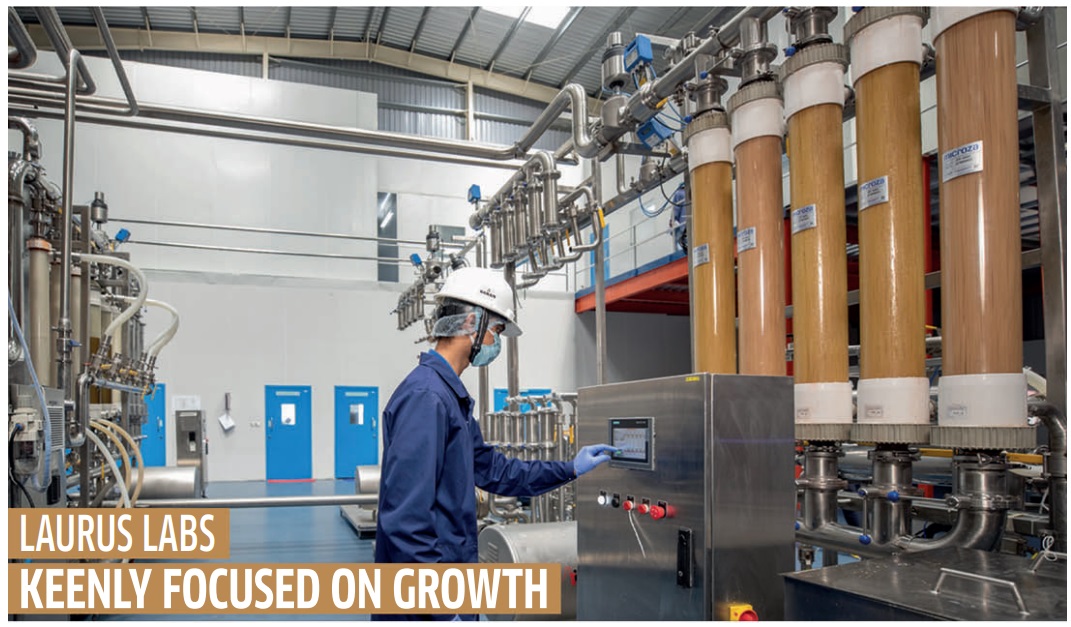
Laurus Labs has showcased impressive growth in the custom synthesis and FDF segments
Laurus Labs has showcased impressive growth in the custom synthesis and FDF segments, capitalising on the rising demand for CDMO services. Geopolitical developments, such as the U.S. Biosecure Act aimed at reducing dependence on Chinese pharmaceutical suppliers, have positioned Indian CDMO players, including Laurus Labs, to capture new opportunities. For long-term investors, the company holds potential [EasyDNNnews:PaidContentStart]
Global economic uncertainty continues to impact the domestic markets, and the second term of U.S. President Donald Trump is driving decisive policy changes under the ‘America First’ agenda. Unlike his first tenure, Trump 2.0’s economic reforms are not just media headers but come with firm execution, creating significant global repercussions. In January 2025, the U.S. Department of State announced a 90-day immediate pause on all foreign funding, including the President’s Emergency Plan for AIDS Relief (PEPFAR), which supports global HIV treatment. This decision disrupted the supply of antiretroviral (ARV) medications to millions worldwide, directly impacting Laurus Labs.
The reason being that is it derives nearly 50 per cent of its business from ARV sales. Following this, Laurus Labs’ stock saw a sharp 11 per cent decline on January 27, 2025. However, on January 30, after the Trump administration approved the resumption of PEPFAR funding, the company’s shares rebounded. Despite volatility, Laurus Labs has shown resilience, with its stock reaching a 52-week high of `646.25 on February 7, driven by strong earnings growth. Let’s analyse the stock to make an informed investment decision.
About the Sector
The global pharmaceutical industry is expanding rapidly, driven by rising healthcare demand, technological advancements, and an ageing population. The market is projected to reach USD 1.7 trillion by the end of 2025, growing at a CAGR of 4-5 per cent, with significant investments in biotechnology and personalised medicine. North America leads the pharmaceutical sector with a 48.9 per cent market share, followed by Europe at 22.5 per cent. The Asia-Pacific region, particularly India and China, is emerging as a key player due to cost-effective manufacturing and growing healthcare access.
The industry faces a patent cliff, with patents worth USD 251 billion set to expire between 2021 and 2025, creating opportunities for generics and biosimilars. The generics market is growing at 6.3 per cent CAGR, while biosimilars are expected to expand at 24 per cent CAGR until 2027. India’s pharmaceutical sector, a major exporter, is expected to reach USD 130 billion by 2030, driven by research and development investments and global expansion. Contract Development and Manufacturing Organization and biotechnology firms will play a crucial role in future growth, supported by outsourcing trends, innovation, and evolving healthcare needs.
About the Company
Laurus Labs Limited is a leading research-driven pharmaceutical company headquartered in Hyderabad. Founded in 2005 by Dr. Satyanarayana Chava, the company has grown from a specialist in active pharmaceutical ingredients (APIs) for antiretrovirals (ARVs) to a fully integrated pharmaceutical manufacturer. With a strong emphasis on research and development, Laurus Labs is actively expanding into high-growth areas such as biotechnology, precision fermentation, and cell and gene therapy. The company collaborates with leading generic and innovator pharmaceutical firms across North America, Europe, and low and middleincome countries (LMICs).
Business Segments
Laurus Labs operates across four key business segments:
1. CDMO Synthesis (Laurus Synthesis) provides contract manufacturing, clinical phase supplies, and research services to global pharmaceutical, crop science, animal health, and specialty ingredient firms. With facilities in Hyderabad and Visakhapatnam, it serves key markets in the U.S., Europe and Japan.
2. Generics API is one of the company’s largest divisions, supplying high-potency APIs for ARVs, oncology, cardiovascular, and gastrointestinal treatments.
3. Generics Finished Dosage Form (FDF) focuses on large-scale oral solid formulations, including ARVs, anti-diabetics, cardiovascular drugs, and proton pump inhibitors (PPIs), leveraging an integrated API / FDF development model.
4. Biotechnology (Laurus Bio) specialises in precision fermentation, supporting regenerative medicine, vaccines, cultured meat, and alternative proteins. It also offers nutraceuticals, dietary supplements, and cosmeceutical products.
Shareholding Pattern
As of December 2024, Lauras Labs’ shareholding includes a 27.62 per cent stake held by promoters. Foreign institutional investors (FIIs) own 25.56 per cent, domestic institutional investors (DIIs) hold 12.74 per cent, and retail investors account for 34.09 per cent.
Recent Development
Laurus Bio secured ₹120 crore equity funding from Eight Roads Ventures and F-Prime Capital, with Laurus Labs co-investing ₹40 crore. The partnership aims to enhance sustainable manufacturing and microbial fermentation capabilities.
Financial Performance
FY24 Financial Performance
Laurus Labs reported a decline in financial performance for FY24 compared to FY23. Its total revenue from operations stood at ₹5,040.83 crore, marking a 17 per cent year-over-year decline from ₹6,040.55 crore in FY23. The company faced a sharp drop in profitability, with EBITDA decreasing by 50 per cent to ₹798.23 crore, down from ₹1,593.63 crore in the previous fiscal year.
The EBITDA margin contracted from 26.4 per cent in FY23 to 15.8 per cent in FY24, reflecting increased operational costs and lower revenue generation. The profit before tax (PBT) plummeted by 79 per cent to ₹236.36 crore from ₹1,108.94 crore, while net profit shrank by 80 per cent to ₹162.27 crore, compared to ₹793.43 crore in FY23. The net profit margin also declined significantly from 13.1 per cent to 3.2 per cent.
Q3FY25 Financial Performance
Laurus Labs showed a strong recovery in Q3FY25, reporting revenue of ₹1,415 crore, an 18 per cent year-over-year increase and a 16 per cent quarter-over-quarter growth. The company’s gross margin improved to 56.9 per cent, up by 2.6 per cent YoY and 1.7 per cent QoQ, driven by a favourable product mix. Its EBITDA surged to ₹285 crore, reflecting a 56 per cent YoY and 57 per cent QoQ increase, with an EBITDA margin of 20.1 per cent. The profit before tax (PBT) rose to ₹131 crore, a substantial 285 per cent YoY and 470 per cent QoQ growth, while the net profit increased by 300 per cent YoY and 360 per cent QoQ to ₹92 crore.
Segment-wise, the CDMO division led the growth curve, with revenue reaching ₹400 crore, marking an 89 per cent YoY and 34 per cent QoQ increase. The formulation (FDF) division also performed well, with revenue at ₹436 crore, up 19 per cent YoY and 33 per cent QoQ. However, API revenues declined by 7 per cent YoY and 5 per cent QoQ due to lower volume uptake in ARV APIs. The bio division grew by 14 per cent YoY and 20 per cent QoQ, indicating continued momentum.
Growth Triggers
1. Rising Global Healthcare Demand and Technology Innovations:
• Ageing population and increasing healthcare needs driving demand for pharmaceuticals, APIs, and finished dosage forms.
• AI-driven drug discovery enhancing efficiency, reducing timelines, and boosting research and development productivity.
2. CDMO and Business Segment Expansion:
• Strong CDMO growth with rising request for proposals (RFPs), particularly in complex small molecules and niche treatments (rare diseases, diabetes, cardiovascular).
• Biotechnology expansion – scaling up precision fermentation and biocatalysis alongside expanding research and development capacity.
• Generics and API leadership – strong ARV traction, new product launches, and approvals in developed markets with established presence in ARV, oncology, and cardiovascular APIs.
3. KRKA Joint Venture:
• The joint venture with KRKA will strengthen market reach with ongoing technology transfer. Formulation lines expected by December 2025.
4. Research and Development Investments:
• Allocating 5 per cent of sales to research and development with focus on high-value segments. Key product launches anticipated in the next 1-2 years.
5. Strategic Capex:
• The company has invested ₹186 crore in Q3FY25 and ₹448 crore in 9MFY25 to enhance manufacturing and research and development capabilities.
6. Financial Turnaround:
• Strong recovery post six quarters of decline, driven by CDMO capacity expansion and contract execution.
7. Margin Guidance:
• The management maintains a 20 per cent EBITDA margin target for FY25, with further scale-up expected in Q4FY25.
Key Focus Areas
1. Strategic Investments and Innovation
• Allocating significant capex to enhance CDMO, API, and formulation capabilities.
• Investing in sustainable technologies like continuous flow chemistry and biocatalysis.
• Leveraging AI, robotics, and automation to enhance research and development and manufacturing efficiency
2. Global Expansion and Market Penetration
• Strengthening presence in key markets (U.S., EU, Japan) while expanding into emerging sectors like animal health and agriculture chemistry.
• Enhancing regulatory strength with certifications from USFDA, WHO, EMA, and other global authorities.
• Prioritising quality compliance through stringent audits and advanced quality control systems.
Key Concerns
1. ARV Business Softness
• Decline in ARV API sales due to capacity reallocation toward higher-margin opportunities.
• ARV segment, a historically significant revenue driver, remains stable but lacks growth potential.
2. High Debt and Cash Flow Constraints
• Net debt at ₹2,766 crore with a net debt-to-EBITDA ratio of 3.1x.
• Weak operating cash flow raises concerns about the company’s ability to fund capex internally.
3. Low ROCE and Underutilised Assets
• ROCE at 6.8 per cent, impacted by negative operating leverage and high capex investments.
• Asset turnover ratio at 0.8x, below the five-year average of 1.1x, indicating underutilisation
4. Weak Oncology API and Formulation Business
• Decline in oncology API sales due to lower demand.
• Formulation growth subdued as ARV weakness offsets gains in developed markets.
5. Working Capital and Capex Execution Risks
• High net working capital days, though expected to reduce.
• Significant capex investments from previous years are yet to be fully commercialised, impacting profitability.
6. CDMO Revenue Lumpiness
• Heavy reliance on large deliveries, causing uneven quarterly performance.
• Long manufacturing lead times pose execution risks in fulfilling orders on time.
Valuation
Laurus Labs is currently trading at a TTM PE of 163x, significantly higher than the industry average of 32.2x, indicating potential overvaluation. Its price-to-sales ratio of 6.3x exceeds its three-year median of 4.6x, and the EV | EBITDA of 38.7x is elevated compared to its industry peers. Robust financial performance, substantial investments in the CDMO segment to enhance manufacturing capabilities, and strong sectoral tailwinds for Indian CDMOs indicate investor support for premium valuations. While Laurus Labs aims to sustain its EBITDA margins at around 20 per cent, its valuation remains high, suggesting that future earnings growth must be strong to justify its current market price.
Conclusion
Laurus Labs has showcased impressive growth in the custom synthesis and FDF segments, capitalising on the rising demand for CDMO services. Geopolitical developments, such as the U.S. Biosecure Act aimed at reducing dependence on Chinese pharmaceutical suppliers, have positioned Indian CDMO players, including Laurus Labs, to capture new opportunities. This shift, along with an 89 per cent YoY surge in the company’s CDMO revenue in Q3FY25, has fuelled investor confidence. Strategically, Laurus Labs has expanded its chemical synthesisbased CDMO business while investing in bio-based CDMO through its JV with Eight Roads.
These efforts, combined with improved execution, ARV formulation growth, and operating leverage, enhance its long-term prospects. The bio-CDMO segment is expected to contribute meaningfully from FY27 onwards, while the API segment, currently underperforming, is likely to normalise post-FY26. Additionally, scaling up commercial production following capital investments takes time, with real value emerging as efficiency improves. If execution remains on track, Laurus Labs’ earnings could see significant growth from FY28 onwards.
Despite strong revenue momentum and operational efficiency, Laurus carries financial risks, with a debt-to-EBITDA ratio of 3.1x. While this dual leverage strategy enhances growth potential, it also increases risk in case of execution delays. Given its long-term potential but stretched valuation, fresh entry at current levels may not be ideal. However, from a long-term perspective we recommend holding the stock, as its investments in CDMO and bio-CDMO could drive substantial growth in the coming years.
[EasyDNNnews:PaidContentEnd] [EasyDNNnews:UnPaidContentStart]
To read the entire article, you must be a DSIJ magazine subscriber.
[EasyDNNnews:UnPaidContentEnd]