Mastering Risk Management in Trading and Investing!
DSIJ Intelligence-6 / 10 Oct 2025 / Categories: General, Knowledge, Trending
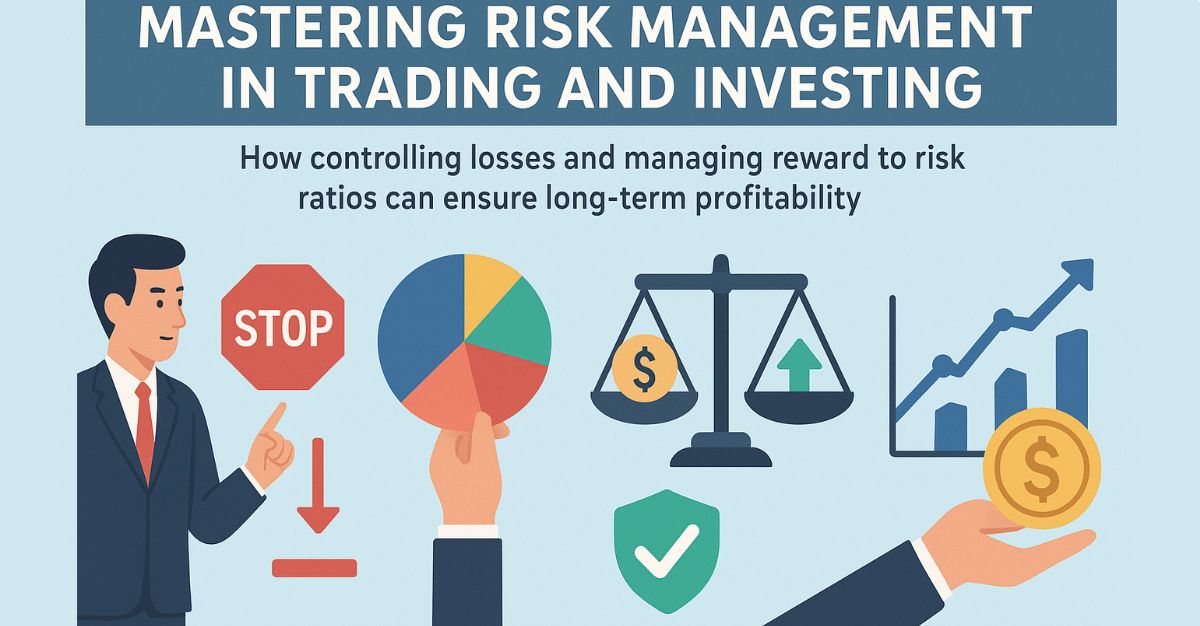
Risk management isn’t about avoiding losses—it’s about surviving them.
Understanding Risk Management
Risk management is the backbone of successful trading and investing. It involves identifying, assessing, and mitigating potential losses while pursuing profits. Every investor, regardless of experience, faces uncertainty—market volatility, economic changes, and unpredictable events. Risk management doesn’t eliminate risk but ensures that losses remain manageable, allowing portfolios to survive tough market cycles and grow steadily over time.
The Core of Risk Management
At its core, risk management is about capital preservation. Usually, people often focus on making profits, but professionals prioritize minimizing losses. The goal is simple—protect what you have before chasing what you don’t. This approach requires discipline, predefined strategies, and emotional control to avoid impulsive decisions driven by greed or fear.
Tools of Risk Management
Using Stop-Loss Orders: A stop-loss is a trader’s insurance policy against large drawdowns. It enforces discipline by defining the maximum acceptable loss before entering a trade. For short-term traders, technical stop-losses based on support/resistance or moving averages work well, while investors can use fundamental or time-based exits when the investment thesis changes. Regularly reviewing stop levels as prices move ensures profits are protected without cutting winning positions too early.
Managing Overall Portfolio Risk: Risk management extends beyond single trades—it’s about the total portfolio’s exposure. A prudent investor limits position sizing to avoid concentration risk; typically, no single position should risk more than 1–2 per cent of total capital. Monitoring portfolio beta, sector correlation, and liquidity risk helps balance exposure across market cycles. Maintaining cash buffers during uncertain times or volatile markets adds flexibility to deploy capital when valuations turn attractive.
Maintaining Reward-to-Risk Ratios: Every trade should have a clearly defined expected return relative to potential loss. A minimum 2:1 or 3:1 reward-to-risk ratio ensures profitability even with moderate accuracy. Over hundreds of trades, this mathematical edge compounds. Professional investors also reassess the ratio dynamically—if risk increases due to changing fundamentals or volatility spikes, positions are trimmed or exited to preserve the ratio.
Using Hedging Strategies: Advanced investors use derivatives like options or futures to hedge portfolio risks. For instance, buying protective puts can limit downside during volatile phases, while covered calls can generate additional income in sideways markets. Hedging ensures smoother returns without liquidating long-term holdings prematurely.
Tracking Volatility and Correlation: Risk isn’t static—it evolves with market conditions. Tracking indicators like the VIX, average true range (ATR), or beta helps gauge changing risk levels. Understanding cross-asset correlations also prevents hidden concentration—stocks, for instance, may appear diversified but can move together during crises.
Periodic Review and Rebalancing: Risk profiles drift over time as winners grow and losers shrink. Periodic rebalancing—quarterly or semi-annually—realigns the portfolio to target allocations and prevents overexposure to outperforming sectors. This disciplined reallocation locks in gains and maintains risk within defined limits.
Why Reward/Risk Ratio Drives Long-Term Success
Keeping a favourable reward/risk ratio transforms trading from speculation into strategy. Even with a 50 per cent win rate, a 2:1 ratio ensures profitability over time. The math of compounding gains and controlled losses tilts probabilities in the investor’s favour. This disciplined approach removes emotional bias and allows consistency to take over—an essential ingredient for longevity in markets.
Conclusion
Risk management isn’t about avoiding losses—it’s about surviving them. Whether through stop-losses, diversification, or maintaining solid reward/risk ratios, managing risk is what separates consistent winners from impulsive speculators. Over the long run, disciplined risk control and adherence to reward/risk principles can turn average investors into consistently profitable ones.