Microfinance Sector Emerging As A Transformative Force
Ninad Ramdasi / 30 Nov 2023 / Categories: DSIJ_Magazine_Web, DSIJMagazine_App, Special Report, Special Report, Stories
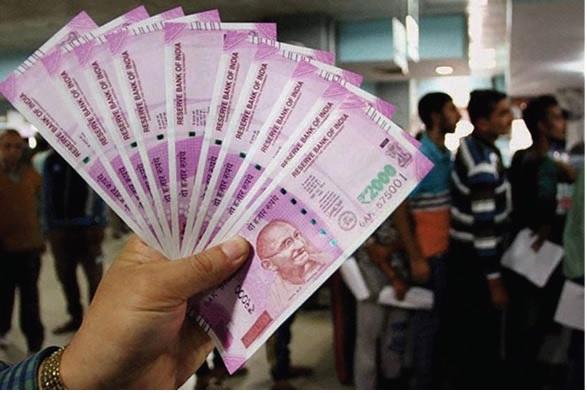
A loan is not a burden when invested wisely. Rather, it's a stepping stone to financial growth. Despite the common perception associating loans with repayments, history reveals numerous instances where loans served as stepping stones for individuals and corporates, propelling them from millionaires to billionaires, and perhaps even more
A loan is not a burden when invested wisely. Rather, it’s a stepping stone to financial growth. Despite the common perception associating loans with repayments, history reveals numerous instances where loans served as stepping stones for individuals and corporates, propelling them from millionaires to billionaires, and perhaps even more
Before delving into the role of loans as stepping stones to personal dreams, it’s crucial to understand the fundamental significance of credit creation in fostering the growth of a developing nation. Credit creation, a dynamic process led by banks, involves extending loans to individuals and businesses. This process is pivotal for the smooth functioning of the economy, enabling business expansions and empowering individuals to participate in the economic cycle by purchasing goods and services. [EasyDNNnews:PaidContentStart]
Recognising the profound role of credit creation is essential as we explore loans as catalysts for personal aspirations. Understanding the symbiotic relationship between credit creation and development is the cornerstone for appreciating the transformative power of loans in shaping individual destinies and contributing to the overall prosperity of a nation. However, the challenge lies in whether obtaining loans is accessible to everyone. Consider this example: Piyush Sharma, Vikas Yadav and Sunil Shah, young adults from lower-middleclass backgrounds in rural India, aspire to establish a business selling fertilisers and insecticides in their village.
Their goal is to provide convenience to the local residents and support farming activities. The hurdle they face is the lack of a financial history or earnings, making it challenging to secure funds from traditional banks. Typically, banks require earning statements for individual loans, and for business loans a track record of past business performance is essential. Unfortunately, Piyush, Vikas and Sunil lack both these prerequisites. The struggle persists as they seek a loan of only ₹ 75,000 to kick-start their venture. The amount, though small, poses difficulties for banks in processing such minimal sums and navigating the complexities of legal documentation.
Role of Microfinance Institutions
In response to such scenarios, the Indian banking and financial sector recognised the necessity of introducing microfinance institutions (MFIs). Microfinance has evolved into a crucial instrument for promoting financial inclusion in India, facilitating access to credit and financial services for the economically vulnerable segments of society. Over the years, MFIs have played a pivotal role in empowering individuals, particularly women, and fostering entrepreneurship in rural and semi-urban areas. The microfinance sector in India has witnessed significant growth, with several prominent companies making substantial contributions to its development.
In India, the journey of microfinance can be traced back to 1974 when SEWA Bank, a segment of the Self-Employed Women’s Association (SEWA), introduced this transformative concept in Gujarat. Since then, microfinance has been a crucial player, extending financial services to those often sidelined in the mainstream economy. The regulatory landscape evolved with the Malegam Committee’s recommendations, proposing margin caps for NBFC-MFIs based on loan portfolios. A uniform margin cap of 12 per cent for all NBFC-MFIs was eventually established in 2011, along with a 26 per cent cap on individual loans.
Although the interest rate ceiling was lifted in 2012 for operational flexibility, a 4 per cent restriction on the difference between minimum and maximum rates was maintained. The microfinance sector witnessed an impressive 40 per cent annual growth until recent times, navigating through various crises. The most recent challenge, the corona virus pandemic, disrupted this period of rapid growth, bringing both resilience and adaptability to the forefront. In India, microfinance services follow two predominant approaches: the bank-led Self-Help Groups-Bank Linkage Programme (SHG-BLG) and the MFI-led approach.
The microfinance sector in India is diverse, encompassing various entities that provide financial services like lending, insurance and pensions to low-income individuals. Participants fall into categories such as small finance banks, NBFC MFIs, banks and non-profit MFIs, with the exception of non-profit MFIs regulated by the Reserve Bank of India (RBI).
Non-profit MFIs, often trusts or societies, are governed by corresponding acts, while NGOs operating as financial intermediaries are typically registered as trusts or societies. This multi-faceted ecosystem plays a pivotal role in reshaping the financial landscape for the economically marginalised.
Status of Microfinance in India
The growth of microfinance in India has been fuelled by various key factors, contributing to the promotion of financial inclusion. One critical driver is the escalating demand for credit among the unbanked and underserved segments of society. As the Indian economy expands, there is an increasing need for credit among small business owners, farmers and low-income households. Microfinance institutions have emerged as crucial players in meeting this demand by providing access to small loans and other financial services that might otherwise be unavailable through traditional banking channels.
Government support has played a pivotal role in fostering the growth of the microfinance sector. The proactive approach adopted by the Indian government in promoting financial inclusion and supporting the expansion of microfinance is a significant driver of the industry’s development. Initiatives such as the Pradhan Mantri Jan Dhan Yojana aim to extend access to financial services to every household across the nation. Regulatory frameworks, including the Microfinance Institutions (Development and Regulation) Act, have been established to ensure the smooth functioning of the microfinance industry in India.
The surge of digital technology has played a pivotal role in the advancement of microfinance in India. Microfinance institutions have adeptly leveraged digital platforms, leading to more effective and cost-efficient services. The incorporation of mobile banking, digital wallets and other cutting-edge technologies has streamlined the delivery of financial services, particularly to remote and underprivileged areas. Recognising the significance of financial institutions in the growth of microfinance in India, both banks and non-banking financial companies have played a crucial role. Many banks have demonstrated eagerness to establish dedicated microfinance departments or collaborate with microfinance institutions to provide financial services to the unbanked and underserved population. This collaborative effort has empowered microfinance institutions to secure funding and expand their market reach, contributing to the overall progress of the microfinance sector in the country.
Impact of Lower Middle-Class on Economy
The conspicuous absence of the lower middle-class segment from the credit cycle could yield substantial repercussions for the nation. The lower middle-class demographic, being a considerable and expanding economic force, holds significant untapped potential. Incorporating the lower middle-class into the realm of credit creation holds multifaceted advantages that extend beyond mere financial transactions. Firstly, the lower middle-class constitutes a substantial and expanding demographic group, harbouring untapped economic potential.
Granting them access to credit becomes a catalyst for unlocking this potential, fostering economic growth, and contributing to the overall prosperity of the nation. Secondly, traditional banks often under-serve the lower middle-class, deeming them a higher risk. Contrary to this perception, studies reveal that the lower middle-class is a remarkably reliable and creditworthy borrower group, with default rates often lower than their higher income counterparts. This challenges preconceived notions, emphasising the importance of extending credit facilities to this demographic for a more inclusive financial landscape.
Thirdly, providing credit access to the lower middle-class becomes a crucial tool in addressing economic inequality. Empowering individuals with credit facilitates investments in education, entrepreneurship and homeownership, thus bridging the wealth gap. The transformative impact of credit creation is evident in various scenarios:
◼ A family leveraging a loan to kick-start a small business, such as a home-based bakery or a landscaping company.
◼ Utilising a loan to purchase a home, providing stability and security to the family.
◼ Financing education or training through a loan, enhancing job prospects and income levels.
◼ Meeting unexpected expenses like vehicle repairs or medical emergencies through accessible credit.
◼ Elevating the overall quality of life by utilising a loan for purposes such as purchasing new appliances or renovating their home.
In essence, recognising the diverse ways in which credit creation can positively impact lower middle-class families underscores the importance of fostering financial inclusion for a more equitable and dynamic society.
Long-Term Hurdles
As of March 31, 2023, India’s microfinance sector has significantly impacted 6.6 crore borrowers, with an outstanding loan amount totalling ₹ 348,339 crore across all states. This scale of influence rivals the credit card industry in the country, which, by the same date, boasted around 8.5 crore credit cards and witnessed an aggregate spend of ₹ 137,000 crore. Despite the comparable customer base, these two industries exhibit stark differences in their evolution and offerings. The Indian credit card industry has undergone dynamic transformations over the years, introducing a plethora of product innovations. These include strategic customer segmentation, enticing reward and loyalty benefits, tailored product customisation and integration with cutting-edge technologies, all aimed at creating customer-centric products.
In contrast, the microfinance sector has experienced minimal change, maintaining a more traditional approach to its services.
This juxtaposition accentuates the need for the microfinance industry to embrace innovation and adapt to contemporary trends to better serve its clientele. Micro and small entrepreneurs are increasingly expressing interest in flexible financial contracts tailored to meet their specific business needs. Recent evidence underscores a substantial demand, with customers seeking flexibility in loans reaching as high as 30 per cent.
Strengthening collaborations between commercial banks and financial technology entities has paved the way for the introduction of novel financial products. These include innovative payment apps, peer-to-peer lending platforms and robotic advisers, offering a compelling alternative to the conventional offerings of microfinance institutions. While MFIs boast strong ties with their customer base, the evolving landscape of financial technology raises questions about their ability to retain clients over the long term.
The willingness of customers to embrace innovative products and the availability of such offerings prompt a reconsideration of the traditional MFI model. To ensure sustained demand for their products, MFIs must embark on robust marketing efforts and implement effective protocols to elucidate the intricacies of more sophisticated financial products, catering to a diverse customer base. This adaptive approach becomes imperative for MFIs to remain competitive in an increasingly dynamic financial landscape.

The Road Ahead
Microfinance stands as an indispensable tool on India’s journey toward comprehensive financial inclusion, particularly for the economically disenfranchised residing in both rural and urban landscapes. Effective management of lending to the impoverished demographic has the potential to work wonders for the nation’s development and poverty alleviation. Collaborative efforts between the government and microfinance institutions can wield microcredit as a formidable force in addressing poverty-related challenges.
The landscape of microfinance is marked by its pivotal role in mitigating financial challenges encountered by the impoverished. However, a substantial challenge looms over the growth of the microfinance industry—the impediment of MFIs in securing adequate funds. In light of this, these institutions must explore alternative avenues for funding to sustain their growth trajectory. The symbiotic relationship between the government, MFIs and external factors plays a crucial role in building the confidence, resilience and skill development of the underprivileged. The collaborative approach emerges as a key solution to tackle the multifaceted challenges faced by the impoverished population.
Looking ahead, the microfinance sector confronts a pivotal juncture. Incorporating technological and financial innovations within its operations becomes paramount for sustained relevance and scalability. The sector’s historical reticence toward embracing change necessitates a paradigm shift, with a renewed focus on incentivising innovation amid regulatory, technological and market dynamics. As we stand at the cusp of transformative possibilities, the microfinance sector’s ability to adapt, innovate and collaborate will determine its efficacy in steering India towards a future of inclusive growth and prosperity. The challenges may be formidable, but the potential for positive change remains immeasurable.
[EasyDNNnews:PaidContentEnd] [EasyDNNnews:UnPaidContentStart]
To read the entire article, you must be a DSIJ magazine subscriber.
Current print subscribers click here to login
Subscribe now to get DSIJ All Access
[EasyDNNnews:UnPaidContentEnd]