Nifty 50, Sensex Trade Slightly Higher; Brent Crude Above USD 100
Prajwal / 16 Mar 2026 / Categories: Mkt Commentary, Trending
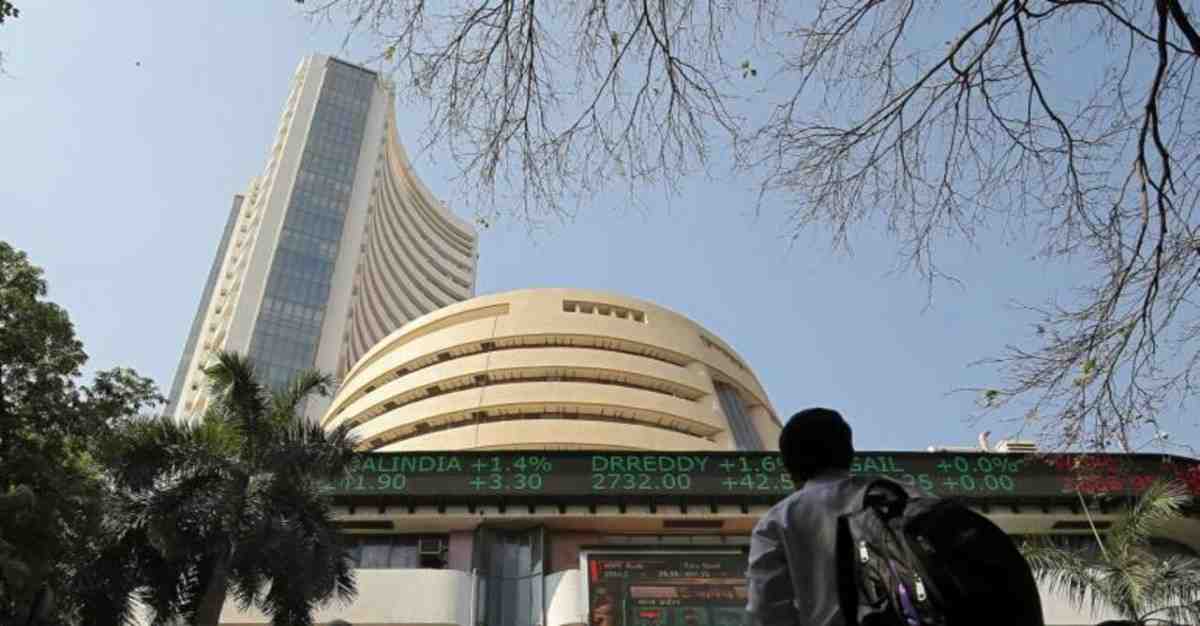
As of 9:23 AM, the Nifty 50 was trading 0.07 per cent or 16.15 points higher at 23,167.15, while the Sensex was up 0.04 per cent or 30.44 points at 74,594.36.
Market Update at 09:36 AM: India’s benchmark indices, the Nifty 50 and the Sensex, were trading slightly higher on Monday morning after a volatile start to the session, supported by gains in pharma and metal stocks.
As of 9:23 AM, the Nifty 50 was trading 0.07 per cent or 16.15 points higher at 23,167.15, while the Sensex was up 0.04 per cent or 30.44 points at 74,594.36.
In the broader markets, the Nifty MidCap and the Nifty SmallCap indices were under pressure. The Nifty MidCap declined 0.58 per cent, while the Nifty SmallCap fell 1.04 per cent.
Meanwhile, crude oil prices remained elevated in the Asian trading session. Brent crude continued to trade well above the crucial USD 100-per-barrel mark amid rising concerns over the safety of oil production infrastructure in Iran.
According to reports, U.S. President Donald Trump is considering options to strike oil infrastructure at Kharg Island, Iran’s key oil export hub. The development was reported citing Mike Waltz, the U.S. ambassador to the United Nations.
Brent’s May futures contract was trading 0.50 per cent higher at USD 101 per barrel on the Intercontinental Exchange.
In the commodities market, gold and silver futures were trading lower. Gold futures declined 0.96 per cent, while silver futures fell 1.55 per cent.
Pre-Market Update at 7:53 AM: India’s benchmark stock indices, the BSE Sensex and Nifty 50, are likely to open higher on Monday but may remain volatile amid mixed global market cues. Investors are closely monitoring the latest developments in the ongoing U.S.–Iran War (2026), which has entered its third week and raised concerns about disruptions in the global oil market.
Asian markets traded mixed, while the U.S. stock market ended lower last week as fears of oil supply disruptions increased due to escalating tensions in the Middle East.
During the week, market participants will track several key triggers, including updates on the U.S.–Iran war, the upcoming policy decision from the Federal Reserve, and developments in global crude supply following the closure of the Strait of Hormuz. Investors will also monitor movements in crude oil prices, foreign institutional investor (FII) flows, trends in gold and silver prices, and key domestic and global macroeconomic data releases.
As of 7:25 am, GIFTY Nifty was trading around the 23,325 level, a premium of nearly 123 points from the Nifty futures’ previous close, indicating a positive start for the Indian stock market indices.
Asian markets traded mixed on Monday amid elevated crude oil prices and as investors assessed the latest developments in the escalating U.S.–Iran war. Japan’s Nikkei 225 declined 0.66 per cent and the TOPIX fell 0.11 per cent. South Korea’s Kospi gained 0.19 per cent, while the Kosdaq was flat. Hong Kong’s Hang Seng Index futures indicated a flat opening.
The conflict between the United States and Iran has now entered its third week, with trade through the Strait of Hormuz effectively coming to a halt, pushing global energy prices higher. U.S. President Donald Trump stated that Washington remains in contact with Iran but expressed skepticism about Tehran’s willingness to engage in serious negotiations to end the conflict.
Meanwhile, the Israel Defence Forces carried out a series of extensive strikes targeting infrastructure linked to what it described as the Iranian regime in Tehran. Earlier, the United States also conducted airstrikes on Kharg Island, Iran’s primary oil export hub, and warned that additional strikes on Iran’s oil infrastructure could follow if necessary.
Economic growth in the United States slowed more than previously estimated in the fourth quarter. The country’s gross domestic product expanded at an annualised rate of 0.7 per cent, revised down from the earlier estimate of 1.4 per cent. For comparison, the U.S. economy grew at a much stronger 4.4 per cent pace in the third quarter.
The U.S. Personal Consumption Expenditures Price Index, a key inflation indicator closely watched by the Federal Reserve, edged higher in January. The index rose 0.3 per cent during the month, following a 0.4 per cent increase in December. On a year-over-year basis, PCE inflation stood at 2.8 per cent, slightly lower than 2.9 per cent recorded in December.
Consumer spending in the United States remained resilient in January. Expenditures, which account for more than two-thirds of U.S. economic activity, increased 0.4 per cent, matching the growth recorded in December.
The U.S. dollar index eased slightly to 100.20 but remained near last week’s 10-month high.
From a derivatives perspective, the Put-Call Ratio (PCR) stands at approximately 0.60, indicating cautious market sentiment. Options data suggests that the 23,500 level is likely to act as immediate resistance, as this strike has an open interest of around 74,659 contracts. On the downside, the 23,000 strike has seen put writers increasing their positions, with nearly 98,906 contracts in open interest, establishing it as a key support level.
Technically, the level of 22,900 is likely to act as key support for the Nifty 50, while the level of 23,200 may act as immediate resistance.
For Monday, Sammaan Capital and Steel Authority of India Limited will remain in the F&O ban list.
On March 13, foreign institutional investors were net sellers, selling equities worth Rs 10,716.64 crore. Domestic institutional investors bought shares worth Rs 4,965.53 crore during the same session. FIIs have been net sellers for the last 11 consecutive trading sessions.
On Friday, the Indian stock market extended steep losses amid concerns over the ongoing U.S.–Iran war. The Sensex declined 1,470.50 points, or 1.93 per cent, to close at 74,563.92, while the Nifty 50 fell 488.05 points, or 2.06 per cent, to settle at 23,151.10.
Wall Street ended lower on Friday as investors assessed the impact of the Iran conflict on global oil supplies. The Dow Jones Industrial Average fell 119.38 points, or 0.26 per cent, to 46,558.47. The S&P 500 declined 40.43 points, or 0.61 per cent, to 6,632.19, while the Nasdaq Composite dropped 206.62 points, or 0.93 per cent, to close at 22,105.36.
Among major technology stocks, NVIDIA fell 1.59 per cent, Advanced Micro Devices declined 2.20 per cent, and Broadcom dropped 4.13 per cent. Apple slipped 2.21 per cent, Meta Platforms lost 3.83 per cent, and Microsoft declined 1.58 per cent. Tesla eased 0.96 per cent, while Adobe was the biggest loser, plunging 7.6 per cent.
Gold prices declined in early trade as rising energy prices triggered inflation concerns. As of 7:14 am, spot gold fell 0.35 per cent to USD 5,000 an ounce, while silver declined 1.22 per cent to USD 79.6 an ounce.
Crude oil prices pared early gains after President Trump called on other countries to help safeguard the Strait of Hormuz, a vital route for global oil and gas shipments. Brent crude rose 0.1 per cent to USD 103.27 a barrel, while U.S. crude fell 0.7 per cent to USD 97.99 per barrel.
Disclaimer: The article is for informational purposes only and not investment advice.