Numbers, Not Nerves: Are Quants the Future of Fund Management
Mandar Wagh / 28 Nov 2025 / Categories: Mutual Fund, Trending
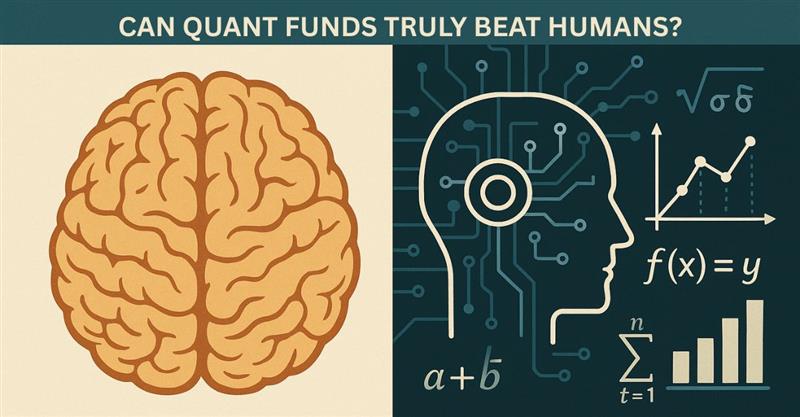
The stock market has a new player and it does not think, panic or hesitate. Quant funds are rising fast, and investors are asking one big question. Can algorithms truly beat humans?
Talk to any investor today and one trend stands out. Quant funds are gaining traction. Unlike traditional funds managed by human judgment, quant funds rely on mathematical models to pick stocks. With several fund houses launching their own versions, investors are curious about one big question. Can algorithms outperform experienced fund managers?
How Traditional Fund Managers Think
Human fund managers have long relied on a mix of research, market understanding and intuition. They analyse Quarterly Results, track company management, and study sector trends. This approach has delivered solid returns over the years, especially in India where growth stories evolve rapidly. But humans are not perfect. They can be influenced by emotion, overconfidence or herd behaviour, sometimes leading to delayed decisions or overlooked opportunities.
Where Quant Funds Claim an Edge
Quant funds, on the other hand, operate on rules. Every buy or sell call comes from a predefined algorithm. A model might, for instance, target stocks with strong earnings growth and attractive valuations. Or it may combine dozens of factors such as volatility, cash flow strength and price momentum. Once the rules are set, the system executes them without hesitation. No emotions and no second guessing.
A Simple Example of How Algorithms Think
Imagine a quant model that only selects companies with rising earnings for eight consecutive quarters. A human manager might hesitate because of a negative rumour, a past bad call or market noise. But a quant model focuses solely on data. If the numbers fit the rule, it buys. If they don’t, it exits. This objectivity is the core of quant investing.
But Quant Funds Are Not Foolproof
It is important for investors to remember that algorithms depend heavily on the historical data they are built on. If market behaviour changes, a model can struggle. A strategy that worked during stable interest rates may fail during rapid economic shifts. Similarly, a momentum driven model may falter in sideways markets. Human managers can adjust quicker because they interpret qualitative signals. A quant model adapts only when it is reprogrammed.
Understanding the Risks Behind the Model
Quant funds are not always low volatility. Some models churn frequently, which increases costs. Others follow concentrated rules, which may cause sudden swings if the strategy temporarily underperforms. Investors should understand the theme, the philosophy of the model and its past performance in different cycles.
So, Who Really Wins, Algorithms or Humans
In trending markets with strong data signals, quant funds have shown an ability to outperform. They help eliminate behavioural mistakes such as panic selling or holding on to poor positions. Human fund managers, however, excel at reading context. When a new regulation comes in or a company changes strategy, humans grasp the implications faster than algorithms.
Finding the Middle Ground
The real value may lie in combining both approaches. Quant funds bring discipline and systematic decision making. Human managers bring interpretation, foresight and flexibility. For modern investors, quant funds offer an interesting diversification tool and help remove emotions from investing decisions. They may not always beat humans, but they certainly have earned a permanent place in today’s investment landscape.
Getting Started with Quant Fund Investing
Investing in quant funds is similar to investing in any other Mutual Fund, but it requires understanding how these algorithm driven strategies work. Start by reviewing the fund’s investment framework and look for details on the type of data it uses, the models it follows, and how frequently it rebalances. Since quant funds rely heavily on technology, check the fund house’s track record in quantitative research and risk management. Compare expense ratios, as frequent model driven trading can push costs higher. Once comfortable, you can invest through any mutual fund platform, app, or distributor by choosing either a lump sum or SIP route. As with any equity-oriented product, ensure the fund aligns with your risk tolerance and long-term goals before committing your money.
Disclaimer: This article is for informational purposes only and should not be considered investment advice.