One 97 Communications Ltd. (PAYTM)
Ratin / 17 Sep 2026 / Categories: Analysis, Analysis, DSIJ_Magazine_Web, DSIJMagazine_App, Regular Columns
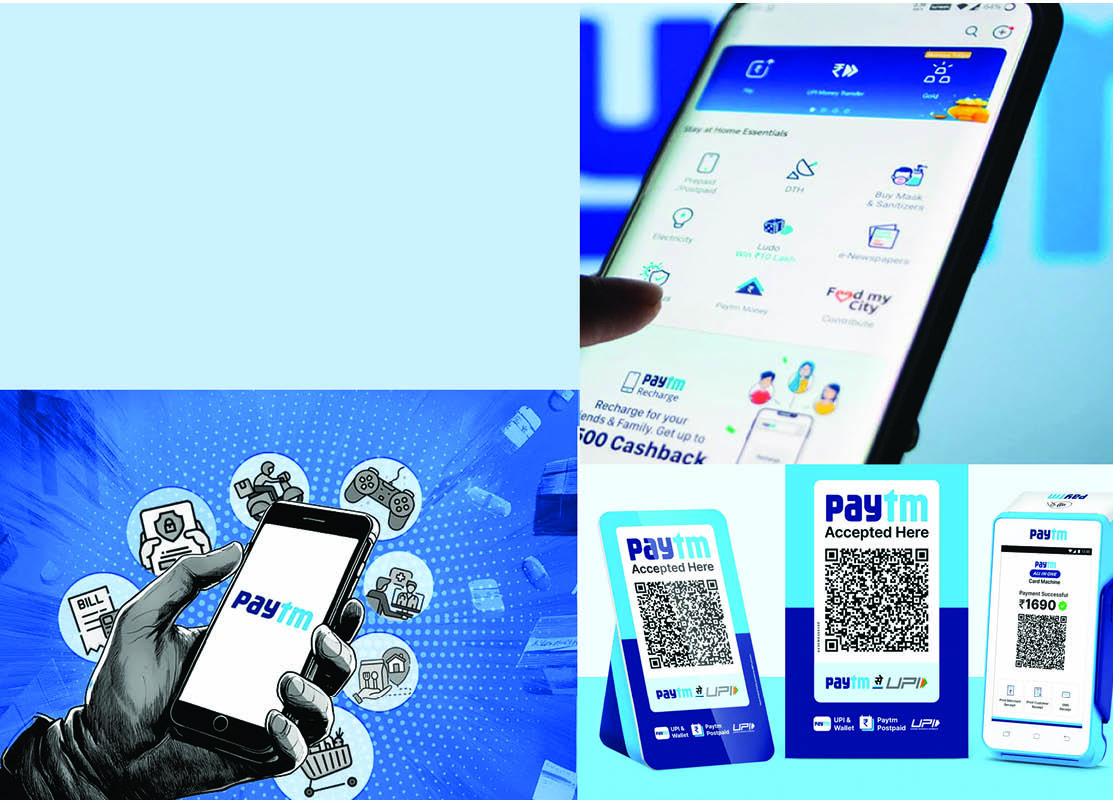
The Paytm Payments Bank Ltd. (PPBL) nightmare is over. The next chapter depends on whether execution can outrun expectations already baked into the stock
Paytm has delivered one of the most striking recoveries among India’s listed new-age companies. From a low near ₹310 in May 2024, the stock has risen roughly 60–68 per cent over the past six months and now trades in the ₹1,670–1,740 range, having touched a fresh 52-week high near ₹1,753 in early September 2026. Market capitalisation stands at approximately ₹1.07–1.11 lakh crore.[EasyDNNnews:PaidContentStart]
The most visible near-term catalyst is renewed discussion around the possible return of Merchant Discount Rate (MDR) on a limited set of higher-value UPI merchant transactions. In August 2026, the government clarified that consumers and person-to-person transfers would remain free, while any future charge would apply only to selected merchant payments above a threshold and at a nominal rate. Legislative enablement is already in place.
Yet MDR is not the foundation of the recovery. Paytm has already returned to full-year profitability without a blanket UPI MDR. Processing margins have stabilised above 4 basis points, financial-services distribution is growing rapidly, the company has fully migrated to a multi-Bank model, and it holds a substantial cash balance. The central investment question has therefore changed. It is no longer about survival. It is whether the current rate of monetisation improvement is sufficient to justify the expectations already reflected in the share price.
From Listing Disappointment to Regulatory Shock
Paytm listed in November 2021 at an IPO price of ₹2,150. The stock opened at ₹1,955 and closed its first day significantly lower as investors questioned valuation, persistent losses and competitive intensity. The decline continued for years, culminating in a low of around ₹310 in May 2024.
The most damaging episode was the Reserve Bank of India’s action against Paytm Payments Bank Ltd. (PPBL). From March 15, 2024, the bank was barred from accepting fresh deposits or top-ups into customer accounts, wallets and FASTags. The banking licence was finally cancelled in April 2026. Although PPBL was a separate associate, it was deeply integrated into Paytm’s ecosystem. Paytm Wallet, PPBL-issued FASTag and several settlement flows depended on it. These products had contributed higher-margin volumes and customer stickiness. Their disruption forced a rapid migration of UPI handles and merchant infrastructure to partner banks. The economics of the old Wallet and FASTag businesses could not be recreated. The share-price impact was severe because the market simultaneously priced in lost revenue, operational upheaval and lasting regulatory overhang. The episode accelerated the shift to a cleaner multi-bank operating model.
In parallel, Paytm simplified its portfolio. In 2024, it sold the movie, sports and events ticketing business to Zomato (now Eternal) for ₹2,048 crore. That business had contributed ₹297 crore of revenue and ₹29 crore of adjusted EBITDA in FY24. The proceeds strengthened the balance sheet and reinforced concentration on payments and financial-services distribution.
The Business Model Today
Paytm is best understood as a payments-led platform with three monetisation layers.
Merchant payments form the core acquisition engine. Paytm onboards merchants through QR codes, Soundbox devices, card machines and online payment solutions. Revenue comes from two sources: a processing margin on the value of transactions and monthly subscription fees charged to deviceusing merchants. These subscription fees flow directly into net payment revenue. Merchant Gross Merchandise Value (GMV) reached ₹23.8 lakh crore in FY26, up 26 per cent, and accelerated to ₹7.1 lakh crore in the June 2026 quarter, up 31 per cent. The subscription merchant base stood at 1.51 crore at the end of FY26 and 1.57 crore by the end of June 2026.
Financial-services distribution is the second, higher-margin engine. Paytm partners with banks and NBFCs to distribute merchant loans, personal loans, Postpaid, credit cards, insurance, broking and wealth products. Lending partners underwrite and carry the loans on their balance sheets. Paytm earns distribution fees and benefits from its existing merchant relationships and transaction data, which lower customeracquisition costs. This segment is relatively capital-light.
The third layer comprises advertising, travel, wealth and other services. The operating logic is a classic flywheel: payments bring users and merchants onto the platform, devices deepen daily engagement, and financial products raise monetisation per relationship. Judging Paytm solely by the take rate on a pure UPI transaction therefore misses the larger economic design.
On the consumer UPI side, Paytm remains a distant third. PhonePe and Google Pay together still control roughly 79–80 per cent of transaction volume, with PhonePe around 46 per cent and Google Pay around 33 per cent. Paytm’s share is typically in the 7–8 per cent range. Its relative strength lies more on the merchant and device side than in pure consumer P2P volume. The large installed base of Soundboxes and QR codes gives Paytm a structural advantage in merchant engagement and in cross-selling loans, even if its pure UPI volume share remains smaller than the two leaders.
Payment Margins: History, Reality and Trajectory
MDR is the fee a merchant pays for accepting digital payments. Paytm’s reported payment processing margin of more than 4 basis points of GMV is already the net figure retained after banks, networks and other intermediaries have taken their share. In practical terms, a 4 bps margin means the company keeps approximately 0.04 per cent of the value it processes. Net payment revenue is the sum of this processing margin and the monthly device subscription fees.
A critical historical point is often misunderstood. Ordinary UPI merchant MDR was set to zero in January 2020, before Paytm’s IPO. The company never earned a steady 7–9 bps on post-listing volumes only to lose it when MDR was abolished. The high margins of FY23 and early FY24 were driven by a richer mix that included Wallet, cards, EMI and Postpaid. By FY25, ordinary UPI accounted for 80–85 per cent of payment GMV. The PPBL restrictions removed the remaining highermargin Wallet and FASTag economics and accelerated the mix shift towards lower-yield UPI.
The financial consequence was clear. Payment-services revenue fell from ₹6,235 crore in FY24 on GMV of ₹18.3 lakh crore to ₹4,039 crore in FY25 even as GMV rose to ₹18.9 lakh crore. Monetisation weakened; scale did not.
Since the trough, margins have recovered. After dipping to a little above 3 bps, the processing margin has stabilised comfortably above 4 bps. Management attributes the improvement to pricing discipline and faster growth in credit cards on UPI and EMI products. A pure bank-account UPI transaction still offers thin economics. The same QR used with a RuPay credit card or an EMI facility can generate a meaningfully higher take rate. Continued growth in these higher-yield instruments can therefore lift the blended margin without any change in regulation.
Device subscription yields have also declined from earlier levels that approached ₹100 per merchant per month. Lower hardware costs, higher refurbishment rates and more competitive acquisition pricing have reduced average monthly revenue per device. Paytm now evaluates merchants on lifetime value rather than rental income alone. Lower immediate subscription revenue is acceptable if the merchant stays longer, processes more volume and eventually takes a loan.
The realistic framework for investors is therefore straightforward. The old 7–9 bps range is not a normalised target given today’s UPI-heavy mix and competitive intensity. The current base above 4 bps is credible. Gradual movement towards 5 bps through mix improvement is possible. On quarterly GMV of ₹7.1 lakh crore, each additional basis point of processing margin is worth roughly ₹71 crore of quarterly revenue, or about ₹284 crore on an annualised basis before further GMV growth.
Selective MDR as Optional Upside
Any reintroduction of MDR is likely to be narrow. The government has been clear that consumers and P2P transfers will remain free and that charges would apply only to highervalue transactions at larger merchants. The majority of merchant UPI volume is expected to stay outside the framework. Investors should not multiply Paytm’s entire GMV by a hypothetical rate. The final threshold, eligible merchant set, headline rate and revenue-sharing formula are still undecided, and Paytm would retain only a portion of any fee collected.
Analyst estimates typically assume a headline rate of 25–40 basis points on a subset of value and net retention for Paytm of 3–4 basis points. That could add several hundred crore of EBITDA over the medium term, but both quantum and timing remain uncertain. The important point is that the business is already generating a positive processing margin without a blanket UPI MDR. Selective MDR would be incremental, not foundational.
Financial Services: The Higher-Margin Engine
Distribution of financial services is becoming increasingly material to overall profitability. Revenue grew 52 per cent to ₹2,594 crore in FY26 and rose another 45 per cent year-on-year to ₹814 crore in the June 2026 quarter.
Merchant lending is the most natural extension of the payments franchise. Existing QR and Soundbox relationships give Paytm low-cost distribution and rich transaction data that partner lenders can use for underwriting. Repeat borrowers further improve unit economics because acquisition costs do not have to be incurred again. The model remains capital-light because partners hold the loans, yet it is not risk-free. Results depend on lender appetite, portfolio performance and collections. Some arrangements have involved Default Loss Guarantee structures. Growth in financial-services revenue and the number of active customers therefore matter more than headline disbursement numbers.
Profitability, Cash and Operating Leverage
FY26 was the first full year of profit. Operating revenue rose 22 per cent to ₹8,437 crore. EBITDA swung by ₹2,008 crore to a positive ₹ 502 crore (6 per cent margin). Profit after Tax was ₹552 crore.
The June 2026 quarter showed further acceleration: revenue of ₹2,448 crore (up 28 per cent, or 31 per cent on a comparable basis excluding residual incentives), contribution profit of ₹1,350 crore, record quarterly EBITDA of ₹203 crore (8 per cent margin), and PAT of ₹220 crore (up 79 per cent). Merchant GMV grew 31 per cent. Consolidated cash stood at ₹13,529 crore at the end of June 2026. The balance sheet is essentially debt-free, with a debt-equity ratio of 0.01.
This cash position gives Paytm meaningful strategic flexibility. Management has indicated that the priority is organic investment in merchant acquisition, product development and technology, while remaining open to selective acquisitions only at attractive valuations. The absence of meaningful debt also reduces refinancing or interest-rate risk and provides a buffer against any temporary regulatory or competitive pressure.
The next phase of earnings growth depends on operating leverage. As payments and financial-services revenue continue to scale, employee costs, technology spend and other indirect expenses are expected to rise more slowly than the top line. The resulting expansion in EBITDA margin can be substantial. Artificial-intelligence tools are already being used to improve onboarding, fraud detection, collections and marketing efficiency, supporting this cost discipline.
Valuation, Competition and Risks
At the current share price, the market capitalisation is ₹1.07–1.11 lakh crore against a cash balance of more than ₹13,500 crore. Trailing earnings multiples remain elevated, well above 150 times even after incorporating the latest quarter. Such multiples can compress rapidly if profits compound, but they also show that substantial future growth is already priced in.
Competition remains intense. PhonePe and Google Pay dominate consumer UPI volume. On the merchant side, specialised players continue to compete for device deployment and lending distribution. Residual regulatory risk cannot be ignored after the PPBL experience, even though the core business has been structurally separated. Credit quality in the financial-services book and the willingness of lending partners to continue scaling are additional variables. Any MDR framework that is narrower or less profitable than current market hopes would remove one source of upside. Finally, execution risk remains: the company must keep converting its large merchant base into higher-margin financial products while defending device relationships against aggressive competitors.
What Successful Execution Would Look Like
Over the next two to three years, a successful outcome would involve sustained mid-to-high teens or better revenue growth, processing margins holding above 4 basis points and ideally drifting higher through credit-led mix, continued expansion of the subscription merchant base, and financial-services revenue growing faster than the overall company. Operating leverage should then allow EBITDA margins to expand meaningfully from the current high-single-digit level.
Delivery against this trajectory, combined with a stable regulatory environment, would support further re-rating. Failure to improve mix, a slowdown in financial-services growth, or renewed regulatory friction would leave the current valuation looking demanding.
Shareholding Pattern Trend
Shareholding has shifted meaningfully over the past year. Foreign institutional ownership has declined steadily from over 54 per cent in mid-2025 to around 48 per cent by June 2026. In contrast, domestic institutions have been consistent buyers; Mutual Fund holdings rose from about 16 per cent to nearly 18 per cent, while overall domestic institutional ownership climbed towards 25 per cent. Founder Vijay Shekhar Sharma continues to hold roughly 9 per cent. The company has moved to majority Indian ownership (above 50 per cent), reinforcing its Indian-owned and controlled company status. High free float remains, though occasional block sales by early investors can still create temporary supply.
Recommendation
The operational turnaround is genuine. Paytm has moved from multi-year losses and dependence on a tightly linked payments bank to a profitable multi-bank platform with stabilising processing margins, a growing financial-services engine, and a strong cash position. The share-price recovery reflects these improvements.
The older high-margin payment economics are unlikely to return in full. The realistic base case rests on sustaining processing margins above 4 basis points with gradual mixdriven improvement, continuing to expand the device merchant base even at lower average subscription yields, and converting a rising share of those relationships into financial products. Selective MDR would provide additional earnings torque but is not required for the business to keep compounding.
At present valuations, the market is already demanding continued successful execution. Existing shareholders are therefore advised to HOLD. Sequential trends in processing margin, financial-services revenue growth, and any official clarity on the MDR framework are the key variables to monitor.
Fresh capital is better deployed only if valuations become more attractive or if the company demonstrates a clear and sustained acceleration in earnings beyond the trajectory already implied by the current price.
[EasyDNNnews:PaidContentEnd] [EasyDNNnews:UnPaidContentStart]
To read the entire article, you must be a DSIJ magazine subscriber.
[EasyDNNnews:UnPaidContentEnd]