Petronet LNG Eyes India's Gas Future
Arvind DSIJ / 06 Aug 2026 / Categories: DSIJ_Magazine_Web, DSIJMagazine_App, Interview, Interviews, Regular Columns
Demand growth is expected to be driven by City Gas Distribution, industries, fertilisers, refineries and petrochemicals. Emerging applications such as Small-Scale LNG and LNG-based transportation are also expected to broaden the demand base by reaching consumers beyond the existing pipeline network. Together, these structural drivers are expected to support sustained growth in India's LNG consumption over the medium term. With the country's largest LNG regasification infrastructure, diversified customer relationships and flexible commercial offerings, Petronet LNG is equipped to support this next phase of market expansion.
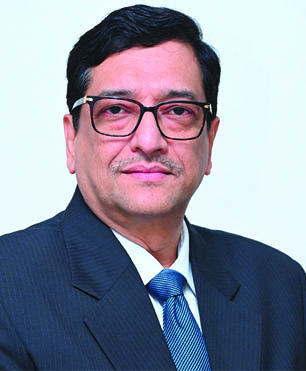
Saurav Mitra
Director (Finance) & CFO - Petronet LNG Ltd [EasyDNNnews:PaidContentStart]
How does management expect LNG demand in India to develop over the next three to five years, and which customer segments are likely to drive the company's volume growth?
India's LNG demand outlook remains supported by strong structural drivers. Natural gas currently accounts for only around 6% of India's energy mix, significantly below the global average of about 23%, indicating substantial long-term growth potential. At the same time, major additions to global LNG supply over the next few years are expected to create a more balanced market and improve affordability, which is particularly important for a price-sensitive market such as India.
Demand growth is expected to be driven by City Gas Distribution, industries, fertilisers, refineries and petrochemicals. Emerging applications such as Small-Scale LNG and LNG-based transportation are also expected to broaden the demand base by reaching consumers beyond the existing pipeline network. Together, these structural drivers are expected to support sustained growth in India's LNG consumption over the medium term. With the country's largest LNG regasification infrastructure, diversified customer relationships and flexible commercial offerings, Petronet LNG is equipped to support this next phase of market expansion.
Following the expansion of the Dahej terminal to 22.5 MMTPA, what utilisation and throughput levels does management expect over the medium term?
India's long-term natural gas demand is expected to grow steadily, supported by policy initiatives aimed at increasing the share of natural gas in the country's primary energy mix from around 6% currently to 15% by 2030. This transition, coupled with expanding pipeline infrastructure and increasing consumption across City Gas Distribution, industries, refineries, fertilisers and petrochemicals, is expected to drive higher LNG imports. As a result, utilisation and throughput at the Dahej Terminal are also expected to increase progressively.
Following its expansion to 22.5 MMTPA, the Dahej Terminal has adequate capacity to cater to this growth. The terminal is connected to five major gas pipelines with an evacuation capacity of around 35 MMTPA, providing access to a wide and diversified consuming market. It has also consistently demonstrated the ability to operate above its nameplate capacity whenever required. Along with Kochi (5 MMTPA) and the expanded Dahej (22.5 MMTPA), Petronet LNG's overall regasification capacity of 27.5 MMTPA, provides sufficient headroom to support India's growing gas demand while enabling Dahej to maintain high utilisation over the medium term.
What steps are being taken to improve utilisation at the Kochi terminal, and what level of annual throughput does management believe is realistically achievable?
The 5 MMTPA Kochi Terminal is entering an important phase of growth as downstream pipeline connectivity and regional gas demand continue to improve. The operational Kochi-Mangaluru pipeline is already supporting demand from industries and City Gas Distribution networks in the Mangaluru region.
The next major catalyst is the Kochi-Bengaluru pipeline, which is expected to provide access to important industrial and commercial centres, including Salem, Coimbatore and Bengaluru, along with expanding City Gas Distribution networks across Southern India. As pipeline connectivity improves and natural gas adoption increases among industries and urban consumers, Kochi's throughput is expected to rise steadily. Based on the emerging demand profile, the terminal is expected to move towards 50% utilisation in the medium term, with further upside as the southern gas market continues to deepen.
How does the company plan to balance long-term LNG contracts, spot purchases and third-party regasification services as market prices and customer requirements change?
Petronet LNG follows a balanced commercial strategy designed to combine supply security, flexibility and earnings stability. Long-term LNG contracts provide reliable supply for customers with sustained and predictable requirements, while spot contracts provide the flexibility to respond to changing market conditions and evolving customer requirements.
The equally important tolling business accounts for around 40 50% of total throughput, under long-term tolling contracts. This model enables customers to source LNG independently while utilising Petronet LNG's regasification infrastructure, allowing the Company to cater to customers with different sourcing and marketing strategies. The combination of long-term LNG supply, spot procurement and tolling services provides flexibility across market cycles, supports stable business performance and strengthens long-term customer relationships.
What are the key milestones and expected completion schedule for the Dahej petrochemical complex, and how important could this business become for Petronet LNG?
The Dahej Petrochemical Complex is progressing as scheduled. The project comprises of a Propane handling facility of about 1,200 KTPA including a 750 KTPA Propane Dehydrogenation Unit, a 500 KTPA Polypropylene Unit. Additionally, a 1,200 KTPA Ethane Handling Facility is also being constructed.
The project has been structured to combine earnings stability with growth potential. The ethane and propane-handling facilities are expected to operate largely on a tolling model, similar to the Company's LNG business. In addition, one-third of the propylene and the hydrogen produced from the complex have already been tied up under long-term arrangements, providing visibility and stability to a meaningful portion of the project's future earnings.
The polypropylene business, on the other hand, offers significant upside during favourable commodity cycles, positioning the project to benefit from the upcycle of the petrochemical sector. This balanced mix of stable infrastructure-linked earnings and commodity-linked growth potential is expected to establish petrochemicals as a strong second growth pillar for Petronet LNG.
What role can small-scale LNG, LNG transportation by trucks, bunkering and supply to industries outside the gas pipeline network play in the company's future growth?
Small-Scale LNG has the potential to significantly expand the reach of natural gas beyond the pipeline network. Through cryogenic truck transportation, it effectively acts as a virtual pipeline, enabling LNG to reach industries, transport users and other consumers for whom direct pipeline connectivity may not be commercially viable.
According to the International Energy Agency, natural gas demand from the transport sector is expected to increase by almost 35 bcm by 2030, while LNG use in the marine transport sector alone is projected to rise by around 15 bcm over the same period, supported by fleet expansion. Further, as per GIIGNL report, LNG bunkering volumes reached 4 MT in 2025 with a YoY growth of 38%. These trends present a significant opportunity for Small-Scale LNG and allied infrastructure.
Petronet LNG has already commissioned three SSLNG truck loading stations. The fourth station is ready for commissioning, and the fifth station is being constructed in Kochi. Petronet LNG plans to develop another 10 stations in next 1-2 years. These businesses are expected to complement the Company's core regasification operations by creating new demand centres, improving terminal utilisation and expanding customer reach across off-grid industrial, transportation and marine segments.
How does management view increasing competition from new LNG terminals, and what will help Petronet LNG retain customers and maintain its market position?
The development of new LNG terminals reflects the continued expansion of India's gas market and the growing requirement for LNG import and regasification infrastructure. It is therefore an indication of market growth rather than merely increased competition.
Petronet LNG's competitive strength lies in its scale, infrastructure, operational reliability and long-standing customer relationships. With Dahej, Kochi and the upcoming Gopalpur Terminal, the Company's regasification capacity is expected to increase to 32.5 MMTPA. In particular, Dahej's connectivity to five major gas pipelines, with an evacuation capacity of around 35 MMTPA, provides a significant competitive advantage by enabling access to multiple gas consuming regions across the country.
The Company also offers customers the flexibility of long-term LNG supply, spot cargoes and tolling services. Supported by consistent operational excellence and dependable service delivery, these capabilities enable Petronet LNG to address diverse customer requirements and maintain strong commercial relationships. As the market continues to expand, scale, connectivity, execution capability and commercial flexibility are expected to remain the Company's key differentiators.
Considering the company's planned investments, how will management balance expansion expenditure, borrowing levels and Dividend payments over the next few years?
Petronet LNG's capital allocation philosophy is centred on creating sustainable long-term shareholder value while maintaining financial discipline. Growth investments are being supported through a financing strategy that seeks to preserve balance sheet strength and financial flexibility across business cycles.
In line with this approach, the Company recently secured a ₹12,000 crore Rupee Term Loan at competitive rates, the largest borrowing in its history, to fund the Dahej Petrochemical Project and other capital expenditure programmes. The facility provides long-term funding visibility while aligning the financing profile with the life of these strategic assets.
At the same time, the core LNG regasification business continues to generate healthy operating cash flows, providing a strong foundation for future investments. Going forward, capital allocation will continue to balance three priorities - funding strategic growth, maintaining prudent leverage and financial flexibility, and delivering sustainable returns to shareholders through a consistent and sustainable dividend policy.
[EasyDNNnews:PaidContentEnd] [EasyDNNnews:UnPaidContentStart]
To read the entire article, you must be a DSIJ magazine subscriber.
[EasyDNNnews:UnPaidContentEnd]