Playing EV & AI Boom
Ninad Ramdasi / 05 Oct 2023 / Categories: Cover Stories, Cover Story, DSIJ_Magazine_Web, DSIJMagazine_App, Stories
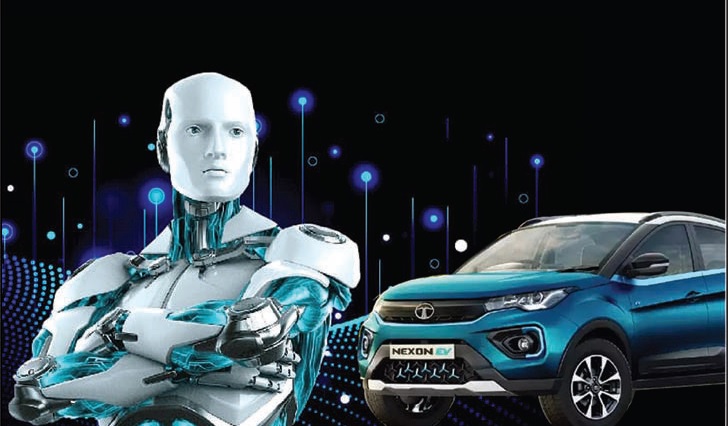
Why are the artificial intelligence (AI) and electric vehicle (EV) sectors generating immense optimism, evolving into sunrise sectors...
Why are the artificial intelligence (AI) and electric vehicle (EV) sectors generating immense optimism, evolving into sunrise sectors, as governments prioritise them through various initiatives while leading companies are leaving no stone unturned in their pursuit to align with prevailing technology trends, positioning themselves to reap the benefits of this global movement? Mandar Wagh and Kamal Mansuriya shed light on the driving forces propelling this optimism and offer insights into how individuals can capitalise on these developments to their benefit
A majority of global stock indices have staged a robust comeback following their earlier setbacks caused by the impacts of the corona virus pandemic and the war between Russia and Ukraine. During 2022, the Nasdaq Composite index faced a significant decline, plummeting by over 33 per cent. However, it has since made a remarkable rebound, soaring by around 25 per cent year-to-date, leaving investors pleasantly surprised. The robust upswing was primarily attributed to heavyweight companies such as Apple Inc., Microsoft Inc., Amazon.com Inc., NVIDIA Corporation, Meta Platforms Inc. and Alphabet Inc. All these companies have been capitalising on the prevailing optimism surrounding the artificial intelligence (AI) industry. [EasyDNNnews:PaidContentStart]
NVIDIA Corporation, in particular, witnessed a meteoric rise in its share prices, generating impressive returns exceeding 190 per cent, thanks to its expansion in AI product offerings, solidifying its position as an AI industry leader. Additionally, Tesla Inc. witnessed its shares climb by around 120 per cent as it continued to accelerate the global shift toward sustainable energy through its electric vehicles (EV). Indian benchmark indices have exhibited impressive resilience in the past six months, departing from their previous range-bound movements and consistently reaching new record highs.
Furthermore, domestic investors have displayed a bullish sentiment towards the AI and EV sector stocks, as evidenced by robust rallies in these stocks. While the Indian government is actively pursuing various initiatives to foster growth in these sectors, leading companies are leaving no stone unturned in their pursuit to align with prevailing technology trends, positioning themselves to reap the benefits of this global movement. Infosys and Microsoft have joined forces to deliver advanced AI-enabled solutions, aiming to expedite widespread adoption across industries. Meanwhile, Wipro has unveiled plans to invest USD 1 billion in AI over a span of three years.
Additionally, both Reliance Group and Tata Group have inked strategic AI partnerships with NVIDIA Corporation. Prominent automakers like Maruti Suzuki, Tata Motors and Mahindra and Mahindra are strategically targeting a burgeoning market for EVs and have already laid out plans to introduce cutting-edge electric vehicle technology in the upcoming years. The question that arises is about why is there so much optimism surrounding these sectors, and why are governments and companies worldwide placing such significant emphasis on them? It is time to delve into the necessity of this importance, explore government initiatives, and gain insights into the future outlook for these sectors, all the while learning how to leverage these developments to your advantage.
Artificial Intelligence

Artificial intelligence (AI) is the field dedicated to creating machines capable of emulating human-like thought processes. It encompasses a machine’s ability to engage in cognitive tasks similar to those attributed to human intelligence, including functions such as perception, reasoning, learning, interaction and complex problem-solving. GPT 3, Google Cloud AI, TensorFlow, PyTorch, OpenCV, Pandas, OpenAI Gym, ROS (Robot Operating System), Dialogflow and Microsoft Bot Framework are among the notable examples of AI tools and platforms available to cater to a wide range of applications and domains. These tools empower developers, researchers and organisations to harness the power of artificial intelligence for diverse purposes, from natural language processing and computer vision to robotics, automation and conversational AI.
Significance of AI in Today’s World
AI offers a wide range of benefits across various sectors and applications. Its ability to automate routine and repetitive tasks liberates human workers from mundane activities, enabling them to dedicate their time and energy to more creative and intricate endeavours. This shift in focus not only enhances overall efficiency but also boosts productivity within organisations and industries. AI’s role in automating tasks and streamlining processes translates to cost reduction for businesses. These cost-saving benefits contribute to improved financial performance and competitiveness in the business landscape.
It can process and analyse vast amounts of data quickly and accurately, uncovering insights and patterns that would be challenging or impossible for humans to identify. AI can assist in decision-making by providing data-driven recommendations and predictions. It acts as a catalyst for innovation by automating experiments, simulations and data analysis in the realm of research and development. This automation expedites the pace of discovery and fosters breakthroughs in diverse scientific domains. AI plays a pivotal role in bolstering security through applications like facial recognition, biometric authentication and anomaly detection, thereby fortifying the security of systems and facilities.
Additionally, it contributes to greater inclusivity by making technology accessible to individuals with disabilities, offering features like speech-to-text and text-to-speech capabilities to assist those with communication challenges. AI-powered chatbots for round-the-clock customer support, robotic advisors and the automation of back-office processes, advanced risk assessment, portfolio management tools and cyber security measures have undergone a remarkable transformation in the BFSI industry. AI has brought about a significant transformation in the healthcare industry by revolutionising various aspects such as medical imaging, early disease detection, drug discovery and development, robot-assisted surgeries, electronic health records, telemedicine, and many others.
AI’s capacity to customise products, services and content according to individual preferences enriches the user experience by making it more personalised and captivating. This capability is especially beneficial in sectors such as e-commerce, marketing and entertainment, where catering to the unique tastes and needs of consumers is crucial for success. The government is actively pursuing initiatives to elevate the armed forces into one of the most technologically advanced in the world by integrating various AI-based technologies. In the broader perspective, AI holds the potential to revolutionise entire industries, elevate the quality of life and fuel economic growth, making it a transformative force with far-reaching implications.

Government Initiatives and Outlook
Recognising its immense potential, the Indian government has taken several initiatives and made efforts to boost the AI industry in the country. India and the United States have collaborated on the US-India AI initiative to foster research and development in AI. The Indian government has been establishing applied AI research centres across the country. These centres focus on research and development in AI and its applications in various industries. The National Research Foundation (NRF) is an initiative that aims to support and fund research in emerging technologies, including AI.
The Ministry of Corporate Affairs (MCA) 3.0 portal is designed to enhance corporate governance and compliance. The government has launched an AI portal to serve as a centralised platform for AI-related resources, news and initiatives. This portal provides information on AI policies, research and opportunities, fostering collaboration and awareness within the AI community. While artificial intelligence made its initial entry into India quite early, it has gained the most significant popularity in the country over the past few years. As per the information provided by the Principal Scientific Advisor (PSA) to the Government of India, AI expenditure in India experienced a remarkable increase of more than 109 per cent, equivalent to USD 665 million, in the year 2018.
Since then, the consistent and robust growth in AI expenditure has continued, further emphasising the growing recognition of the pivotal role AI plays and its ever-expanding adoption within India. The global AI market reached approximately USD 60 billion in 2021, with a projected compound annual growth rate (CAGR) of 39 per cent. This trajectory is expected to propel the global AI market to USD 422 billion by 2028. In the case of India, the AI market is forecasted to experience a CAGR of 20 per cent, expanding from USD 3 billion in 2020 to an estimated USD 7.8 billion by 2025.
In the financial year 2022-23, public funding allocated to the Digital India mission experienced a substantial increase of 67 per cent, reaching a total of USD 1.29 billion. This funding includes a strategic initiative to harness the power of AI for purposes such as enhancing financial inclusion, bolstering the education sector and revolutionising urban infrastructure. The number of AI start-ups has already seen robust growth, and this trend is poised to continue in the years ahead. Experts are forecasting that by the year 2030 there will be a notable surge of over 30 per cent in job opportunities within fields related to data science and mathematical science, with a predominant focus on AI-based roles.
Electric Vehicles

Electric vehicles (EVs) are a type of vehicle that runs on electricity stored in batteries, rather than relying on internal combustion engines fuelled by gasoline or diesel. Certainly, the category of electric vehicles spans a diverse spectrum of electrically powered transportation solutions, extending well beyond electric passenger cars to encompass electric buses, electric trucks, electric bicycles and electric motorcycles. These various electric vehicle types address distinct transportation requirements and come with their unique set of advantages. EVs are powered by rechargeable lithium-ion or other types of batteries. These batteries store electrical energy, which is used to drive an electric motor that propels the vehicle.
There are primarily three categories of electric vehicles including battery electric vehicles (BEVs), plug-in hybrid electric vehicles (PHEVs) and hybrid electric vehicles (HEVs). BEVs are purely electric vehicles with no internal combustion engine. They rely solely on electricity and need to be plugged in to recharge. PHEVs have both an electric motor and an internal combustion engine. They can be charged via a plug and also use gasoline or other fuels. HEVs combine an internal combustion engine with an electric motor. They use the electric motor to assist the engine and improve fuel efficiency but cannot be charged externally.
EVs: The Future of Transportation
According to experts, in order to avert the most severe climate repercussions, there must be a substantial reduction in global greenhouse gas emissions by 2030, ultimately leading to achieving a net-zero emissions goal. The term net-zero essentially denotes the aim of minimising greenhouse gas emissions to the lowest feasible levels, with any remaining emissions being offset by measures to reabsorb these gases from the atmosphere. The quantity of emissions released by vehicles is significant and must be eradicated for the sake of our future. This underscores the need for embracing alternative mobility solutions.
Meanwhile, the surplus of sugarcane production has become a concerning issue, prompting the government’s call for sugar producers to divert excess sugarcane stocks into ethanol production. Ethanol can be blended with petrol to serve as a vehicle fuel. India has initiated the ethanol blended petrol (EBP) programme as a step toward reducing reliance on fossil fuels and meeting its carbon emissions reduction goals. Ethanol does present certain challenges, such as the potential for increased ethanol content to cause damage to fuel pipes and injectors. Additionally, its higher combustion rate and lower energy compared to petrol can have an impact on overall fuel efficiency and performance.
In the midst of these concerns, electric vehicles have emerged as the most promising solution, owing to their capacity for emissions reduction, high energy efficiency, reduced operational expenses, quieter operation and the continuous advancements in battery and electric motor technologies. The growth of the EV market is driving innovation and competition among automakers, resulting in the development of more efficient and affordable EV models. Electric vehicles are equipped with cutting-edge technology features, including touch-screen interfaces, over-the-air software updates and a range of connectivity options. As the demand for EVs grows, there is a corresponding increase in charging infrastructure, making it more convenient for EV owners to charge their vehicles.
Investing in Foreign Companies
While we have seen the growing space of EV and AI in the world, there are very few listed companies in India that can be considered among the top companies or prominent players in these sectors. To take advantage of these trends, we can consider investing in other countries’ listed companies. For example, Tesla, BYD, Li Auto and Rivian are the new-age prominent players in the EV space listed on the New York Stock Exchange (NYSE) or the Shanghai Stock Exchange (SSE). In the AI boom companies like Microsoft, which owns the biggest market leader in AI, Chat GPT and Alphabet also known as Google which now includes Bard, Amazon and Meta are also making significant developments in AI.
Chip manufacturing, which is a very important component of hardware for data processing has seen companies like NVIDIA Corporation emerge as world leaders in the AI space. NVIDIA Corporation has increased its share value by around 250 per cent over the past year. Companies like Tesla, which is not just an EV manufacturing company but also a technology company, have recently announced a chip named Dojo which is a supercomputer for the future. One of the top three investment banking companies, Morgan Stanley values Dojo and estimates that it could add approximately USD 500 billion to Tesla’s market capitalisation, which currently stands at around USD 760 billion.
Now the question is about how to start investing in listed companies outside India. For China, one has to overcome several obstacles, including parsing websites with instructions in Mandarin. However, there are Chinese ETFs (exchange traded funds) listed in the US and major companies in the fields of EV and AI are from the US. The US is the world’s largest economy and a stable country for investment. There are many geographical tensions between India and China, which can be a point of concern for Indian investors considering investing in Chinese companies. There are many advantages to investing in the US compared to China. From here on, we will explore how Indians can invest in the US equity market.

Investing in the US stock market from India has become increasingly accessible in recent years thanks to advancements in technology and changes in regulations. The allure of the US stock market lies in its geographical diversity, stability, the benefits of a weakening rupee against USD and the potential for high returns from technology companies. The big advantage is that we can buy shares in fraction. We can invest in brands that we use the most AI such as Apple, Amazon, Meta, Google, Netflix, and many more. There are two ways in which you can invest in US equity.
Indirect Route
Indian mutual funds and ETFs are two methods that can be used to invest in the US equity market. Mutual funds from Motilal Oswal and Franklin Templeton offer several mutual funds schemes that invest in the US equity market. ETFs are similar to mutual funds in that they are also investment vehicles that pool money from several investors to purchase stocks, bonds or other securities. However, unlike mutual funds, ETFs are traded on stock exchanges like individual stocks. Investing in US-focused ETFs can be another indirect option. It has been a month since most mutual funds with access to global equity strategies stopped accepting new money because they reached the SEBI-defined limit of USD 7 billion for the mutual fund industry. Until this limit is modified this avenue of investment is unavailable for now.
Direct Route
Before opting for the direct route, we should be aware of the Liberalised Remittance Scheme by the Indian government. This scheme permits all resident individuals, including minors, to freely remit up to USD 250,000 per financial year. This means that we can invest a maximum of around Rs 2.08 crore in one financial year if we consider an exchange rate of Rs 83 per dollar. In the direct method, there were traditional methods such as US brokers with offices in India or banks that offered services to invest in the US equity market. However, the problem with these methods lies in the high initial opening fees, high account maintenance charges, commission structures, high exchange rates and high account balances which were only feasible for high-net-worth individuals (HNIs).
The most effective way to invest in the US equity markets involves two options. First, there is the NSE ISFC (International Financial Service Centre) recently launched by the National Stock Exchange (NSE) in the Gift City of Gujarat. Currently, there are 50 shares available for trading, including companies like Tesla, NVIDIA Corporation, Alphabet, Microsoft, Apple, and other major names. To get started, a person needs to open a trading and demat account with an IFSC-registered broker. Many brokers are currently offering these services.
All trades will be conducted in US dollars. It’s important to note that investors won’t actually purchase the physical US stocks of the companies through the NSE IFSC exchange. Instead, they will be issued depository receipts which are financial instruments that represent an equity stock listed on a foreign exchange. DRs allow investors to hold equity shares of foreign companies without the need to trade directly on a foreign stock exchange. NSE IFSC depository receipts are issued by HDFC Bank IFSC Banking Unit (HDFC IBU) based in Gift City. HDFC IBU buys and holds the actual US stocks on behalf of investors in the NSE IFSC exchange.
They purchase the underlying stock of US companies from international exchanges such as NASDAQ or NYSE and hold them on behalf of investors. The second option is to open an account with new-age Indian start-ups that have ties with US brokers. From there, you can begin your investment journey. While NSE IFSC brokers may have various fees and brokerages, these new-age start-ups offer zero maintenance fees and brokerage charges. Taxation on US equity is slightly different from India. India and the US have a Double Tax Avoidance Agreement (DTAA) and therefore investors need to pay taxes to the Indian government only.
In the case of US equity, long-term capital gains (LTCG) and short-term capital gains (STCG) are differentiated by a 24- month holding period. When it comes to dividends paid to Indian investors, there is a 25 per cent TDS (tax deducted at source), but investors can claim a refund under Income Tax Rule No. 128. To conclude, investing in US companies, particularly in sectors like EV and AI, offers Indian investors diversification, potential high returns and stability. This can be done directly through platforms like NSE IFSC or Indian start-ups. Understanding tax implications and the Liberalised Remittance Scheme is crucial for successful investment.

Government Initiatives and Outlook
The government has launched numerous initiatives to encourage the production and use of electric vehicles in the country, including FAME India (Faster Adoption and Manufacturing of Hybrid and Electric Vehicles in India). The FAME II scheme was introduced in India with a budget allocation of approximately USD 1.3 billion. The Production- Linked Incentive (PLI) scheme for the production of automobiles and automotive components is expected to have a positive impact on India’s battery infrastructure. According to the Union Budget, the total outlay for this scheme is approximately USD 2.45 billion. The government has introduced a new section in the Income Tax code to incentivise electric car ownership.
Under this provision, electric car owners can claim tax benefits of up to ₹ 1.5 lakhs on the interest paid for a loan. The electric vehicle market in India, as a result, reached a significant milestone in 2023, with sales surpassing one million units in less than nine months. This achievement marks a notable acceleration in the adoption of EVs compared to the previous year when it took a full year to achieve the same milestone. In September, the sale of EVs reached around 1.25 lakh units, contributing to a growth of 51 per cent year-on-year for the first six months of the ongoing financial year, totalling nearly 7.4 lakh units.
Notably, two-wheelers and three-wheelers constitute a significant portion, accounting for 94 per cent of these sales. However, there is a growing demand for electric cars, SUVs and buses, reflecting an expanding interest in electric mobility across different vehicle segments. The Indian automobile industry currently ranks as the world’s fifth-largest and projections indicate that it is poised to ascend to the third position by 2030. According to the India Energy Storage Alliance (IESA), the electric vehicle sector in India is anticipated to experience robust growth, with a CAGR of 36 per cent.
To promote the adoption of electric vehicles and align with sustainable transportation goals, NITI Aayog has set ambitious targets. In its report, NITI Aayog expressed an optimistic outlook, forecasting that 100 per cent penetration of electric two-wheelers in the Indian market is feasible by the financial year 2026-27. NITI Aayog has indicated that achieving a full transition to electric vehicles would necessitate a substantial investment of approximately ₹ 19.7 lakh crore in various aspects, including vehicles, battery infrastructure and charging infrastructure. The Union Cabinet has given its approval for the PM-eBus Sewa initiative, aimed at enhancing city bus operations.
As part of this programme, a total of 10,000 electric buses will be deployed in various cities across the country. The project entails an expenditure of ₹ 57,613 crore. In addition, the ongoing emphasis on creating charging infrastructure is in line with what is needed for a successful EV environment. Surat, Pune, Ahmedabad, Bengaluru, Hyderabad, Delhi, Kolkata, Mumbai and Chennai are among the first lot of megacities on which the government is focusing more intensely. Once the EV infrastructure in these megacities is fully developed, the government plans to gradually extend its coverage to other cities. The National Highways Authority of India (NHAI) is building EV charging stations and other wayside amenities along highways and expressways.
Conclusion
In conclusion, the Indian government’s active pursuit of initiatives in the fields of AI and EV is indicative of the significant importance these sectors hold for the country’s future growth and development. AI is poised to revolutionise various sectors by automating tasks, improving efficiency, reducing costs and driving innovation. The government’s initiatives, such as establishing AI research centres and increasing funding, demonstrate a commitment to fostering AI-driven growth in India. On the other hand, EVs are essential for addressing environmental concerns and reducing greenhouse gas emissions. The government’s efforts, including schemes like FAME India and tax benefits, are driving the adoption of electric vehicles.
The rapid growth in EV sales, particularly two-wheelers and three-wheelers, indicates a shift towards sustainable mobility. NITI Aayog’s ambitious targets and investment plans underline the government’s commitment to a green and electrified future for transportation in India. Both AI and EVs offer transformative potential, and their significance extends beyond economic growth. Understanding and leveraging these developments is crucial for individuals and businesses seeking to thrive in an era shaped by AI and sustainable transportation. As these initiatives progress, India is poised to play a pivotal role in the global AI and EV landscape.
[EasyDNNnews:PaidContentEnd] [EasyDNNnews:UnPaidContentStart]
To read the entire article, you must be a DSIJ magazine subscriber.
Current print subscribers click here to login
Subscribe now to get DSIJ All Access
[EasyDNNnews:UnPaidContentEnd]