Should Commodity Funds Be Part Of Your Portfolio?
Ninad Ramdasi / 07 Mar 2024/ Categories: Cover Stories, DSIJ_Magazine_Web, DSIJMagazine_App, MF - Cover Story, Mutual Fund
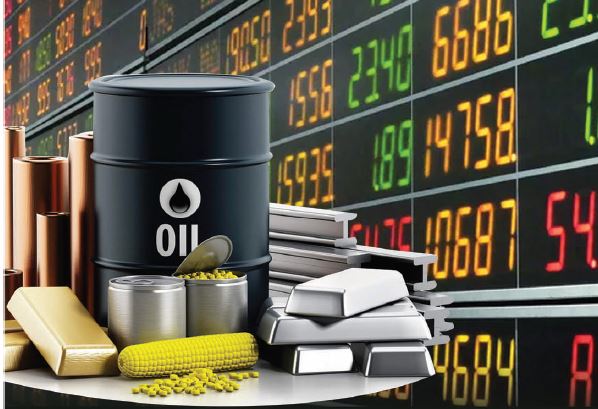
Commodities serve as tangible assets that offer investors a means to engage with the real economy and provide a degree of insulation from financial system disruptions. In this scenario, multi-asset allocation funds represent a more efficient vehicle for commodity exposure compared to hybrid schemes. Here are the details
Commodities serve as tangible assets that offer investors a means to engage with the real economy and provide a degree of insulation from financial system disruptions. In this scenario, multi-asset allocation funds represent a more efficient vehicle for commodity exposure compared to hybrid schemes. Here are the details [EasyDNNnews:PaidContentStart]
The Indian equity market is currently trading at its all-time high, and equities are delivering returns that have easily outpaced every other asset class over the past year. So, what should be the most ideal course for an investor to take now? Age-old wisdom says that we should be doing a rebalancing act and diversify the portfolio, if not done till now. One of the ways to rebalance is to take profit from the asset whose weightage has increased in your portfolio beyond your tolerance level and invest in the asset that has underperformed, resulting in your portfolio being underweight on that asset class. Right asset allocation and timely rebalancing remain two of the biggest contributors to portfolio returns in the long term.
A retail investor in India has always been comfortable investing in physical assets. Nonetheless, it has been more in a traditional way, such as investing in real estate and physical gold. With the development and advancement in technology, along with a very proactive regulator, the investor has an option to invest in commodities digitally. In fact, commodities is one of the asset classes where you should always allocate some proportion of your portfolio. In the following paragraphs, we will take you through what commodity funds are and outline the reasons for investing in them.
Defining Commodity Funds
Commodity funds are investment vehicles, often structured as either Fund of Funds (FoFs) or Exchange Traded Funds (ETFs), which focus on trading specific commodities like oil, minerals, gold, and others. These funds typically allocate at least 95 per cent of their net assets to physical commodities or commodity ETFs, such as gold and silver. The remaining assets may be held in liquid assets, cash, and various debt and money market instruments. Commodity mutual funds invest in commodities belonging to the domestic or overseas markets
As such, any valuation gains or losses to the fund are directly driven by the changes in the market prices of the respective commodities. Such changes in the prices get reflected in the movement of the net asset value (NAV) of the funds. In its circular dated May 21, 2019, the Securities and Exchange Board of India (SEBI) stipulated guidelines for mutual fund investments in commodities, permitting exposure solely through Exchange Traded Commodity Derivatives (ETCDs) and limiting direct exposure to physical commodities, except for gold ETFs.
In instances where funds are required to take possession of underlying goods due to physical settlement of contracts, disposal must occur within 30 days, as per the notification. SEBI has authorised mutual funds to engage in ETCDs exclusively within hybrid and multi-asset allocation schemes. For multi-asset allocation schemes, exposure to ETCDs is capped at 30 per cent of the NAV, while in hybrid schemes it is capped at 10 per cent of the NAV. Additionally, any exposure to a single commodity within a scheme is capped at 10 per cent, excluding gold ETFs and gold funds. For investors, these guidelines translate into a conservative approach to commodity exposure, aiming to enhance portfolio stability.
A 30 per cent allocation to commodities in a portfolio is deemed sufficient for this purpose. In a hybrid scheme, 10 per cent exposure may offer a glimpse into commodities but may not fully leverage diversification benefits. The 10 per cent cap on a single commodity, except for gold, serves to mitigate risks for investors. This decision stems from the uneven liquidity present in the Indian commodity markets, particularly noticeable beyond the top six or seven commodities that are globally benchmarked prices such as gold, oil and metals. Beyond these commodities, liquidity significantly diminishes and it does not make sense to diversify as lower liquidity will have an impact cost that will bear upon returns.
Reasons for Investing in Commodity Funds
One of the biggest reasons for investing in any asset class is its attractive returns. Nonetheless, equally important is how the asset fits into the entire portfolio. For example, if you already have a well-diversified equity portfolio, you may not require direct exposure to equities. Instead, you can diversify your portfolio to fixed income securities. To understand how an asset fits into your portfolio, one of the basic checks carried out is to know the correlation between those asset classes. Lower the correlation, better do they fit in the portfolio.
Historically, there has been little correlation between the movements of commodities as an asset class and that of traditional assets such as equity. To understand this relationship, we did a study of correlation between the BSE Sensex (representing equities) and S & P GSCI, which serves as a benchmark for investment in the commodity markets and as a measure of commodity performance over time. The following chart shows the one-year rolling correlation between the Sensex and the S & P GSCI.
The correlation varied between -0.16 to 0.47 and the average remained at 0.13. However, the median correlation is a bit lower at 0.11. There are certain spikes in the correlation between these two asset classes in our study period. Those spikes have come during some of the black swan events such as the global financial crisis of 2008-09 and, more recently, the corona virus pandemic. During such uncertain times, all asset classes move in unison. The data clearly shows that in general, there is very low correlation between commodity and equities. This translates into better diversification with portfolios that hold commodities along with equity.

Now, let us dig deeper into individual funds so as to understand the right way to mix commodities in your portfolio. If you are looking to diversify your portfolio and potentially hedge against inflation, there are certain ways to add commodities exposure as an Indian investor.
1. Multi-Asset Portfolio — This is a streamlined option, where you invest in a single mutual fund that includes stocks, bonds, and a percentage allocated to commodities. The fund manager handles the diversification and asset allocation for you, making it a convenient way to gain commodity exposure without having to choose individual investments.
2. Pure Equity Fund Plus Dedicated Commodity Fund — This approach offers more flexibility. You would have to choose an equity mutual fund focusing on your preferred stock categories. Then, you would supplement that with a dedicated commodities fund such as a gold fund. This allows you to tailor the exact commodities’ exposure to suit your individual risk preferences and investment goals.
3. Hybrid Fund with Commodities Exposure — Hybrid funds offer a blend of different asset classes, sometimes including commodities. This provides the potential for built-in diversification within the fund itself, but might offer less direct control over your specific commodity exposure compared to a dedicated commodity fund.
To determine the optimal strategy for integrating commodities into your portfolio, we examined several combinations:
1. Pure Multi-Asset Fund — This approach involves investing in a dedicated multi-asset fund, such as the ICICI Prudential Multi-Asset Fund. This fund allocates approximately one-fifth, or 20 per cent, of its assets to commodity-related derivatives.
2. Equity Plus Commodity (Gold) — With this strategy, investors allocate funds to both a pure equity fund and a commodity fund, with gold being the chosen commodity due to the absence of a diversified commodity-dedicated fund. For the commodity component, we selected the ABSL Gold Fund, while the equity portion is represented by the HDFC Flexi-Cap Fund. A weighted average allocation of 70 per cent to equity and 30 per cent to gold was used to construct the portfolio.
3. Equity Plus Commodity (Gold + Energy) — In this variation, we expanded the commodity exposure by incorporating an additional commodity—energy, alongside gold.
Following is the table that gives a glimpse of the performance statistics of the above combination.

The performance statistics of various category and combination of funds clearly shows that taking exposure to commodities through a multi-asset fund is one of the best options. Over the period of January 1, 2015 to December 29, 2023, the ICICI Prudential Multi-Asset Fund displayed a total return of 244.31 per cent, which turns out to be a compound annual growth rate (CAGR) of 14.74 per cent. The maximum drawdown it experienced was of -30.61 per cent. Conversely, the DSP Natural Resources and New Energy Fund representing energy stocks exhibited an impressive total return of 341.02 per cent and a relatively higher CAGR of 17.94 per cent.
Nevertheless, what is worrying about the fund is its drawdown. The fund has a maximum drawdown of -48.03 per cent.
Compare this with one of the pure and most popular commodities, namely, gold. The ABSL Gold Fund delivered a total return of 112.20 per cent in the same period, which is quite low compared to other funds discussed above. It also has a lower maximum drawdown of -20.61 per cent. Now let us compare all this with a pure equity fund.
The HDFC Flexi-Cap Fund provided a total return of 249.70 per cent, which works out a CAGR of 14.94 per cent, and a maximum drawdown of -41.84 per cent. Combining equity and gold investments (HDFC Flexi-Cap Fund and ABSL Gold Fund) yielded a total return of 248.54 per cent and a CAGR of 14.90 per cent, with a maximum drawdown of -41.44 per cent. These statistics are comparable to a pure equity fund and there is no remarkable improvement in either return or risk.
Introducing exposure to natural resources and new energy (ABSL Gold Fund + HDFC Flexi-Cap Fund + DSP Natural Resources and New Energy) also did not result in any visible difference with total return of 249.90 per cent and a CAGR of 14.95 per cent, with a maximum drawdown of -41.62 per cent. Trying different combinations and analysing their results clearly shows that taking exposure to commodities through a commodities fund may not be advisable taking into account the risk-return profile. The best risk-adjusted returns measured through the Calmer ratio and Sharpe ratio is given by a multi-asset portfolio.

Understanding Multi-Asset Funds
Multi-asset funds are investment vehicles that offer exposure to multiple asset classes within a single fund, including equity, real estate, debt and gold, based on the fund manager’s discretion. These funds are particularly appealing to investors who lack the time or expertise to actively manage diversified portfolios, as they provide a convenient way to gain exposure across various asset classes with just one investment. They also provide investors the option to automatically re-balance their portfolio.
During volatile market phases that are difficult to navigate, rebalancing the portfolio will be instrumental in keeping up with the momentum. Lastly, investors have to also consider the various tax treatments associated with each asset class if they are investing individually in different asset class. However, it’s important to note that while multi-asset funds offer diversification benefits, they cannot replace the need for a personalised asset allocation strategy tailored to each individual’s unique financial circumstances.
Personal finance is inherently personal, and what works for one investor may not necessarily work for another. While multiasset funds can complement existing asset allocation strategies, they should not serve as a complete substitute. One challenge with multi-asset funds lies in comparing them, as the allocation to different asset classes can vary significantly between the funds, making it challenging to gauge expected return profiles. Investors would do well, therefore, to first draw up a list of financial goals and then zero in on a fund that will work towards the fulfilment of such objectives.
Conclusion
Commodities serve as tangible assets that offer investors a means to engage with the real economy and provide a degree of insulation from financial system disruptions. Even a modest allocation to commodities can significantly reduce portfolio volatility without compromising returns, resulting in a smoother investment journey for similar levels of returns. Rather than viewing commodities solely as tools for capitalising on price movements, investors may consider them as a means to enhance stability in their returns. Consequently, investments in commodities should be approached with a long-term perspective.
While doing so, emphasis must be placed on their role as enduring assets rather than short-term speculative ventures. Multi-asset allocation funds represent a more efficient vehicle for commodity exposure compared to hybrid schemes, where commodity exposure may be too limited to have a meaningful impact. Compliance with SEBI’s guidelines and having dedicated fund managers for commodities further enhances the safety features for investors. These funds offer investors an excellent opportunity to engage in commodity trading while also aiding them in achieving specific financial objectives.
[EasyDNNnews:PaidContentEnd] [EasyDNNnews:UnPaidContentStart]
To read the entire article, you must be a DSIJ magazine subscriber.
Current print subscribers click here to login
Subscribe NOW to get DSIJ All Access!
[EasyDNNnews:UnPaidContentEnd]