Should You Be Investing In Large-Cap Funds Now?
Ninad Ramdasi / 21 Mar 2024/ Categories: Cover Stories, DSIJ_Magazine_Web, DSIJMagazine_App, MF - Cover Story, Mutual Fund
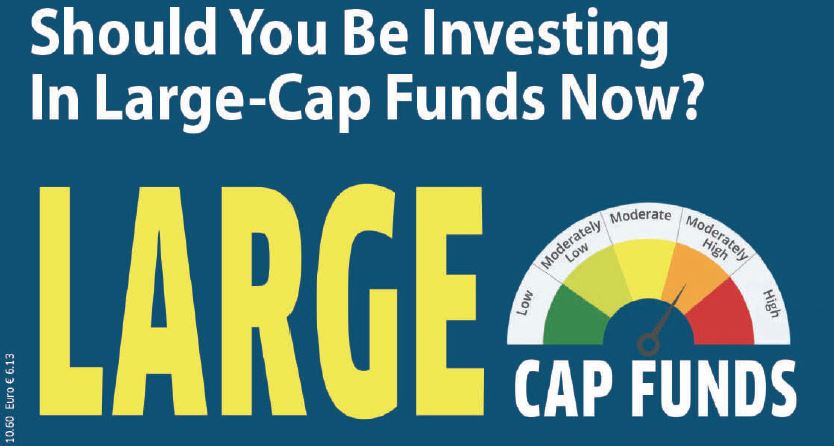
Given that small-cap and mid-cap stocks have started correcting from the second week of March and the general elections next month could act as a trigger, this seems to be the right time to transition to large-cap stocks. Besides, the global scenario is also not looking very favourable for the equity market, thereby creating a lot of volatility in the equity market
Given that Small-Cap and Mid-Cap stocks have started correcting from the second week of March and the general elections next month could act as a trigger, this seems to be the right time to transition to Large-Cap stocks. Besides, the global scenario is also not looking very favourable for the equity market, thereby creating a lot of volatility in the equity market [EasyDNNnews:PaidContentStart]
The recent trend that has caught the attention of many investors is that of large-cap funds outperforming their small-cap and mid-cap counterparts. This shift, after a period of dominance by the broader market capitalisation-dedicated funds companies, begs the question: Is this a sign to increase your exposure to large-cap-dedicated equity funds? In the past one year, mid-cap and small-capdedicated funds have on an average generated return of little more than 50 per cent. Compare this with the large-capdedicated funds in the same period that have generated return of a shade lower than 40 per cent. Nonetheless, in the last one month the tide seems to be turning around and large-cap funds have started to outperform the broader market funds.

The chart above proves the point that large-cap funds’ category has given superior returns over other fund categories in the last one month. This performance has clearly attracted lot of attention from investors and is reflected in the inflows into large-cap funds. According to the latest data provided by the Association of Mutual Funds in India (AMFI), large-cap mutual funds witnessed fund inflow of ₹1,287 crore in January. This was the highest level since July 2022 when the category saw inflow of ₹2,052 crore. Nevertheless, in the month of February 2024, it dipped to ₹921 crore. This is a huge turnaround for large-cap mutual funds. The latest inflow helped to increase the asset base of the large-cap equity category by 30 per cent to ₹3.04 lakh crore at February end compared to ₹2.35 lakh crore a year ago.


Benchmark Index in Mutual Fund
The benchmark index for a particular mutual fund scheme is the index against which the scheme intends to measure its performance. For example, the Nifty 100 index which contains stocks of companies that are ranked among the top 100 in terms of market capitalisation. This is the index against which many large-cap funds are benchmarked. In short, large-cap funds will try to match the performance of this benchmark. At times, it may outperform, and at other times it may underperform the benchmark.
It is mandatory for all mutual fund schemes to declare the index against which their performance is benchmarked. The scheme information document mentions the benchmark index of the mutual fund scheme. This is useful for investors because it helps them to figure out if their investments are doing better or worse than the overall market. The whole point of the benchmark index is to see how well an investment portfolio is doing. Benchmark indices are also great for deciding if investment managers are good at making more money than what the market usually make.

Should You Be Investing in Large-Cap Funds Now?
Given that large-cap funds have started performing now, does it make sense to allocate more to large-cap-dedicated funds? Large-cap mutual funds are those funds that invest in the top 100 companies by market capitalisation. These companies are often market leaders and very well known to investors. The minimum investment in equity and equity-related instruments of large-cap funds has to be 80 per cent of the total assets. We believe equity mutual funds should be judged on their longterm performance. Let’s explore large-cap funds from an investor’s point of view.
Here are some key points to consider about large-cap funds:
1) Risk and Volatility — As the stock market enters an expensive territory and becomes volatile, large-cap funds can be a good choice for conservative investors. These funds are far better during uncertain times due to the strength of the companies they invest in. Large-cap mutual funds have a tendency to perform better in volatile markets. We will use standard deviation, which is one of the most used measures to understand the risk in an investment and assess the risk of different categories of the fund. A high standard deviation figure indicates greater volatility in returns with high risk. A low standard deviation figure indicates less volatility with low risk.

The above standard deviation is calculated based on monthly returns of the last three years. From the above table we can see that the large-cap mutual fund category has the lowest standard deviation compared to the small-cap and mid-cap funds’ categories.
2) Consistency in Returns — Large-cap funds provide a foundation of stability and have the potential to provide consistent returns. They may offer less returns compared to small-cap and mid-cap mutual funds, but they will deliver consistent returns over the long term. The companies in which large-cap funds invest are market leaders in their domain and fundamentally very sound and popular among the investors. Despite facing challenges from new benchmark and stricter investment norms, large-cap schemes can still offer inflationbeating returns without excessive volatility. If you are comfortable with 10 To 15 percent annual return with investment horizon of more than 5 years, then investing in large-cap funds is a prudent choice. A point to note is that as they are part of equity funds, the risk factor has to be taken into consideration.

3) Better Liquidity — Large-cap stocks are more liquid. They are easier to buy and sell. Many large-cap mutual funds hold a diversified portfolio of stocks across different sectors. These funds have high liquidity.
4) Self-Judging Risk — Investors should self-judge the risk-taking ability. What works here is to invest with certain goals in mind and for a long term. Judging the risk appetite of one’s own self is very important. Investors with low risk appetite can gain from investing in large-cap funds as these funds offer less risk compared to mid-cap and small-cap funds.
Things to Consider While Investing in Large-Cap Funds
1. Investment Goals — Define what you want to achieve with your investment. Whether it is saving for retirement, a child’s education or building an emergency fund, your goals will guide the type of mutual fund you choose. The goals where these funds can be utilised include retirement planning and wealth creation. Large-cap funds are a cornerstone for retirement portfolios. Their relatively stable returns and lower risk profile compared to small-cap and mid-cap funds make them ideal for building a strong retirement corpus over the long term. Large-cap funds can also be used for wealth creation. While large-caps might not deliver the explosive growth potential of smaller companies, they offer a dependable and consistent path to wealth creation. Through steady capital appreciation and potential dividend payouts, large-cap funds can help you accumulate wealth gradually over time.
2. Expense Ratio — The expense ratio represents the annual cost of operating and managing an investment fund. A lower expense ratio is generally better because it means lower costs for investors. The expense ratio is calculated as a percentage of the daily investment value. For example, if you invest ₹5,000 in a mutual fund with an expense ratio of 2 per cent, approximately 0.0054 per cent will be deducted from the investment value each day. The daily deduction ensures that you only pay for the period you stay invested. However, keep in mind that this deduction slightly reduces your returns each day. Our analysis shows that the expense ratio for large-cap funds was in the range of 0.40 to 2.55 per cent at the end of February. It is further observed that funds with lower asset under management tend to have higher expense ratio. For example, Taurus Large-Cap Fund - Direct Plan with AUM of just ₹44 crore has an expense ratio of 2.55 per cent. On the same lines, ICICI Prudential Bluechip Fund - Direct Plan with AUM of ₹51,554 crore has an expense ratio of 0.92 per cent.
3. Turnover Ratio — The turnover ratio represents the percentage of a mutual fund’s holdings that have been replaced with in a given year. It indicates how frequently the fund’s assets are bought and sold. Typically, turnover ratios fall between 0 and 100. Extremely high turnover could indicate excessive trading (churning) by the manager. Understanding the turnover ratio helps you make informed investment decisions.
4. Consistency of Performance — We have to watch a fund’s performance for the last five years. Has the fund delivered consistently good returns over those years? Funds that consistently perform well are more likely to continue doing so in the future. Look for funds that have consistently outperformed their peers and benchmark over the last five years. Considering this factor is very essential for an investor to select the right fund.
5. Long-Term Horizon — When you invest for the long term, your mutual fund returns are compounded. Imagine investing ₹1 lakh every year from the age of 25 until retirement at 58. With a 10 per cent compounded interest rate, your investment corpus could grow to an impressive ₹2.7 crore at redemption, and your invested amount will be ₹33 lakhs. This is the power of compounding, which is most noticeable when the investment span extended over a long duration. Starting early and being patient are the two parameters of wealth creation.
6. Asset Size of Fund — AUM represents the total market value of the assets managed by the fund. A large fund can attract more investors and make larger investments but managing a fund and controlling expenses becomes difficult. AUM should not be a sole factor in your decision-making process
7. Fund Manager Experience — The importance of a fund manager’s role cannot be neglected. They do not, however, determine the success or failure of a fund. Instead, this is decided by the investment philosophy and the fund’s stock selection. The fund manager’s past performance can provide valuable insights. Look at how the fund has performed under their management. Consider both the current fund and any other funds handled in the past even though past performance doesn’t guarantee future results. The choice should be based on whether the chosen fund follows a reliable, tried and true investment strategy
8. Sectoral Diversification — Large-cap funds invest in blue chip companies across various sectors. Diversification in such large-cap companies reduces the risk of the fund. This works to the advantage of an investor.

Who Should Invest in Large-Cap Mutual Funds?
Large-cap mutual funds are suitable for investors who require steady returns over the long term and have low risk appetite. Such an investor looks for stable capital appreciation through equity investment but does not want to take high investment risk. Another question is whether large-cap mutual funds are safe enough? Large-cap mutual funds invest in companies with a higher market capitalisation and a proven track record. These companies have greater market visibility and brand presence. So, it is generally considered safe to invest in large-cap funds from a long-term investment perspective for earning stable returns. Before making any investment decisions, prepare the investment strategy that fits your individual needs. Remember, investing always involves risks, and it’s crucial to do through research before doing so.

Conclusion
The Indian economy has been outperforming other emerging economies and also is one of the fasted growing major economies in the world. This will have direct bearing in the growth of Indian equity. Nevertheless, small-cap and mid-cap stocks have started correcting from the second week of March.
Besides, the general elections next month will be a major trigger to consider. The global scenario is also not looking very favourable for the equity market. All this has created a lot of volatility in the equity market. Hence, in the current market conditions we suggest that investors should focus on large-cap funds as a prudent choice to tide over the volatile phase.
[EasyDNNnews:PaidContentEnd] [EasyDNNnews:UnPaidContentStart]
To read the entire article, you must be a DSIJ magazine subscriber.
Current print subscribers click here to login
Subscribe NOW to get DSIJ All Access!
[EasyDNNnews:UnPaidContentEnd]