Sula Vineyards
Ratin Biswass / 26 Jun 2025/ Categories: Analysis, Analysis, DSIJ_Magazine_Web, DSIJMagazine_App, Regular Columns
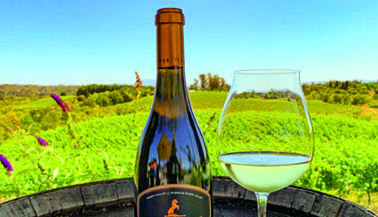
Maharashtras recent steep excise hike on IMFL and spirits has sent ripples through the alcoholic beverage industry
Maharashtra's recent steep excise hike on IMFL and spirits has sent ripples through the alcoholic beverage industry, impacting major players. However, this policy uniquely favours Sula Vineyards, as wine and beer remain exempt, leading to a potential consumer shift towards these more affordable categories.[EasyDNNnews:PaidContentStart]
Maharashtra's government has significantly hiked excise duty on liquor, effective June 2025, marking the steepest increase since 2011. The levy on Indian Made Foreign Liquor (IMFL) is up 50 per cent, with duties also rising on country liquor and imported spirits. The state aims to boost revenues by an estimated ₹14,000 crore annually.
This move has triggered immediate industry anxiety and resistance. Major players like United Spirits (20-22 per cent sales from Maharashtra) and Radico Khaitan (7-8 per cent) saw their stocks fall up to 7 per cent, fearing a severe impact on demand. However, this policy creates a unique opportunity for Sula Vineyards Ltd. and beer producers like GM Breweries. The excise hike specifically excludes wine and beer, leaving their prices stable. This makes them relatively cheaper as spirits become dramatically more expensive. Sula Vineyards' shares surged over 8 per cent after the announcement, with GM Breweries also rallying. Sula's strategic insulation from this duty hike and its potential to capitalise on shifting consumption patterns make it a key stock for analysis at this critical industry inflection point.
About the company
Sula Vineyards Limited, established in 1999 in Nashik, Maharashtra; a region it significantly helped establish as the "Wine Capital of India," Sula pioneered the cultivation of classic grape varieties such as Chenin Blanc, Sauvignon Blanc, Riesling, and Zinfandel in the country. The company has consistently maintained its market leadership in the Indian wine industry since 2009, holding over a 50 per cent market share by value in the domestic 100 per cent grape wine market.
Business Segments
Sula Vineyards operates primarily through two synergistic divisions:
The Wines Division: This core segment encompasses the production of a diverse portfolio of wines, ranging from red, white, and sparkling varieties, as well as the import and distribution of wines and spirits. Sula offers a wide range of price points, from ₹250 to ₹1,895 per 750 ml bottle in Maharashtra, catering to a broad consumer base from massmarket to premium segments. Its portfolio includes 68 labels across four categories. The company boasts an extensive distribution network, servicing approximately 8,000 hotels, restaurants, and caterers, and reaching over 25,000 points of sale across 23 states and 7 Union Territories.
Wine Tourism: Complementing its wine production, Sula has pioneered wine tourism in India, owning and operating two wine resorts, "The Source at Sula" and "Beyond by Sula," both located near its Nashik winery. It also has a tasting room at its "Domaine Sula" vineyard in Karnataka. This segment offers vineyard tours, wine tasting sessions, gourmet dining options, and resort stays, attracting over 3 lakh visitors annually. The wine tourism business is a high-margin segment that provides a direct-to-consumer (D2C) channel, allowing for direct consumer preference analysis and contributing significantly to overall revenue.
Revenue Breakdown
Sula Vineyards' revenue is primarily driven by its 'Own Brands' within the Wines Division and its Wine Tourism business. For the fiscal year 2024–25, the company recorded an all-time high revenue of ₹618.8 crore, a 1.7 per cent growth from ₹608.7 crore in FY24. Sula Vineyards' Own Brands revenue grew by 2.2 per cent to ₹546.2 crore in FY25, with Elite & Premium wines now making up a record 80.5 per cent of this. Wine Tourism revenue saw a 10.2 per cent increase to ₹60.3 crore in FY25, having grown at a strong 35 per cent annually since FY21. Sula’s revenue has been growing at a CAGR of 10 per cent from FY21 to 25. However, FY25 saw a more subdued growth of 1.6 per cent in total revenues, with net sales rising 2.3 per cent.
Business Updates
Sula Vineyards is investing heavily to fuel its growth. In FY23, they invested ₹80 crore, with ₹32 crore expanding winery capacity to 16.7 million litres. FY24 saw ₹55-65 crore for renewables, more cellar expansion, and land for hotels. They plan to add another 2.5 million litres by FY26.
A key move in 2024 was buying ND Wines, boosting tourism potential near the Maharashtra-Gujarat border. Sula is also expanding its high-profit wine tourism, adding three new lakeside villas in Nashik, increasing room capacity to over 100. New projects include a tasting room at ND Wines and expanded facilities near Bangalore. A 30-key resort near York Winery is set for late FY26, further increasing total rooms to over 130.
Sector overview of the Indian Wine Market
Indian Wine Market India's wine market is booming, valued at USD 229 million in 2024 and projected to hit USD 892 million by 2033, a 16.3 per cent annual growth. This surge is fuelled by a rising middle class, global lifestyle exposure, and growing wine tourism. Younger consumers and women increasingly prefer wine, while hospitality and e-commerce boost its accessibility. Beer also shows robust growth, driven by microbreweries and premium brands. Both segments benefit from changing social norms and expanding online sales, pointing to sustained double-digit growth in India's alcohol industry.
Financial Performance
Sula Vineyards reported flat financial performance in Q4FY25. Gross sales were ₹133.09 crore, a 38.6 per cent drop from Q3FY25, but a slight 1.1 per cent increase year-on-year. Profit after tax (PAT) was ₹13.03 crore, down 53.6 per cent sequentially and 3.8 per cent year-on-year. Operating margins contracted to 21.4 per cent. Despite the sequential slowdown, Sula showed resilience compared to the previous year, highlighting its ability to manage seasonal changes and strong brand positioning.
Ratios:
■ Stock P/E vs Industry PE = 36.3x Vs 31.x n PEG Ratio = .70x (Vs Industry median of 0.99x)
■ Debt to Equity Ratio (vs Sector D/E Ratio average) = 0.54x Vs 0.34x n ROCE = 13.25% (Vs Industry median of 13.25%)
■ ROE = 12.30% (Vs Industry median of 10.77%) n dividend Yield = 1.20% (Vs Industry median of 0.15%)
■ Promoters Holding = 24.66%
■ Interest Coverage = 3.96x (Vs Industry median of 5.67x)
Valuation and Outlook
As of June 2025, Sula Vineyards Limited is valued at approximately ₹2,532 crore. The company is currently trading at a PE of 36.3x, which is high when compared with its industry PE of 31.x. However, its 3-year median PE is 45.4x. The PEG ratio of the company is 0.70, which is attractive and lower than the industry average.

Sula Vineyards Limited is uniquely poised to benefit from the recent excise duty hike on IMFL and imported spirits in Maharashtra, which is expected to shift consumer preference towards exempt categories like wine and beer. As India’s wine market leader with a 60–65 per cent share, Sula’s strong brand, diverse portfolio, deep farmer relationships, and extensive HORECA (Hotel, Restaurant, and Cafe) network provide significant competitive advantages. The company’s premiumisation strategy is driving margin expansion, with Elite and Premium wines now contributing over 80 per cent of Own Brands revenue. Wine tourism and sustainability initiatives further enhance Sula’s growth prospects and brand equity.

Despite these strengths and the clear tailwinds from regulatory changes, a ‘HOLD’ recommendation is warranted at current price levels. While Sula’s long-term growth prospects remain robust—underpinned by favourable demographics, rising wine awareness, and supportive state policies—the company has recently experienced a moderation in profitability and almost no growth on a YoY basis in its revenue. FY25 saw a decline in net profit and margins, attributed to higher selling expenses and a temporary slowdown in urban consumption, even as revenue growth in premium segments outpaced the broader alcoholic beverage sector. The current valuation, with a P/E of 36.3, already reflects much of the optimism around these growth drivers. Additionally, promoter holding remains relatively low at 24.7 per cent, and debtor days have increased, signalling the need for close monitoring of operational efficiency as working capital days have also increased substantially from 171 days to 240 days.
As management invests in capacity, marketing, and new market expansion, some margin correction is likely in the near term, though margins are expected to remain healthy. Therefore, while Sula remains a best-in-class operator with clear long-term potential, we advise investors to ‘Hold’ the stock, awaiting clearer signs of sustained profitability recovery and significant earnings expansion forecasted from FY26 onward. This approach balances recognition of Sula’s market leadership and growth catalysts with prudent caution amid near-term earnings volatility.
[EasyDNNnews:PaidContentEnd] [EasyDNNnews:UnPaidContentStart]
To read the entire article, you must be a DSIJ magazine subscriber.
[EasyDNNnews:UnPaidContentEnd]