The Pick and Shovel Play: Investing in the Backbone of Booms!
DSIJ Intelligence-6 / 27 Oct 2025 / Categories: Knowledge, Trending
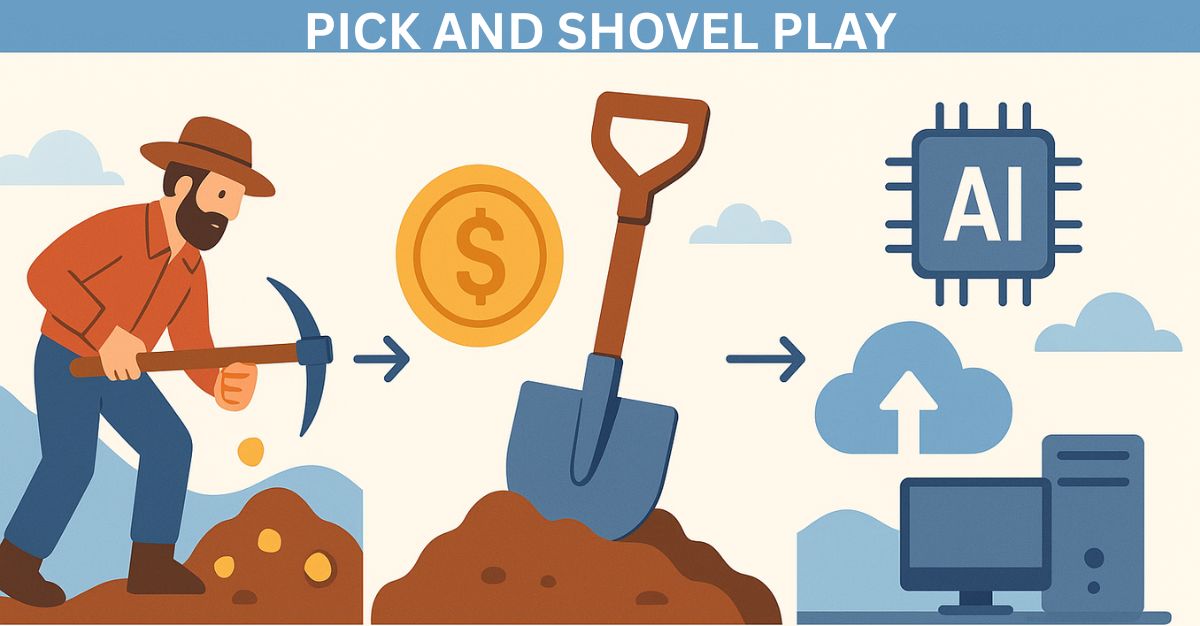
The pick and shovel strategy embodies a timeless investing truth—sometimes, it’s wiser to sell the tools than to dig for the treasure.
Introduction: Profiting from the Providers
In investing, the “pick and shovel play” refers to a strategy where investors focus on companies that supply the essential tools, infrastructure, or services needed to support a booming industry—rather than those directly engaged in the boom itself. This approach allows investors to benefit from the overall growth of a sector while reducing exposure to the risks faced by individual players in that industry.
The Origin: Lessons from the California Gold Rush
The term “pick and shovel” originates from the California Gold Rush of the mid-1800s. While thousands of prospectors risked everything to strike gold, few actually became wealthy. The real winners were the merchants who supplied the miners with the essentials—picks, shovels, pans, and jeans. Levi Strauss, for example, made a fortune selling durable clothing to miners, while toolmakers and suppliers enjoyed consistent profits regardless of who found gold.
This historical lesson underpins the modern investing philosophy: it’s often more profitable to back the enablers of a trend than to gamble on those chasing direct success within it.
How the Strategy Works
The pick and shovel strategy involves identifying the “infrastructure layer” of an emerging or growing industry. These are companies that provide critical inputs—whether hardware, software, Logistics, or specialized services—that every player in the industry depends on.
For example, during the oil boom, equipment manufacturers and pipeline companies served as pick-and-shovel beneficiaries. In the digital age, cloud computing providers, Semiconductor manufacturers, and data storage firms play similar roles. The key lies in finding businesses with broad, recurring demand driven by the industry’s expansion rather than the success of individual end-products.
Advantages of Pick and Shovel Investing
- Lower Risk Exposure: These companies earn steady revenue streams as suppliers to multiple clients, making them less vulnerable to the failure of any single firm.
- Consistent Demand: As long as the industry grows, the need for their tools or services continues.
- Scalability: Suppliers can benefit from multiple customers within the same industry, amplifying their growth potential.
- Diversification: They often serve multiple sectors, cushioning them from sector-specific downturns.
Disadvantages and Risks
- Competition and Margin Pressure: Tool providers can face intense price competition, limiting profitability.
- Dependency on Industry Growth: If the broader sector slows down, demand for their products can also shrink.
- Technological Disruption: Suppliers risk becoming obsolete if newer technologies replace their offerings.
Example: Pick and Shovel Plays in Artificial Intelligence
Artificial Intelligence (AI) has sparked a modern gold rush, with companies racing to develop advanced models and applications. However, the true pick-and-shovel winners are those supplying the infrastructure that powers AI innovation.
NVIDIA provides the GPUs essential for AI computation. TSMC manufactures the advanced chips that fuel AI hardware. Microsoft Azure, Amazon Web Services (AWS), and Google Cloud offer the computing platforms needed to train AI models. These firms profit from the AI boom irrespective of which company develops the next breakthrough chatbot or algorithm.
Conclusion: The Smarter Path to Growth
The pick and shovel strategy embodies a timeless investing truth—sometimes, it’s wiser to sell the tools than to dig for the treasure. By focusing on the enablers of innovation rather than the end products, investors can tap into powerful growth themes with a cushion against volatility. From the Gold Rush to the AI revolution, this approach remains a durable path to steady, long-term returns.